The Case for Multilateralism: Unilateral Airspace Closure and the Need for the UN
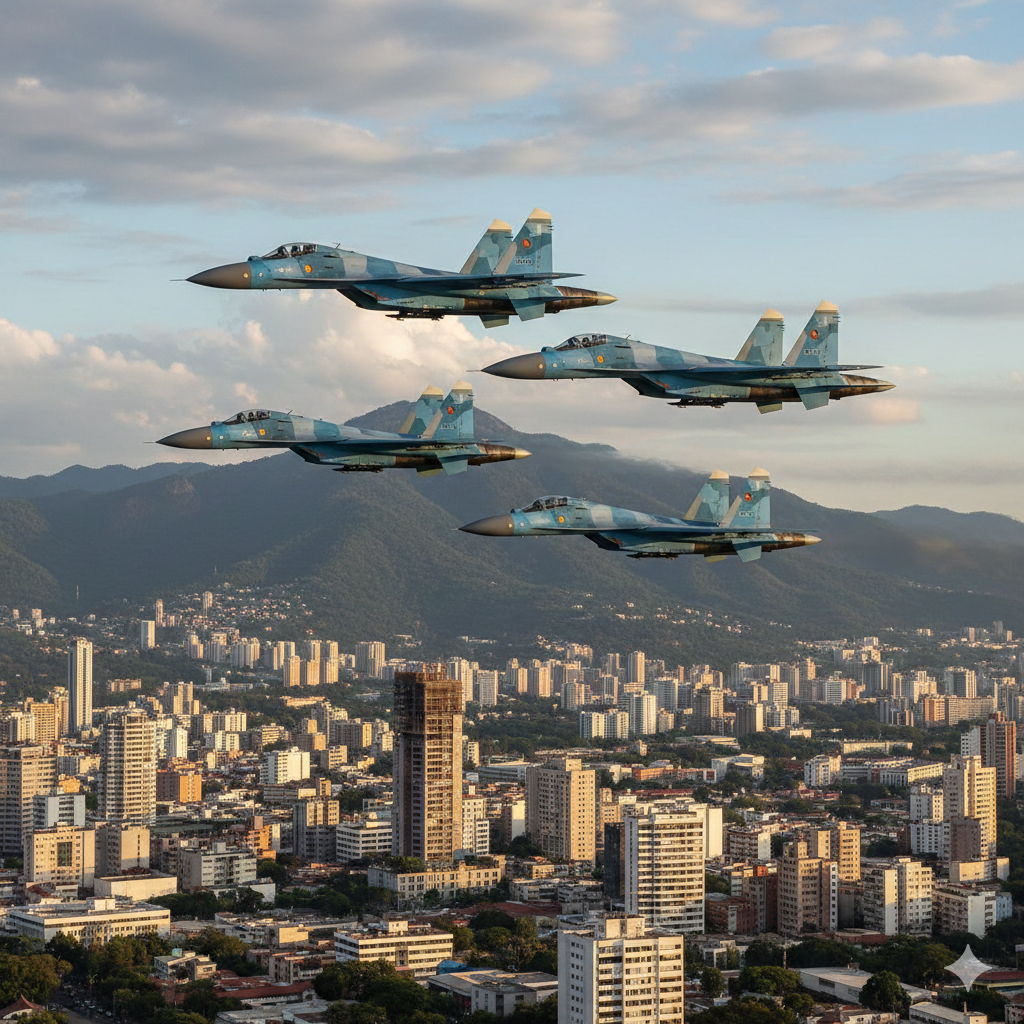
The purported closure of the airspace surrounding Venezuela by the President of the United States, as recently stated, serves as a powerful case study for the fragility of global order and the indispensable need for international law and robust multilateral institutions. While the assertion may be rooted in addressing transnational issues such as drug trafficking, the unilateral nature of the declaration directly challenges the foundational principles of state sovereignty and global stability. Such a move underscores that complex geopolitical problems are inherently international in scope and must be resolved by collective bodies, not by the coercive power of a single nation.
At the heart of this dispute lies the principle of territorial sovereignty. Under international law, particularly codified in the 1944 Chicago Convention on International Civil Aviation, every sovereign state possesses exclusive and absolute control over the airspace above its territory. For the United States to declare another sovereign nation’s airspace “closed” without the consent of the Venezuelan government or the explicit authorization of a governing international body is an act widely condemned as a breach of international law. This is not a domestic problem; it is a critical violation of established global norms that govern aviation safety, trade, and state integrity. Allowing a powerful state to dictate the accessibility of another state’s sovereign territory sets a dangerous precedent, destabilizing the system built to prevent conflict after World War II.
Therefore, the problem demands a solution rooted in multilateralism. The notion that the USA should not solve this alone is not merely an ideological stance, but a practical requirement for legitimate and sustainable resolution. When a state acts unilaterally, its motives are often viewed with suspicion, leading to escalation and resistance, as seen in the immediate, defiant rejection of the order by the Venezuelan government. This kind of international problem must be solved by international organizations because they possess the legal and moral authority to mandate actions that individual states do not.
This is precisely where the United Nations (UN) is needed. The UN Security Council is the only body with the legal authority under the UN Charter to impose mandatory sanctions, including a no-fly zone, on a member state, provided it determines the situation constitutes a threat to international peace and security. Seeking and obtaining UN authorization transforms the action from a coercive act of aggression by one nation into a legitimate enforcement action by the international community. Furthermore, technical bodies like the International Civil Aviation Organization (ICAO) provide the necessary expertise to manage the logistics and safety implications of air travel restrictions without resorting to military threats. The UN provides legitimacy, ensures a collective sharing of responsibility, and facilitates the involvement of neutral third parties, making a negotiated or enforced solution both legal and durable.
In conclusion, the provocative statement regarding the closure of Venezuelan airspace highlights a core tension in modern geopolitics: the struggle between unilateral power projection and the rule of law. Issues involving national sovereignty, global transportation, and regional security cannot be effectively addressed by the dominant power acting in isolation. The necessity of international law and a strong UN is proven by the illegitimacy and potential for escalation that arise from such solitary actions. Only through the collaborative framework of international organizations can the world navigate complex crises peacefully, legally, and with the full backing of global consensus.