The Two-State Solution as the Imperative Path to Lasting Peace
The Israeli-Palestinian conflict, characterized by decades of competing national claims, occupation, and devastating violence, demands a resolution that secures the dignity and self-determination of both peoples. While the conflict’s complexity has led many to declare the two-state solution—the establishment of an independent, sovereign Palestinian state alongside the State of Israel—to be dead, it remains the only viable framework for ending the cycle of bloodshed and ensuring a just political outcome. Despite current political roadblocks and the profound trauma inflicted by events like the recent war in Gaza, the two-state solution is not merely a diplomatic aspiration; it is a moral and strategic imperative that requires robust international intervention, anchored by a strengthened United Nations.
The core strength of the two-state solution lies in its ability to address the fundamental national aspirations of both Israelis and Palestinians. Zionism, the movement for Jewish self-determination, requires a secure and democratic Jewish state. Palestinian nationalism demands a sovereign state with full control over its territory and destiny. The alternative, a single unified state, is a recipe for perpetual civil strife, as it would force two populations with deeply entrenched and conflicting narratives into a political framework where one group would inevitably feel dominated, jeopardizing Israel’s democratic and Jewish character while denying Palestinians their national rights. The two-state model offers a geographically bounded compromise, based largely on the pre-1967 lines with agreed-upon land swaps, allowing both nations to fulfill their core identities within secure, recognized borders.
The recent military campaign in Gaza, described by many as a humanitarian catastrophe, underscores the failure of managing, rather than resolving, the conflict. The horrific events that precipitated and followed the large-scale military operation—which critics have described using terms like “Gaza genocide”—demonstrate that the current status quo of occupation, blockade, and periodic, asymmetrical warfare is unsustainable and catastrophic. The sheer scale of civilian suffering in Gaza highlights a critical truth: security for Israelis cannot be achieved at the expense of justice and dignity for Palestinians. The only way to dismantle the forces of extremism on both sides, which thrive on hopelessness and resentment, is through a credible political horizon that delivers concrete, irreversible progress toward Palestinian statehood. Continued occupation and denial of rights only fuel the radical rejectionist elements.
Achieving this resolution, however, cannot be left solely to the two deeply polarized parties. The profound distrust, the proliferation of Israeli settlements in the West Bank, and the political opposition within Israel’s current government to Palestinian statehood all necessitate external enforcement and guarantees. This is where a stronger, more assertive United Nations (UN) must step in. Past peace efforts have failed due to a lack of binding international guarantees and continuous oversight.
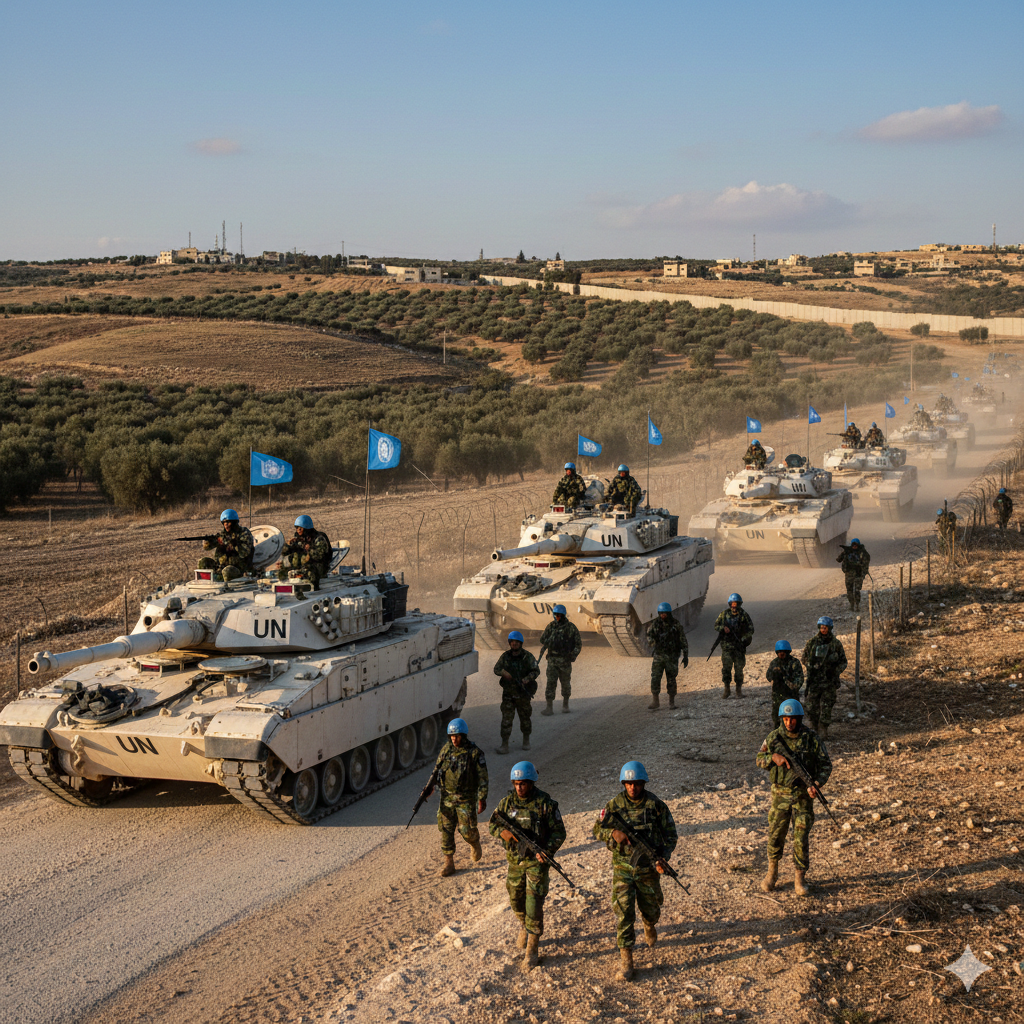
A renewed, irreversible commitment to the two-state solution requires the UN to move beyond issuing resolutions to playing an executive role. This could involve the Security Council passing a Chapter VII resolution to establish an International Stabilization Force and a dedicated transitional authority in the Palestinian territories. This UN-backed mechanism would be tasked with several critical, irreversible steps: overseeing the phased withdrawal of Israeli forces, ensuring the disarmament of militant groups, providing security guarantees for both Israel and the future State of Palestine, and managing the reconstruction and governance of Gaza. Such a robust UN mandate, authorized to use “all necessary means” to enforce its mandate, would provide the necessary security umbrella and political legitimacy for the transition, making the pathway to statehood tangible and irreversible. Without this powerful, internationally guaranteed supervision, the deep wounds of the conflict, exacerbated by the recent violence, will continue to fester, dooming both populations to perpetual conflict. The two-state solution, backed by a strong global coalition led by the UN, is therefore the only mechanism that fuses security for Israel with justice and sovereignty for Palestine, forging the only realistic path to long-term stability in the Middle East.