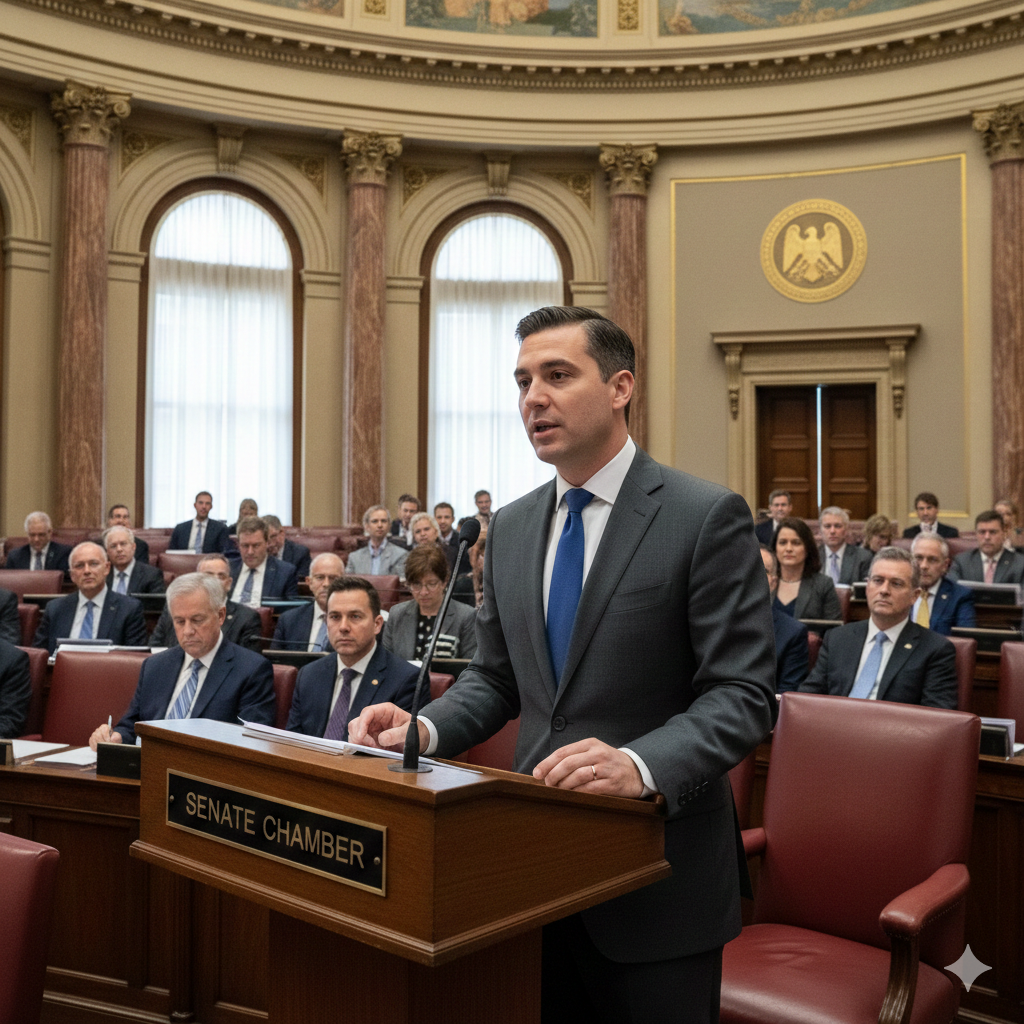
The Crisis of Character: Why the Modern World Needs Statesmen, Not Personalities
In the contemporary political landscape, we are often seduced by the “strongman” or the “charismatic outsider.” We mistake a loud voice for a clear vision and a forceful personality for effective leadership. However, as our global challenges grow more complex, it becomes increasingly clear that what we urgently need is not charisma, but quality statesmanship. To understand why, we must examine the mechanics of power—how it is derived, how it is exercised, and how it relates to the very structure of the human mind.
The Anatomy of Power: Modes and Sources
Power is not a monolithic force; it is a composite of specific methods and origins. According to classic political sociology, there are three primary modes of power:
- Force (Condign Power): Winning submission by making the alternative sufficiently painful. It is the power of the stick.
- Compensation (Compensatory Power): Winning submission by offering a reward. It is the power of the carrot or the paycheck.
- Persuasion (Conditioned Power): Winning submission by changing beliefs. This is the most sophisticated mode, as the subject believes they are acting on their own volition.
These modes flow from three distinct sources of power:
- Personality: Power derived from the individual—their physical strength, charm, or “charisma.”
- Wealth: Power derived from the possession of material resources.
- Organization: Power derived from a structured collective—the state, the law, or the institution.
The Civilized State: Rule by Organization
In a truly civilized society, the dominant source of power is not the individual (personality) or the market (wealth), but organization. While dictatorships rely on the cult of personality or the buying of loyalty through wealth, a democracy is defined as rule via organization.
In this framework, the state is the epitome of democracy. It replaces the whims of a “strongman” with the predictable, transparent processes of law and bureaucracy. In a democracy, power is exercised primarily through persuasion. The state must convince its citizens of the legitimacy of its laws and the necessity of its projects. Unlike the brute force of a tyrant, democratic organization requires a social contract based on shared understanding.
The Neurobiology of Leadership
The distinction between these forms of power is not just political; it is biological.
- Personality and Wealth often appeal to the “lower” parts of the brain—the limbic system and the amygdala. These are the centers of emotion, fear, greed, and tribalism. Dictatorships thrive here, using fear (force) and greed (compensation) to bypass critical thought.
- Organization and Persuasion engage the prefrontal cortex—the “upper” part of the brain responsible for logic, long-term planning, and ethical reasoning.
A quality statesman represents this “upper” part of human thinking. They are not there to inflame the passions of the mob or to enrich a small circle of allies; they are there to manage the complex, organized machinery of a civilized society.
The Statesman and Democratic Socialism
If the statesman is the “civilized society in action,” then the framework they inhabit most naturally is democratic socialism. This is not merely an economic policy, but the essence of statesmanship because it prioritizes the organization of society for the common good over the personality of the ruler or the wealth of the few.
Democratic socialism recognizes that without organization, wealth and personality will inevitably lead to inequality and the erosion of freedom. The statesman uses the tools of the state to ensure that persuasion and logic—the highest functions of the human mind—guide the distribution of resources and the protection of rights.
Conclusion
The world does not need more “strong” personalities; it needs people who are strong enough to submit to the discipline of organization. We need statesmen who understand that true power lies in the ability to persuade a collective to move toward a rational, organized future. By shifting our focus from the charisma of the individual to the integrity of the institution, we move away from our primitive impulses and toward a truly civilized, democratic existence.