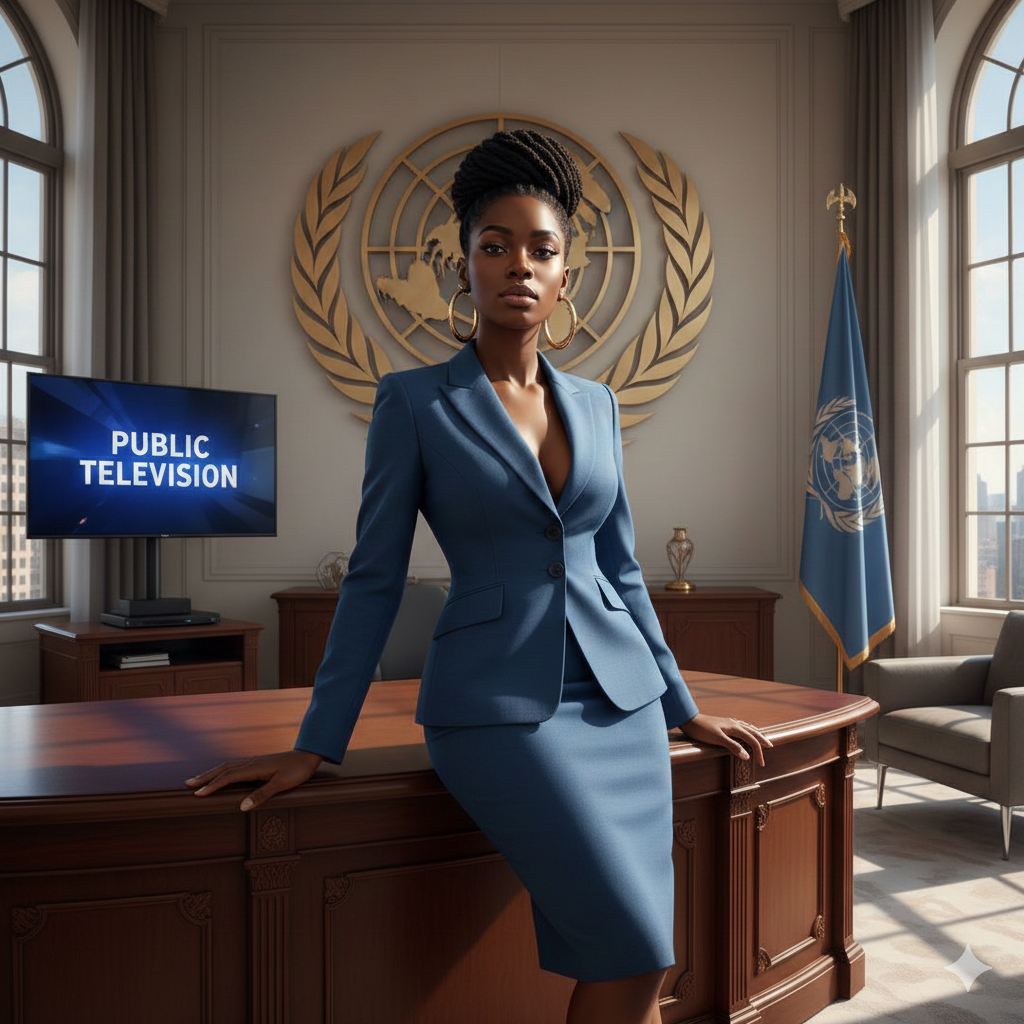
The dissolution of the Corporation for Public Broadcasting (CPB) in early 2026 marks a watershed moment in American history, signaling the end of a 58-year commitment to universal, non-commercial education. For decades, the CPB acted as the bedrock for 1,500 local stations, ensuring that every American—regardless of income or geography—had access to high-quality information. Its absence creates a vacuum that private markets are ill-equipped to fill, precisely at a time when national cognitive and educational trends suggest we need it most.
The Educational Void
The most immediate and devastating impact of the CPB’s end is the loss of the Ready To Learn initiative. Public broadcasting was the only platform providing research-based, ad-free educational content like Sesame Street and Molly of Denali to the 36 million children who lacked access to preschool.
Unlike commercial “educational” apps designed for engagement and profit, CPB-funded content was built on rigorous pedagogy. Studies have shown that children who regularly engage with public media show measurable gains in:
- Early Literacy: Recognition of letters, sounds, and phonemic awareness.
- Numeracy: Foundational math skills and problem-solving.
- Executive Function: The ability to focus, follow directions, and manage emotions—skills often eroded by the fast-paced, “high-arousal” editing of commercial cartoons.
The Crisis of Declining IQ
America is currently grappling with a “Reverse Flynn Effect.” After a century of rising scores, recent data from the journal Intelligence (2023) shows a decline in American IQ scores, particularly in verbal reasoning and mathematical ability. Experts attribute this to “environmental” factors: increased screen time on fragmented social media, a decrease in deep reading, and the erosion of formal educational supports.
Education is the most robust tool known to raise and maintain intelligence. By removing the CPB, the U.S. has effectively dismantled its most accessible “classroom.” Without a public alternative, the “knowledge gap” between wealthy families who can afford private tutors and low-income families will widen, leading to a permanent decline in national human capital.
The UN as a Digital Substitute?
While no international body can replace a local broadcaster, the United Nations (UN) provides several resources that can act as a partial “digital safety net” for the educational content lost with the CPB:
| UN Agency | Educational | Initiative |
| UNESCO | Global Literacy | The Global Education Coalition provides open-source digital learning platforms and “Radio Education” toolkits designed for underserved areas. |
| UNICEF | Early Childhood | The Learning Passport, a collaboration with Microsoft, offers high-quality, curriculum-aligned digital learning for children even in low-connectivity environments. |
| UN News | Fact-based Journalism | While not a “broadcaster” in the traditional sense, the UN provides multi-language, non-partisan reporting that serves as a baseline for media literacy. |
The UN’s role is primarily to set standards and provide resources for developing nations, but in the absence of a national American public media system, their Open Educational Resources (OER) may become essential tools for American educators.
The death of the CPB is not merely a budget cut; it is a retreat from the ideal of a “better-informed citizenry.” If America is to reverse its current cognitive decline, it must find a way to re-institutionalize public education, whether through a new digital public trust or by integrating more deeply with global educational standards provided by organizations like the UN.