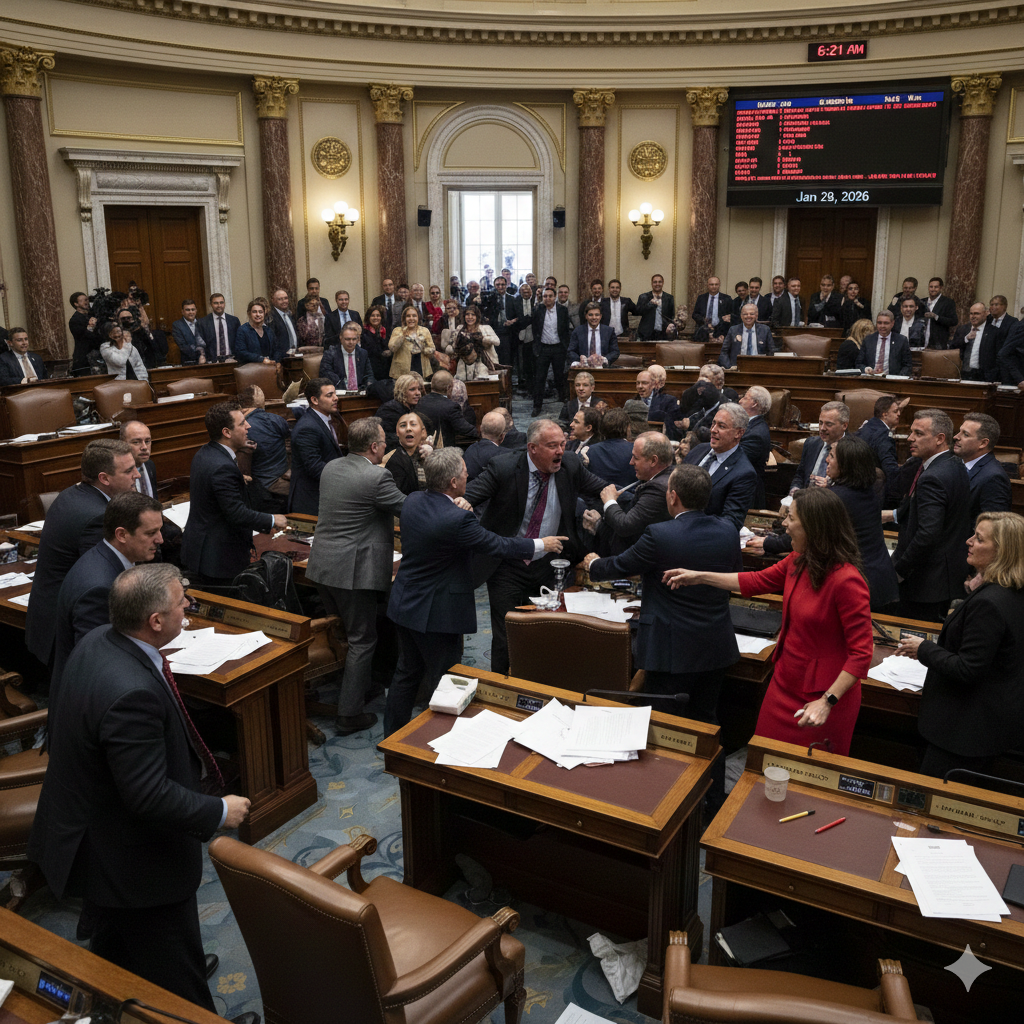
The Cracks in the Pillar: Profanity and the Erosion of American Civility
In the grand architecture of a functioning democracy, civility is not merely a decorative flourish; it is a load-bearing pillar. It provides the framework through which citizens and leaders navigate deep-seated disagreements without collapsing into chaos. However, in recent years, this pillar has begun to show alarming cracks, manifested most visibly in the normalization of profanity. What was once the language of the “private room” has become a staple of the public square—used not only by regular citizens in the heat of protest but, more disturbingly, by the very officials sworn to uphold the dignity of the state. While some argue that coarse language is merely an authentic expression of passion, its rise signals a deeper, more systemic decay in the social fabric.
The Breakdown of Presidential and Local Decorum
The erosion of verbal standards is perhaps most jarring when it comes from the highest offices in the land. President Donald Trump has frequently pushed the boundaries of political decorum, famously using a middle-finger gesture toward a heckler during a visit to a Michigan Ford plant in early 2026. While his supporters often view such acts as “toughness” or a refusal to be intimidated, the use of obscene gestures by a Head of State fundamentally alters the gravity of the office, turning the presidency into a theater of schoolyard confrontation.
This trend is not confined to one side of the aisle. In Minneapolis, Mayor Jacob Frey made headlines for telling federal agents to “get the f*** out” of his city following a contentious ICE shooting. While Frey defended his language as a proportional response to a loss of life, his choice of words bypassed the diplomatic channels required for inter-governmental cooperation. Similarly, Representative Ilhan Omar, after surviving a terrifying physical attack at a Minneapolis town hall in January 2026, used profanity to describe her assailants. While it is a relief that she was not harmed and her resilience is commendable, the public use of such language by a federal lawmaker—even in a moment of extreme duress—reinforces the idea that “low” language is the new standard for “high” office.
Profanity as a Tool of Escalation
The shift in political rhetoric has a “trickle-down” effect on the general public. When leaders swear, they grant a silent permission for the citizenry to do the same. This is most evident in the ongoing tensions regarding immigration enforcement:
- ICE Agents: Reports have surfaced of federal agents using profanity to intimidate or move crowds during operations.
- Protesters: Activists frequently use expletive-laden chants and signs, viewing “polite” speech as a tool of the status quo that fails to capture the urgency of their cause.
While both sides may feel their anger is justified, the result is a linguistic arms race. When “f-bombs” become the default setting for communication, the nuance required for policy solutions is lost. We cease to see political opponents as neighbors with different ideas and begin to see them as enemies who only understand the language of aggression.
The Warning Signs of Societal Decline
Sociologists and historians have long suggested that the health of a society is reflected in its adherence to shared norms. As profanity and incivility rise, they serve as a leading indicator of social dissolution. When a society loses its ability to maintain a baseline of mutual respect, the following consequences often occur:
- Erosion of Trust: Constant vulgarity signals a lack of self-control and professional standards, causing the public to lose faith in the stability of their institutions.
- Increased Polarization: Profanity is often used to “signal” group membership. It creates an “us vs. them” dynamic where the goal is to insult the other side rather than persuade them.
- The Path to Violence: Language is the precursor to action. When we dehumanize others through obscene rhetoric, we lower the psychological barrier to physical conflict.
Conclusion: The Necessity of Restraint
Civility is not about being “nice”; it is about maintaining a functional environment where a diverse population can coexist. Even if we accept that “words are just words,” they are the primary tools we use to build our world. If our leaders and citizens continue to trade the precision of civil discourse for the blunt force of profanity, we risk more than just our manners—we risk the very stability of our republic. For a society to survive, it must be able to speak to itself with a level of dignity that reflects the value of the democracy it inhabits.