Categories
Economics Social Issues

Vagrancy and Society

The Case for Structured Reintegration: A Keynesian and Socialist Approach to Vagrancy

The presence of widespread homelessness in modern society is often viewed through two narrow lenses: either as a criminal nuisance to be purged via incarceration or as an unfortunate “lifestyle choice” to be tolerated under the guise of civil liberties. Both perspectives fail the individual and the state. Homelessness is fundamentally a failure of social and economic architecture—it is detrimental to the health of the individual, the safety of the community, and the productivity of the nation.


Categories
Economics Health Care Social Issues

SNAP is a Fundamental Moral Imperative

The Moral and Practical Necessity of SNAP: A Lifeline Beyond Wages

The debate over the Supplemental Nutrition Assistance Program (SNAP) often centers on fiscal responsibility and labor participation. However, viewing SNAP solely through a budgetary lens ignores its fundamental role as a cornerstone of national stability and human dignity. While the ultimate goal of any healthy economy should be a “living wage” that allows all citizens to purchase food independently, cutting SNAP funds in the interim is not a solution—it is a moral and humanitarian failure. Protecting SNAP is not just a matter of policy; it is an fulfillment of a nation’s ethical and international obligations.

Categories
Education Social Issues Technology

Sweden leads the Way

The Great Recalibration: Why Sweden is Returning to Books and Why the World Should Follow

For over a decade, the global educational trend has been a headlong rush toward “one-to-one” digitalization—putting a tablet or laptop in the hands of every student. Sweden, a perennial leader in quality education and technological innovation, was an early pioneer of this movement. However, in a move that has sent ripples through the international community, the Swedish government recently announced a significant policy reversal: a “return to basics” that replaces screens with printed textbooks and replaces keyboards with pen and paper. This shift is not a rejection of modernity, but a science-based recalibration. To ensure the cognitive development of future generations, the UN should advocate for a similar return to physical materials in classrooms worldwide.

Categories
Economics Social Issues

Model Railroading and the Future of Society

The Vanishing Track: Why the Decline of Model Railroading Matters

The soft hum of a transformer and the rhythmic “click-clack” of miniature wheels on brass rails were once staples of the American basement and attic. Today, however, these sounds are fading into silence. The decline of model railroading is often dismissed as the natural obsolescence of an “old-fashioned” hobby in a digital age, but this perspective ignores the profound cultural, social, and civic loss that accompanies its disappearance. Model railroading is more than a craft; it is a visual manifesto for collective endeavor and a gateway to reimagining our public infrastructure.

Categories
Economics Education Social Issues

Department of Education Must Stay in Operation

The debate over the existence of the U.S. Department of Education (ED) often centers on the tension between federal oversight and state autonomy. While critics argue that education is a local matter and the federal bureaucracy is an unnecessary “middleman,” the Department plays a critical, irreplaceable role in protecting the rights of vulnerable students and ensuring that zip codes do not determine the quality of a child’s future. Abolishing the Department would not merely shift paperwork to the states; it would dismantle the essential “guardrails” of equity, civil rights, and financial stability in the American education system.

Categories
Conflict Power Social Issues

Ludwig van Beethoven

Today, December 16, marks the anniversary of Ludwig van Beethoven’s birth in 1770. While the world rightfully celebrates him as a titan of Western classical music—the man who bridged the Classical and Romantic eras—his legacy extends far beyond the stave and the symphony. Remembering Beethoven is essential not only for the “superb” nature of his compositions but because he was a radical thinker whose progressive social views and vision of human brotherhood laid the spiritual groundwork for modern ideals of world peace and global cooperation.

Categories
Economics Education Power Social Issues

She’s the Boss Now!

The Unfolding Power: Black Women’s Ascent in Education and Leadership

The narrative of American progress is continually being reshaped by the resilience and determination of Black women. Nowhere is this more evident than in their extraordinary and persistent rise in education, a foundational movement that is now beginning to translate into a commanding presence in positions of leadership and authority across all sectors. Black women are not just participating in the pursuit of knowledge; they are excelling, often outpacing all other demographic groups in educational attainment. This educational prowess is a potent force, signaling a powerful and inevitable shift in the landscape of leadership in the United States.

Categories
Conflict Power Social Issues

Dangers of Antisemitism

🌍 The Persistent Shadow: Addressing the Dangers of Modern Antisemitism

Antisemitism, often referred to as “the longest hatred,” is not a relic of the past but a dangerous and dynamic force in the contemporary world. Despite the universal condemnation of the Holocaust, Jewish people and institutions globally face a disturbing resurgence of prejudice, harassment, and violent attacks. This essay will explore the profound dangers of modern antisemitism, emphatically distinguish legitimate criticism of the State of Israel from anti-Jewish hatred, and outline the urgent need for more robust involvement by the United Nations to ensure the safety and security of Jewish communities worldwide.

Categories
Education Health Care Social Issues Technology

Generation Alpha

The Glass Barrier: Generation Alpha, iPads, and the Call for Public Oversight

Generation Alpha, born into a world where touchscreens are as ubiquitous as toys, faces a defining challenge: the iPad problem. These devices, heralded as tools for education and connection, have become, for many young children, digital pacifiers that carry profound and often detrimental effects on development. The excessive, unmonitored screen time experienced by this generation is a public health crisis in the making, and it demands a response that transcends the individual household. While parental responsibility is undeniable, the sheer scale of the digital environment and its impact on foundational human development necessitate that the government and social services step in to actively monitor and regulate the screen time of small children.

Categories
Education Social Issues

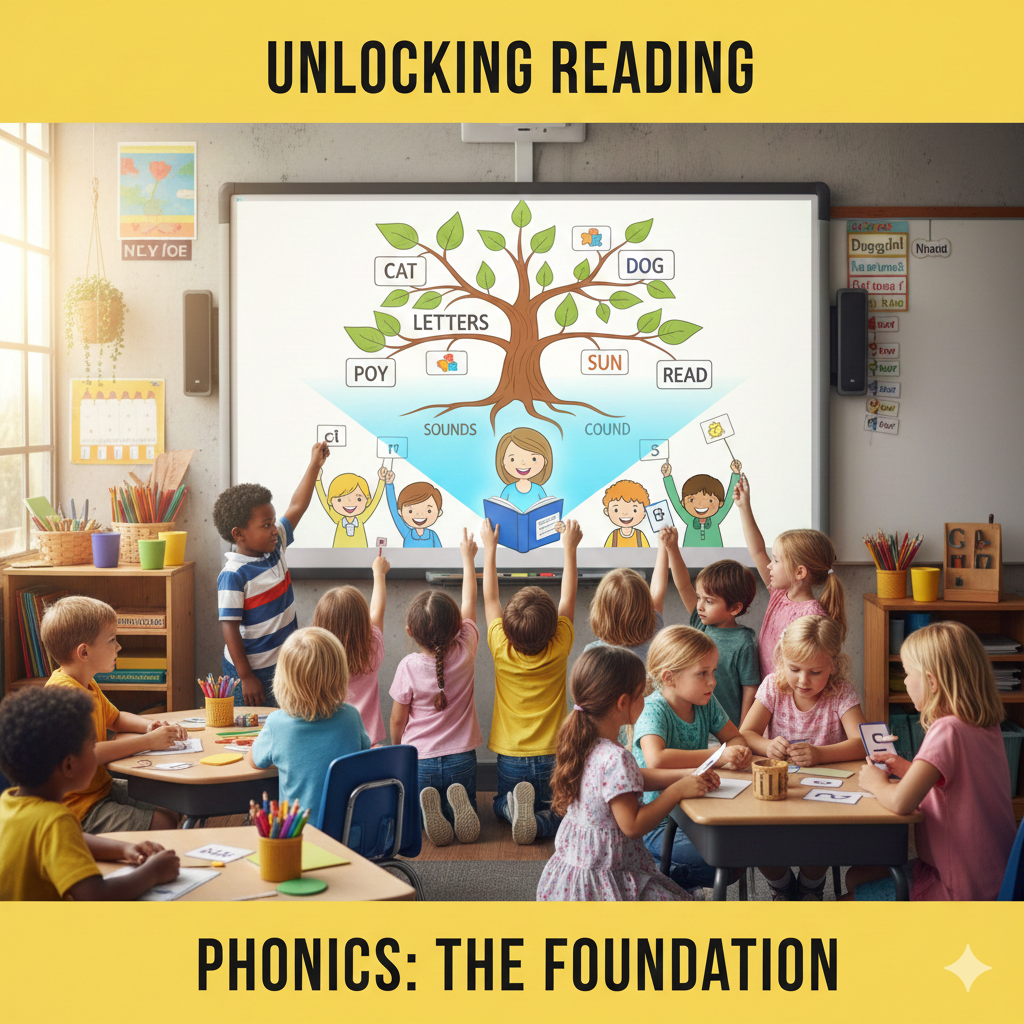
Phonics in Schools

📚 The Unbreakable Code: Reasserting the Primacy of Phonics in Education

The ability to read is the cornerstone of academic success and a fundamental driver of social mobility. At the heart of achieving widespread literacy lies phonics, a systematic instructional method that teaches children to decode the written word by understanding the relationship between sounds (phonemes) and the letters or groups of letters (graphemes) that represent them. The decision by many educational institutions to move away from systematic phonics instruction in the mid-to-late 20th century in favor of approaches like “Whole Language” and “Balanced Literacy” was a detrimental swing of the pedagogical pendulum—a mistake that research has consistently shown to have hindered reading proficiency for a generation of students. Re-embracing explicit, systematic phonics is not a regression but a necessary return to evidence-based practice.