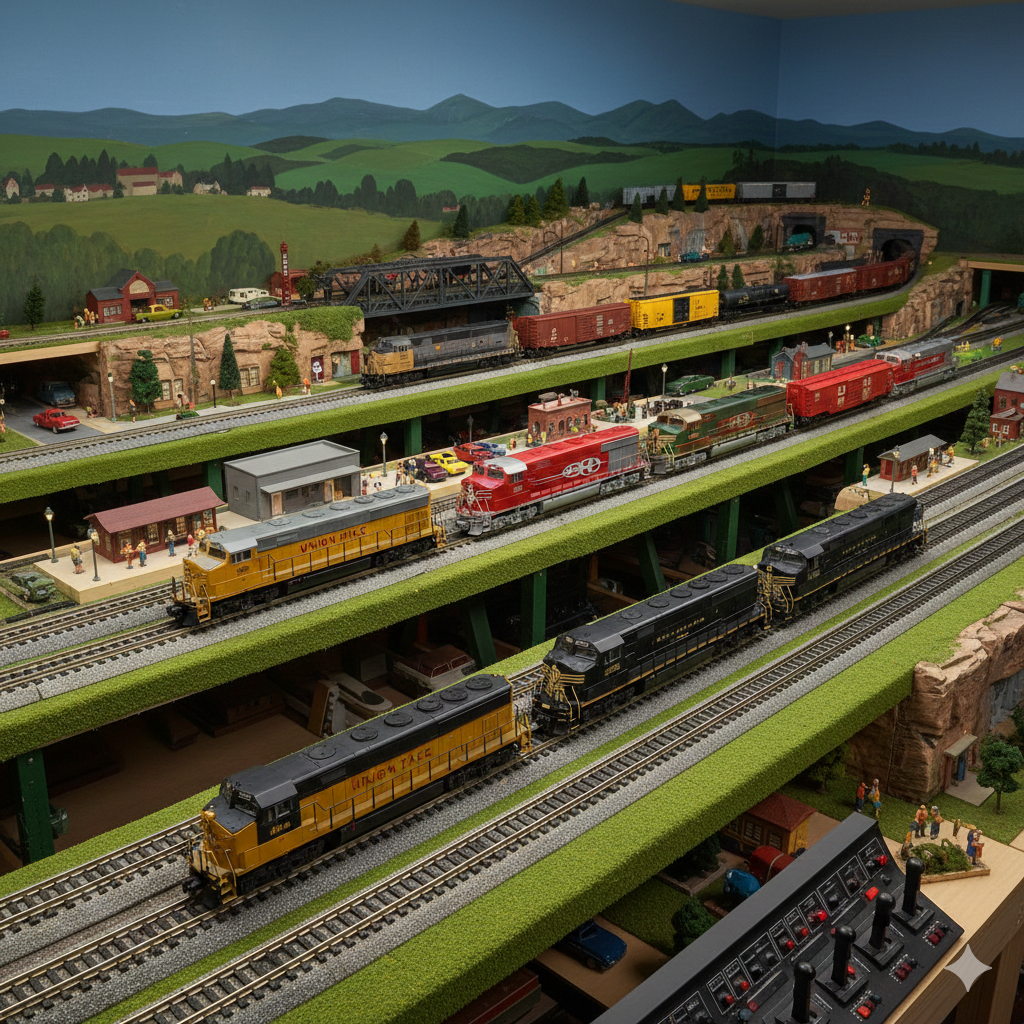
The Vanishing Track: Why the Decline of Model Railroading Matters
The soft hum of a transformer and the rhythmic “click-clack” of miniature wheels on brass rails were once staples of the American basement and attic. Today, however, these sounds are fading into silence. The decline of model railroading is often dismissed as the natural obsolescence of an “old-fashioned” hobby in a digital age, but this perspective ignores the profound cultural, social, and civic loss that accompanies its disappearance. Model railroading is more than a craft; it is a visual manifesto for collective endeavor and a gateway to reimagining our public infrastructure.
The Symbolism of the Rail: A Public Identity
While many real-world railroad companies are private entities, the concept of the train is inherently socialistic and communal. Unlike the automobile, which represents individualistic movement and atomization, the train represents a shared journey. It is a singular vessel carrying a diverse public toward a common destination.
Model railroading captures this “public” spirit. When a hobbyist builds a layout, they are not just playing with toys; they are acting as a literal “town planner.” They must coordinate stations, crossings, and industries, simulating the complex interdependency of a functioning society. The hobby fosters an appreciation for:
- Interconnectivity: How one town relies on the resources of another.
- Shared Space: The necessity of infrastructure that serves everyone simultaneously.
- Civic Engineering: The meticulous care required to keep a “commonwealth” running smoothly.
Cultivating the Next Generation of Transit Advocates
The decline of this hobby among young people is particularly concerning for the future of our environment and urban design. Early exposure to model trains instills a subconscious “pro-rail” bias. A child who spends hours perfecting a miniature transit system is far more likely to grow into an adult who supports public transportation initiatives and high-speed rail projects.
By losing model railroading, we lose a powerful tool for civic imagination. Without the tactile experience of managing a rail network, the next generation may view public transit as an abstract or foreign concept rather than a vital, efficient, and even beautiful component of modern life.
The Barrier of Entry: The Need for Regulation
One of the primary engines driving the hobby’s extinction is its prohibitive cost. What was once an accessible pastime for the working class has become a “luxury” hobby. Brands like Lionel, once the gold standard for every American child’s Christmas morning, now command prices that are often out of reach for average families.
If we view model railroading as a tool for public education and civic engagement, then its current market state is a failure. To save the hobby, we should consider:
- Price Regulation or Subsidies: Ensuring that entry-level starter sets are affordable for all socioeconomic backgrounds.
- Community Hubs: Supporting local clubs and libraries to provide communal layouts, moving the hobby out of private basements and back into the public eye.
- Educational Integration: Bringing “modular” railroading into STEM curricula to teach physics, electronics, and urban planning.
Conclusion
The “death” of model railroading would be a victory for isolationism and a loss for the collective imagination. By pricing out the youth and allowing the hobby to wither, we are inadvertently signaling that shared infrastructure and public endeavor are relics of the past. To encourage model railroading is to encourage a future where we value the tracks that connect us more than the fences that divide us.