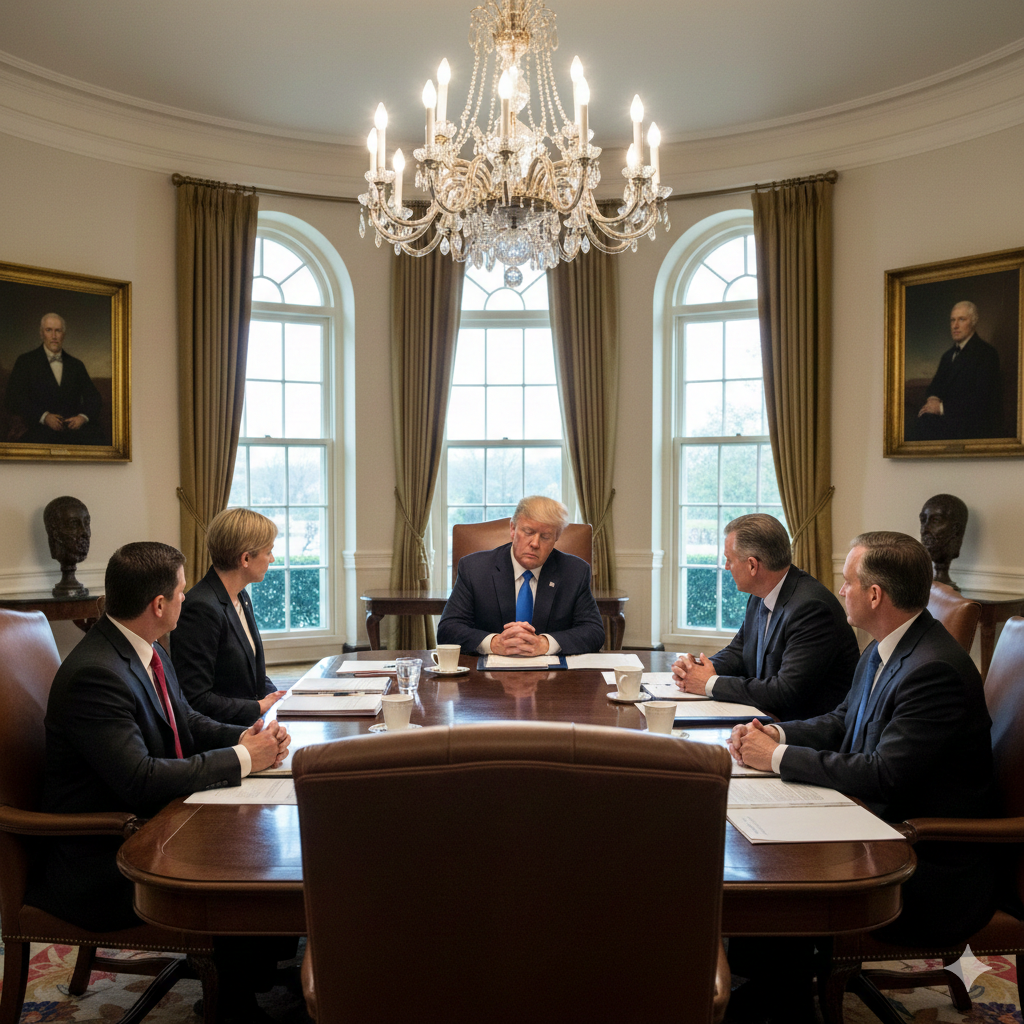
As 2025 draws to a close, the once-monolithic “MAGA” movement is showing visible signs of wear. For nearly a decade, Donald Trump maintained an iron grip on the Republican Party, but his second term has introduced a new and unfamiliar narrative: a simultaneous decline in physical vigor and political dominance. As the President nears his 80th birthday, the image of the high-energy insurgent is being replaced by that of a “lame duck” leader struggling with the demands of the Oval Office and a restive GOP.
The Visible Toll of Age
The physical decline of the President has become a frequent topic of discussion, moving from tabloid speculation to mainstream concern. Throughout late 2025, reports have increasingly highlighted a diminished public schedule and a visible lack of stamina.
One of the most striking symbols of this decline occurred during a high-stakes televised Cabinet meeting in early December 2025. As Commerce Secretary Howard Lutnick discussed trade policy, cameras captured the President appearing to nod off for several seconds, his eyes fully closed and his head momentarily drooping before he jerked back into focus. While White House Chief of Staff Susie Wiles defended the moment, claiming he was simply “listening intensely with his eyes closed,” the footage went viral, drawing unfavorable comparisons to the “Sleepy Joe” attacks Trump once leveled against his predecessor.
Furthermore, medical disclosures have added substance to these concerns. In late 2025, the White House confirmed a diagnosis of chronic venous insufficiency, explaining the visible swelling in his lower legs. These physical hurdles, combined with a public appearance schedule that has reportedly declined by nearly 40% compared to his first term, suggest a leader who is physically retreating from the rigors of the presidency.
A Fracturing Front
This physical frailty is mirrored by a growing political vulnerability. The “shock and awe” of his early second-term executive orders—ranging from federal workforce purges to controversial funding freezes—has met with unexpected resistance from within his own party.
- Legislative Defiance: In December 2025, a significant number of Republicans joined Democrats to pass the National Defense Authorization Act (NDAA) with language specifically designed to curb the President’s war powers, particularly regarding escalating tensions in South America.
- Approval Slump: Recent polling shows the President’s approval rating hovering in the mid-30s, a “cratering” of support that has emboldened GOP lawmakers to prioritize their own political survival over loyalty to the White House.
- The “Lame Duck” Reality: With the 2026 midterms approaching, potential successors within the party are beginning to distance themselves. Figures who once sought his endorsement are now quietly carving out independent platforms, signaling that the fear of a “mean tweet” or a primary challenge no longer holds the weight it once did.
The confluence of these factors suggests that Donald Trump is entering a new, more difficult phase of his political life. When a leader’s physical stamina is questioned, his perceived authority often follows. As more Republicans split ranks on key policy issues, the image of the President dozing off in a White House meeting serves as a potent metaphor for a movement that may finally be losing its momentum.