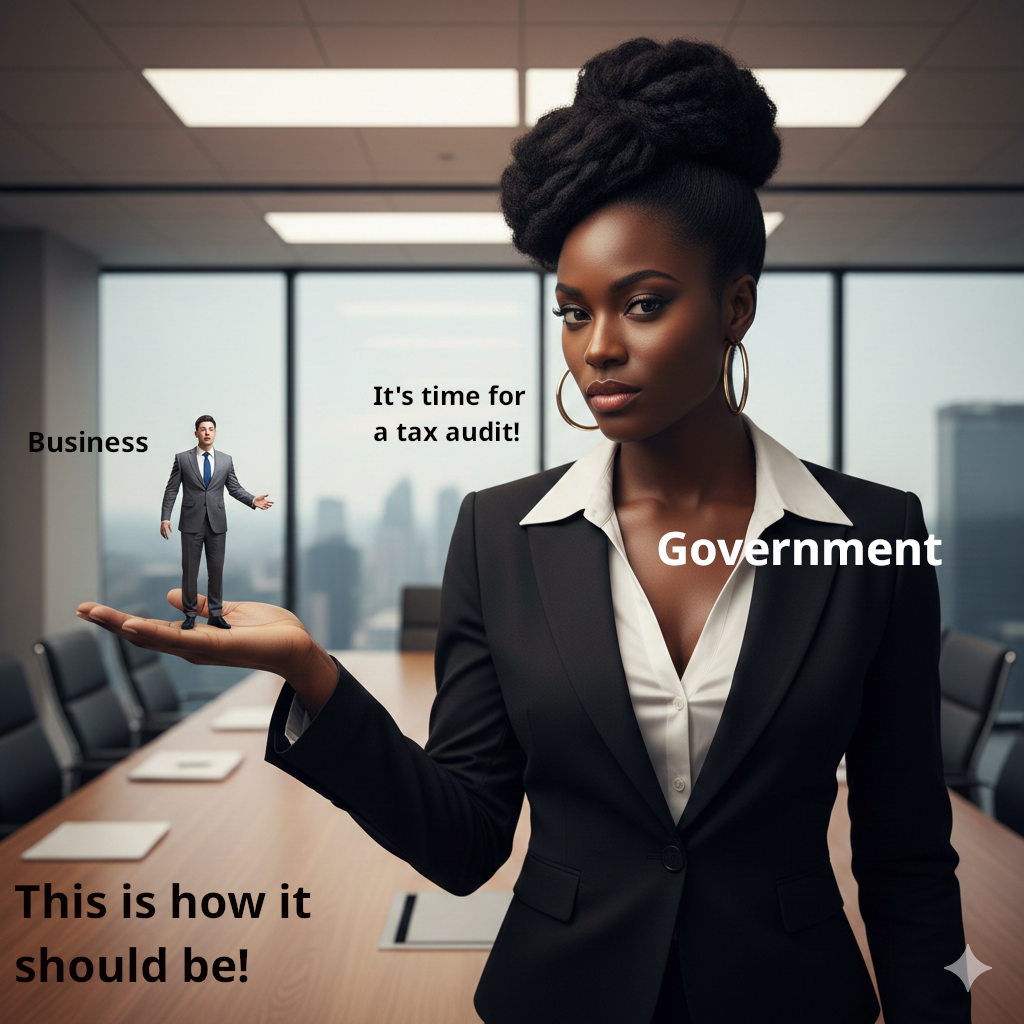
The question of how power should be distributed between the state and the private sector is one of the most enduring debates in political economy. While proponents of a free market argue for minimal interference, a strong case can be made that the collective well-being of a society depends on a government that is not merely a referee, but a dominant force. For a community to truly thrive, the government must possess the authority to redirect wealth through steep, progressive taxation and to keep corporate interests in check through rigorous regulation.
The Moral Priority of the Community
At its core, a government represents the collective will and the shared needs of the people, whereas a business represents the private interests of shareholders. When businesses grow too powerful, they often prioritize profit over public health, environmental safety, and labor rights.1
A dominant government acts as a necessary counterweight. By wielding “huge” regulatory power, the state ensures that the pursuit of profit does not come at the expense of the common good. Whether it is enforcing strict carbon emission limits or ensuring fair wages, the government serves as the guardian of the community’s long-term interests—interests that a quarterly earnings report can never capture.
The Necessity of Progressive Taxation
To fund the infrastructure of a civilized society—healthcare, education, and public safety—the state must have access to significant resources. This is where steep, progressive taxation becomes essential.
The logic is simple: those who have benefited most from the infrastructure and stability provided by the state should contribute the most to its upkeep. Steep taxes on high-income earners and large corporations prevent the unhealthy accumulation of generational wealth and ensure that the “circulatory system” of the economy continues to flow toward the public services that benefit everyone.
The Power Dynamic: The Audit and the Hand
To understand the ideal relationship between the state and the private sector, one might visualize the government as a steady, massive hand, and the business as a small, delicate object within its palm. During the majority of the year, the hand provides the stable surface upon which the object rests. However, during tax time, the true scale of power is revealed.
When the government initiates a tax audit, the metaphor becomes literal. The business, no matter how influential it seems in the marketplace, becomes “tiny” and “small” in the face of the state’s investigative reach. This power dynamic is not meant to be cruel, but to be corrective. The audit is the moment of ultimate accountability, where the state peeks into the smallest gears of a corporation to ensure it is fulfilling its debt to the society that allows it to exist. In this moment, the “huge” power of the government ensures that no entity, no matter how wealthy, is above the law or exempt from its social obligations.
Conclusion
A society where business is larger than government is a society at risk of exploitation. By maintaining a clear hierarchy—where the state holds the ultimate authority to tax steeply and regulate firmly—we ensure that the economy serves humanity, rather than humanity serving the economy. The smallness of business in the hands of the government is not a sign of a weak economy, but of a strong, healthy, and accountable democracy.