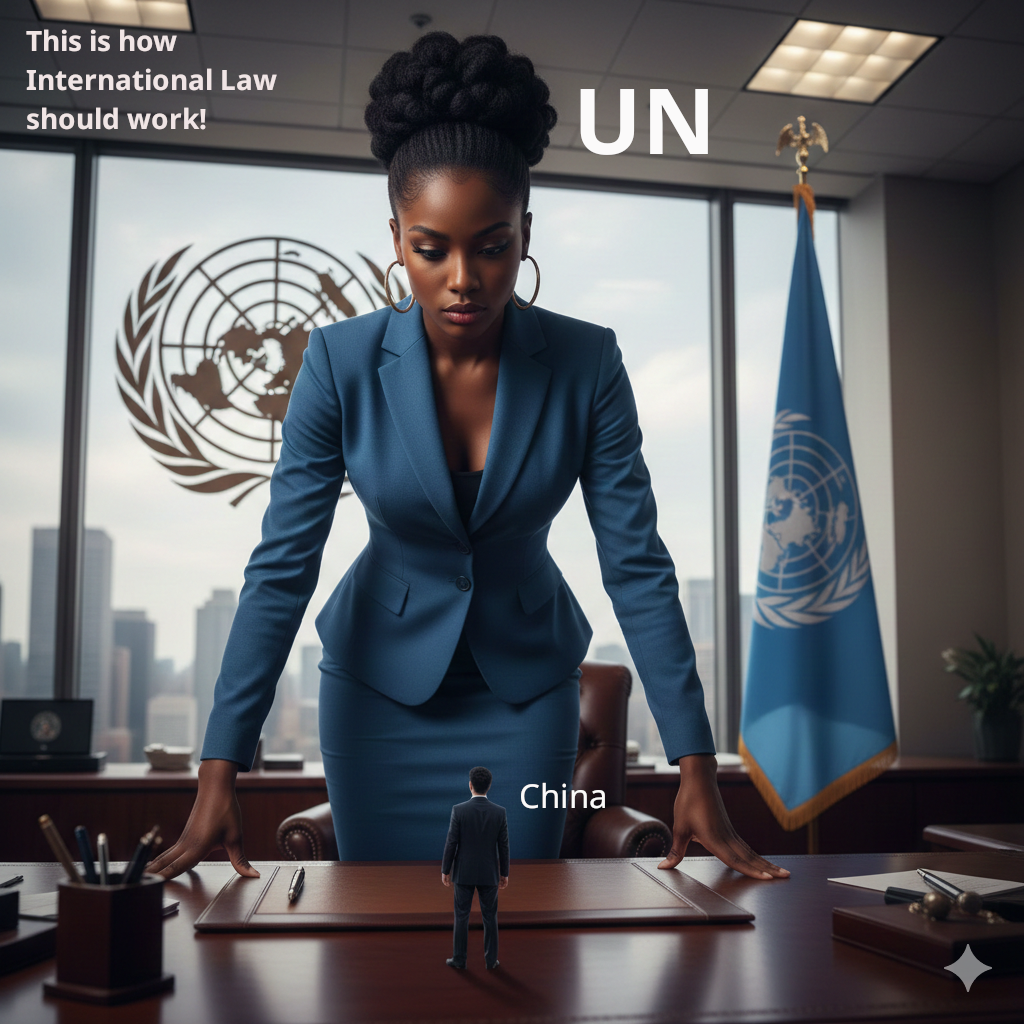
On December 29, 2025, the People’s Republic of China (PRC) launched “Justice Mission 2025,” a massive, live-fire military exercise encircling Taiwan. These maneuvers—the sixth major round of war games since 2022—simulated blockades of vital ports like Keelung and Kaohsiung, utilizing destroyers, bombers, and long-range missiles. While Beijing frames these actions as a “stern warning” against separatism, they represent a profound violation of the Taiwanese people’s fundamental right to peace of mind and expose a systemic failure in our current international order.
A Violation of the Right to Peace
The primary victim of these military theatrics is the civilian population of Taiwan. International law, specifically the UN Declaration on the Right of Peoples to Peace (1984), proclaims that the “peoples of our planet have a sacred right to peace.” When a superpower conducts “precision strike” simulations 24 nautical miles from a civilian coastline, it is not merely practicing maneuvers; it is engaging in state-sponsored psychological warfare.
For the 23 million people of Taiwan, these drills are an assault on their mental well-being and economic stability. Constant military intimidation creates a “new normal” of anxiety, where the threat of blockades and the specter of “all-dimensional deterrence” hang over everyday life. By weaponizing fear, the PRC violates the spirit of the UN Charter, which mandates that disputes be settled by peaceful means to avoid the scourge of war.
The Impotence of International Law
The “Justice Mission 2025” exercises highlight a glaring loophole in the current global architecture: the inability of international bodies to enforce the law against its own most powerful members.
- UNCLOS Violations: China’s claim of “sovereignty and jurisdiction” over the entirety of the Taiwan Strait contradicts the UN Convention on the Law of the Sea (UNCLOS), which protects high-seas freedoms of navigation in international corridors.
- The Veto Problem: As a permanent member of the UN Security Council, the PRC can effectively veto any resolution intended to curb its aggression. This creates a “might-makes-right” environment where international law is a suggestion for the powerful and a burden for the small.
The Need for a Stronger UN
The recurring nature of these “salami-slicing” tactics suggests that the world cannot continue to rely on a passive United Nations. To move toward a more “peaceful and productive world,” the UN must be empowered to act beyond mere rhetoric.
- Enforcement Mechanisms: The international community needs a framework where blatant violations of regional stability carry automatic diplomatic or economic consequences, bypassing the paralyzed Security Council.
- Recognition of Human Rights over Territory: The UN should prioritize the right to self-determination and the safety of the Taiwanese people over archaic territorial claims rooted in the mid-20th century.
- Active Mediation: Instead of standing on the sidelines, the UN must proactively “figure out how to solve this problem” by creating a formal platform for dialogue that includes Taiwan’s democratically elected representatives, rather than allowing its participation to be blocked by Beijing.
The “Justice Mission 2025” drills are more than a regional dispute; they are a challenge to the very idea of a rules-based international order. If the global community allows the peace of mind of an entire nation to be held hostage by military might, it signals the sunset of international law. The United Nations must step up, reform its enforcement capabilities, and ensure that the right to peace is a reality for all, regardless of the size of their neighbor’s military.
2 replies on “China’s Aggression Against Taiwan Must be Addressed!”
You raise an important point about how these exercises affect ordinary Taiwanese people beyond the geopolitical headlines. The psychological pressure and economic uncertainty created by repeated blockades and strike simulations tend to get overlooked in policy discussions. It would be interesting to see more international focus on protecting civilians from this kind of sustained coercion, not just responding to the military dimension.
It’s all about increasing UN authority and getting a more progressive policy out of the USA. To end all these type of problems, the UN has to be the organization to handle the issue and have the final say. There should be room to appeal, but international law is essential.