Categories
Conflict Economics Power Social Issues

It’s Always About Power and Control!

The Architecture of Order: Power, Hierarchy, and the Global “Giant”

The history of humanity is, at its core, a history of power. From the earliest tribal structures to the complexities of the modern state, the drive to influence, control, and organize has remained an inescapable facet of our existence. To imagine a world without power is to imagine a world without direction; to survive, humanity requires authority.

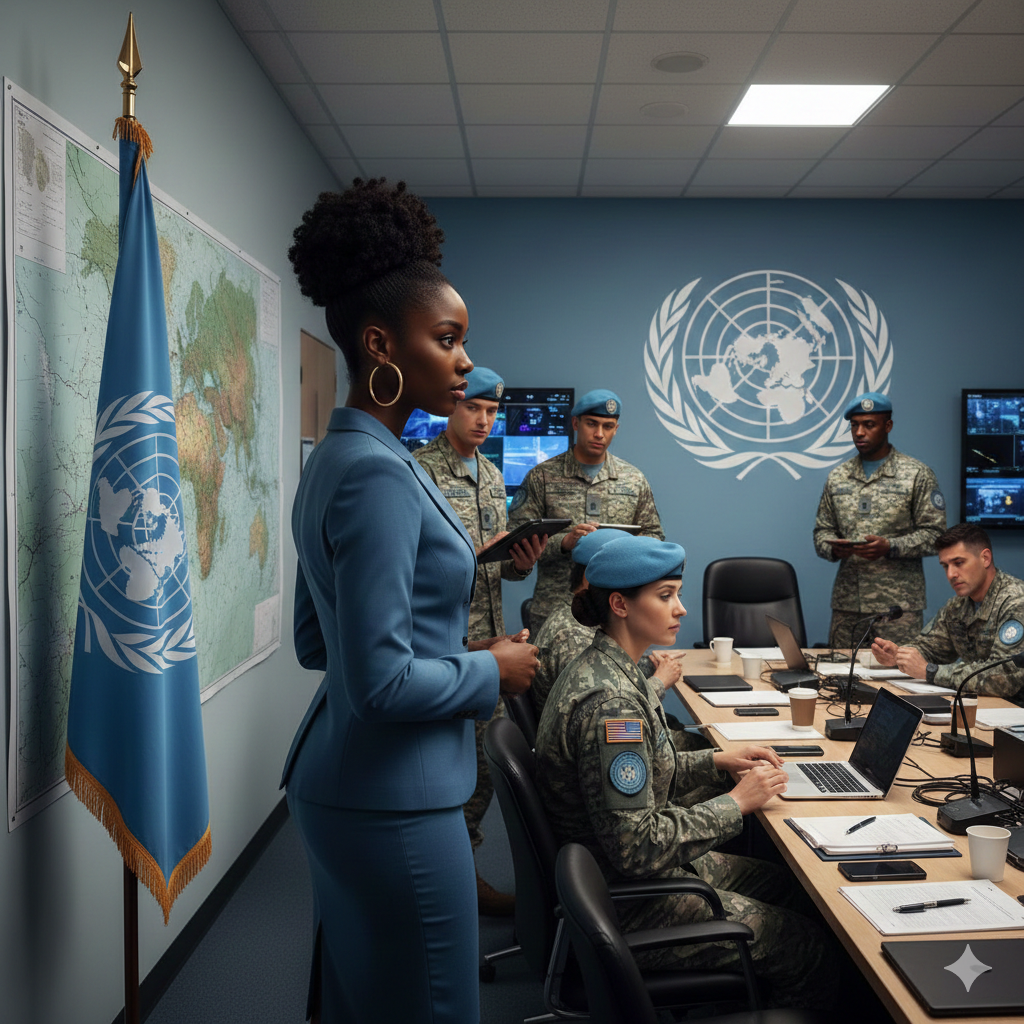
The question, therefore, is not whether power will exist, but how it is structured and what serves as its foundation. For a stable and prosperous future, we must move toward a global hierarchy that places a reorganized United Nations at the summit—a “giant” of organizational power capable of regulating nations, corporations, and the common good.


Categories
Conflict Economics Power Social Issues

Multilateral Intervention by the United Nations is the Necessary Policy to Follow

The Crisis of Unilateralism: A Case for Multilateral Accountability in Venezuela

The escalating tensions between the United States and Venezuela have reached a critical juncture that threatens regional stability and undermines the foundation of international law. While the United States justifies its military posture and economic blockades as a necessary crusade against “narco-terrorism,” its unilateral approach—characterized by extrajudicial maritime strikes and sweeping sanctions—circumvents the global legal order. Simultaneously, the Venezuelan government cannot be shielded from scrutiny; substantive evidence suggests the state has devolved into a “gangster state” where high-ranking officials facilitate the global drug trade. This dangerous deadlock demonstrates that neither unilateral aggression nor sovereign impunity is a viable path forward. Instead, the situation demands a robust, centralized response from the United Nations to address both criminal culpability and illegal aggression.

Categories
Conflict Economics Health Care Social Issues

Health Care Must be Given to Everyone

The Looming Crisis: Expiring ACA Subsidies and the Moral Mandate for Universal Care

As of January 2026, the United States stands at a precarious health care crossroads. The expiration of the enhanced premium tax credits—originally enacted during the pandemic and extended through 2025—has begun to trigger a massive financial shock for millions of Americans. For many, the “subsidy cliff” is no longer a theoretical policy debate; it is a monthly bill that has doubled or tripled overnight. As the nation moves toward the next federal election cycle, the urgency to transform this temporary fix into a permanent, universal right has never been greater.

Categories
Economics Education Power Social Issues Technology

Happy New Year!

A Dawn of Unity: Why the Light of Progress Still Shines

Happy New Year! As the calendar turns and we step into the fresh light of a new beginning, there is a natural inclination to look toward the horizon with a mixture of trepidation and anticipation. While the world often feels fractured by borders, ideologies, and old grievances, the dawn of a new year reminds us that time is an ally of transformation. There is a profound, evidence-based hope that the world is moving toward a more united, progressive, and enlightened future.

Categories
Economics Health Care Social Issues Technology

Nutrition Policy and the SNAP Program

The shift toward restricting Supplemental Nutrition Assistance Program (SNAP) benefits to exclude “junk food” like candy and soda is an initiative that, on the surface, appears to align with the goal of improving public health. Proponents argue that taxpayer dollars should prioritize nutrition over empty calories. However, a closer look at the current implementation reveals that these changes—spearheaded by the Trump administration through broad state-level waivers—may be more disruptive than beneficial. While promoting healthy eating is a noble goal, the current approach lacks sufficient scientific backing, threatens the economic stability of retailers, and risks raising food prices for all consumers.

Categories
Conflict Economics Power Social Issues

It’s the Function of the United Nations to Secure World Peace

In late 2025, the global diplomatic stage shifted toward Mar-a-Lago, Florida, where President Donald Trump hosted two of the world’s most pivotal leaders: Ukrainian President Volodymyr Zelenskyy and Israeli Prime Minister Benjamin Netanyahu. These meetings, occurring back-to-back, highlighted a “deal-maker” approach to foreign policy that largely bypasses traditional international bureaucracies.

Categories
Conflict Power Social Issues Technology

China’s Aggression Against Taiwan Must be Addressed!

On December 29, 2025, the People’s Republic of China (PRC) launched “Justice Mission 2025,” a massive, live-fire military exercise encircling Taiwan. These maneuvers—the sixth major round of war games since 2022—simulated blockades of vital ports like Keelung and Kaohsiung, utilizing destroyers, bombers, and long-range missiles. While Beijing frames these actions as a “stern warning” against separatism, they represent a profound violation of the Taiwanese people’s fundamental right to peace of mind and expose a systemic failure in our current international order.

Categories
Economics Social Issues

Family Agriculture is Important for Many Reasons

The Vital Heartbeat: Why Supporting Small Family Farms Matters

In an era defined by industrial globalization and massive corporate agricultural chains, the small family farm can sometimes seem like a relic of the past. However, these farms are far from obsolete; they are the foundational pillars of a resilient society. Beyond merely growing crops, small family farms serve as the lifeblood of rural communities, the guardians of food security, and the anchors of social stability.

Categories
Conflict Power Social Issues Technology

United Nations and Psychological Maturity

The Maturity of Peace: The Case for a Truly Empowered United Nations

In the final days of 2025, the world remains caught in a paradoxical loop: as our technological capacity for destruction reaches new heights, our global mechanisms for preventing that destruction remain tethered to the mid-20th century. Recent events in Ukraine and Nigeria serve as stark reminders that the current international order is insufficient. To move beyond this cycle of violence, we must recognize that empowering the United Nations is not merely a political necessity; it is a profound expression of psychological and moral maturity.

Categories
Conflict Economics Power Social Issues

United Nations Must Lead the Way in the Fight Against Terrorism

The Case for Multilateralism: Strengthening Legitimacy in the Fight Against Terrorism

The recent U.S. airstrikes in northwest Nigeria, conducted in December 2025, have reignited a critical debate regarding the unilateral use of military force in the global war on terror. While the United States cited the protection of persecuted communities and the elimination of ISIS-Sahel militants as the primary drivers for the strikes, the operation’s long-term effectiveness and international standing remain under scrutiny. To ensure that such interventions are viewed as legitimate by the global community, there is an urgent need for greater United Nations (UN) involvement and a shift toward a truly internationalized counterterrorism effort.