Categories
Social Issues

Genocide, War Crimes, and Crimes Against Humanity

The Gaza Crisis, Genocide, and the Failure of Global Governance

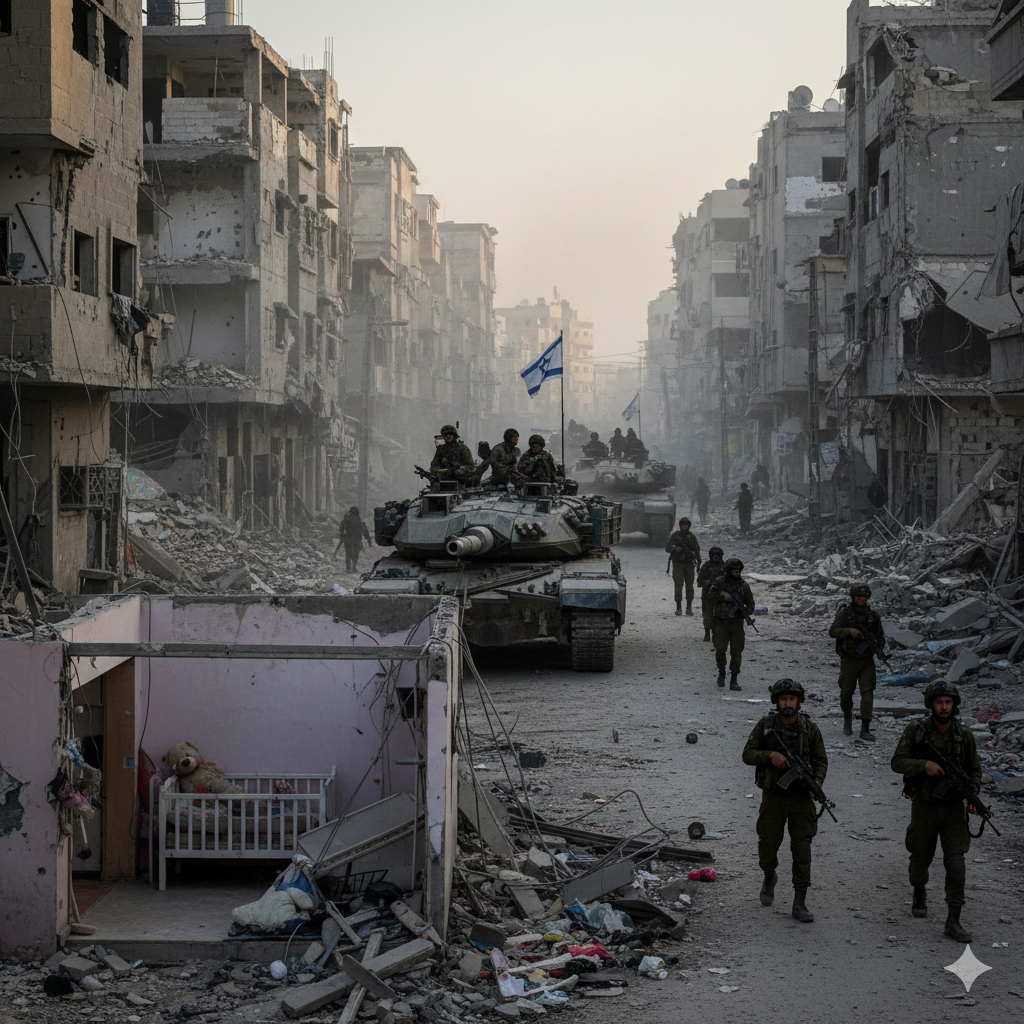
The humanitarian catastrophe unfolding in the Gaza Strip represents more than a conflict; it is a profound failure of the international system to uphold its most fundamental laws and principles. Rooted in an occupation that has persisted since 1967—and which many international bodies affirm continues despite the 2005 disengagement due to Israel’s control over Gaza’s borders, airspace, and sea—the crisis has metastasized into a political and legal debate centering on the charge of genocide. This situation demands an unequivocal accounting of international law, the prosecution of responsible leaders by institutions like the International Criminal Court (ICC), and a radical restructuring of the United Nations (UN) to ensure its efficacy, perhaps even granting it the enforcement powers of a dedicated military force.


Categories
Power Social Issues

Changing Demographics and Power Relations

The Ascent of the New Global Architect: A Speculative Essay on Power Demographics

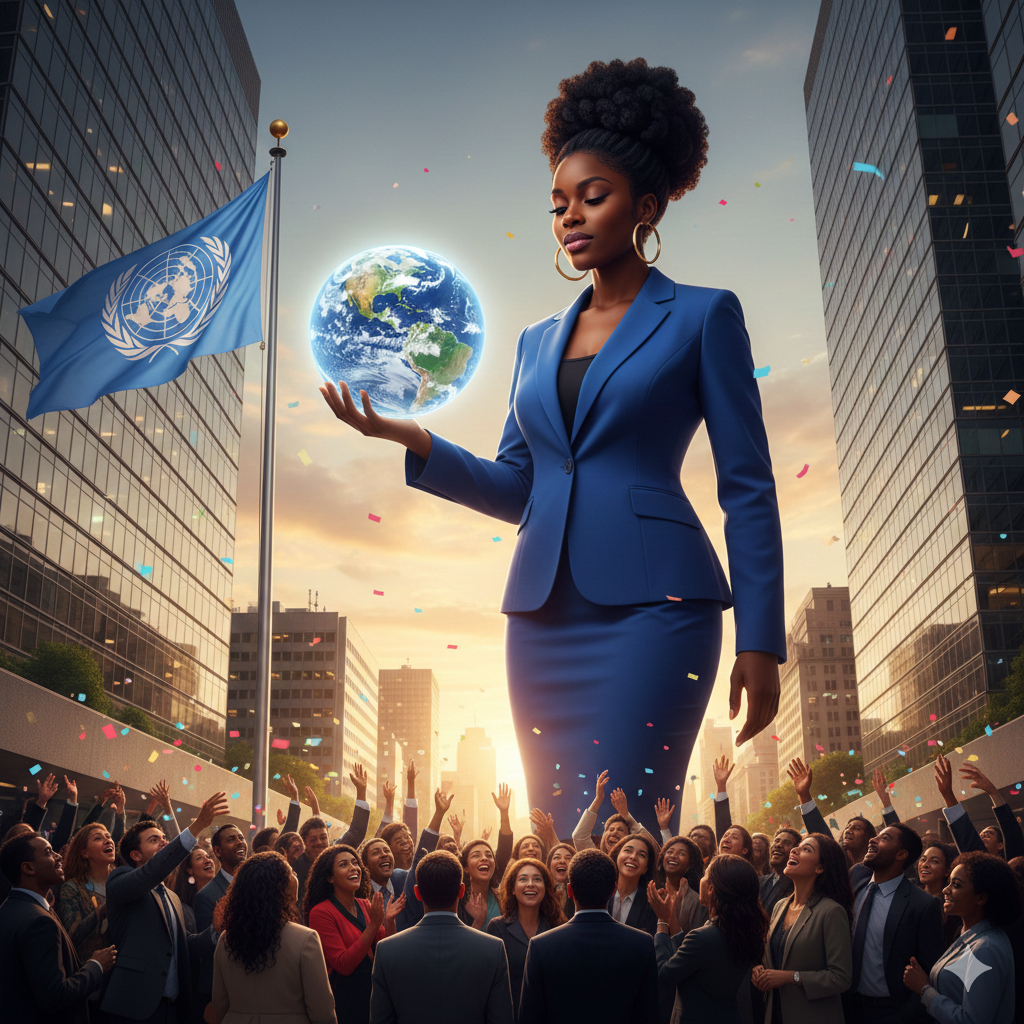
The architecture of global power is not fixed; it is a fluid structure, constantly reshaped by demographic currents and societal evolution. For centuries, the commanding heights were reserved almost exclusively for a single demographic: the white man. However, as the 21st century unfolds, shifts in gender and racial demographics are accelerating, challenging the legacy model and signaling a profound reorientation of leadership. This analysis posits a future where the intersectional strength, unique resilience, and multifaceted vision of Black women position them to ascend to, and ultimately command, the world’s most powerful institutions.

Categories
Education Social Issues

Place the Linux OS in Schools

The Case for Linux in School Systems: Fiscally Responsible and Educationally Superior

The modern educational environment requires a robust, secure, and cost-effective digital infrastructure. For decades, proprietary operating systems like Microsoft Windows have dominated school computer labs, but a closer examination reveals that this reliance often hinders both the budget and the learning outcomes of students. Transitioning school systems from Windows to a Free and Open Source Software (FOSS) platform like Linux is a financially responsible move that simultaneously delivers profound educational benefits, fostering a generation of digitally autonomous and critically thinking users.

Categories
Social Issues

UN Secretary-General Must be Elected by the Global Populations of the World

The Case for a Globally Elected UN Secretary-General: Enhancing Legitimacy and Effectiveness

The United Nations, founded in the ashes of the Second World War, stands as the primary institution for collective security and global cooperation. Yet, in a 21st-century world defined by rising global consciousness and interconnected problems, the UN faces a persistent challenge: a crisis of legitimacy and perceived ineffectiveness. The core of this deficit lies not only in the powerful veto held by the five permanent members of the Security Council (P5) but also in the method of selecting the Organization’s chief administrative officer. To realize the UN Charter’s opening declaration, “We the peoples of the United Nations,” the Secretary-General (SG) must transition from an appointed chief bureaucrat to a globally elected representative. Direct election by the world’s population would fundamentally strengthen the SG’s mandate, dramatically increasing the UN’s democratic legitimacy and operational effectiveness.

Categories
Power Social Issues

United Nations Must Have its Own Nuclear Arsenal to Keep World Peace

🌍 A Call for True Authority: Reimagining the Power of the United Nations

The United Nations, established in the crucible of world war, was founded on a noble vision: to save succeeding generations from the scourge of war. Yet, today, the daily news is a tragic ledger of conflicts, humanitarian crises, and gross violations of human rights that the organization seems perpetually under-equipped to resolve. The current structure, which relies heavily on the political will and resources of sovereign member states, has proven fundamentally inadequate to fulfill its mandate of maintaining international peace and security. To move beyond a deliberative forum and become a decisive force for global stability, the UN requires an unprecedented, radical endowment of real authority: its own standing military, an independent nuclear deterrent, and the power to impose a global income tax.

Categories
Social Issues

The United Nations Must Become the World’s Foremost Power

The Case for a Sovereign United Nations: Enforcing Global Democracy

The United Nations’ strong condemnation of the military coup in Guinea-Bissau, where elected authorities were overthrown mere days after national elections, highlights a critical paradox in modern international relations. While the UN successfully establishes and articulates universal norms of democratic governance and constitutional order, its power to enforce these principles remains fundamentally hobbled. The diplomatic warnings and expressions of “grave violation” issued by the UN, while morally necessary, are ultimately hollow without the teeth to reverse the actions of military juntas and dictators. This gap between moral authority and military capacity reveals a profound structural flaw, compelling the argument that the UN requires substantially increased global sovereignty, its own independent military force, and an empowered Secretary-General capable of becoming the world’s singular most powerful executive.

Categories
Social Issues

Socialism will be the Wave of the Future

The Inevitability of International Democratic Socialism: A Path to Global Utility

The trajectory of human civilization is a ceaseless search for systems that maximize collective well-being while preserving individual liberty. In this historical evolution, international democratic socialism, underpinned by a globally empowered United Nations (UN), presents itself not merely as a utopian ideal, but as the pragmatic and inevitable culmination of this search. This system, which combines political democracy with social ownership and economic democracy, is positioned to ultimately win out because it uniquely resolves the chronic instabilities of contemporary capitalism. By leveraging Keynesian principles for robust growth, establishing an unparalleled degree of social justice, and adhering strictly to the utilitarian ethic of the greatest good for the greatest number, this unified global framework promises to eliminate the deep-seated social tensions that plague the current world order, ensuring equitable advancement for all, including historically disadvantaged minority groups and races.

Categories
Power Social Issues

The Urgent Need for a Single and Effective World Authority

The Imperative for a Strengthened UN: Power Without Abuse and Exploitation

The United Nations, conceived in the wake of catastrophic conflict, serves as the central institutional expression of global cooperation. Yet, in an era defined by transnational crises—climate change, pandemics, and complex civil wars—the organization often appears paralyzed, a forum for debate rather than an instrument of action. To fulfill its mandate for peace, development, and security, the UN must undergo a radical transformation. This essay argues that the UN requires substantially enhanced authority in leadership, military capability, and fiscal independence to effectively address world and national issues. Crucially, this strengthening must be engineered not to compromise the independence of sovereign states, but to elevate global standards, foster democratic socialism as an ideological backbone, and empower the Secretary-General as the world’s foremost political authority.

Categories
Social Issues

Immigration Policy Must become Logical

When Policy Meets People: The Case for a Humane and Sensible Immigration System

The recent arrest of Bruna Caroline Ferreira, a Brazilian native detained by ICE near Boston on November 12th, serves as a stark illustration of the human cost and systemic flaws of current U.S. immigration policy. Ferreira, a long-term resident who arrived in the U.S. as a child, was reportedly a former recipient of Deferred Action for Childhood Arrivals (DACA) and was in the process of applying for a green card when she was apprehended. While federal authorities emphasize her overstayed visa from 1999 and an old charge disputed by her attorney, the essential tragedy of her case remains: a person deeply rooted in American life, with family ties to a high-ranking White House official, has been abruptly detained, separating her from her community and her American-citizen son. Her story crystallizes the urgent need for a pragmatic, two-pronged immigration policy: granting amnesty to the millions of undocumented immigrants already integrated into the nation’s fabric, while simultaneously establishing more accountable control over future arrivals.

Categories
Economics Social Issues

The Need for Democratic Socialism

The Case for Necessity: Why Democratic Socialism is Needed in America

The founding vision of the United States, as articulated in the Constitution’s preamble, is to “promote the general Welfare.” However, decades of economic deregulation and market-first policies have resulted in profound wealth disparities and systemic instability. Democratic socialism, defined not as totalitarian state control but as strong government regulation of the economy for the purpose of the general welfare, offers a necessary path to redress these failings. By prioritizing human needs over private profit in critical sectors, democratic socialism provides the regulatory tools required to build a more just, stable, and resilient society for all Americans.