Categories
Conflict Power Social Issues

UN Power for Conflict Resolution

The Silent Skies of the Arabian Sea: A Case for a Reformed UN

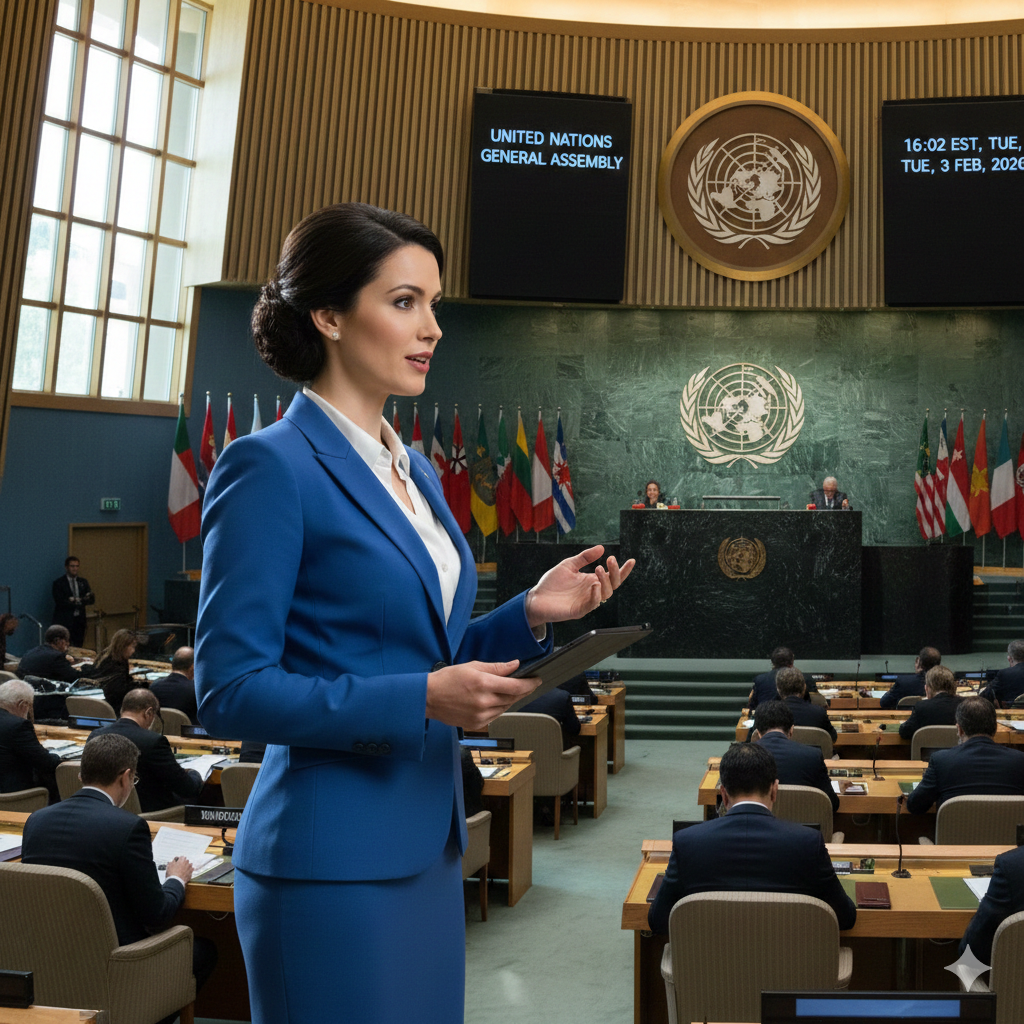
On February 3, 2026, the silence over the Arabian Sea was shattered when a U.S. Navy F-35C, launched from the USS Abraham Lincoln, intercepted and destroyed an Iranian Shahed-139 drone. According to U.S. Central Command, the drone had “aggressively approached” the carrier, ignoring de-escalatory signals. This engagement, occurring just 500 miles off the Iranian coast and amid a flurry of maritime harassment incidents in the Strait of Hormuz, is more than a tactical skirmish; it is a symptom of a fractured global order. The incident underscores a dangerous reality: in the absence of a robust, empowered international mediator, the world relies on the hair-trigger “self-defense” of individual nations, making regional war a matter of a single pilot’s split-second decision. To prevent such sparks from igniting a global conflagration, the United Nations must be granted greater authority to regulate and resolve interstate conflicts before they reach the point of kinetic engagement.


Categories
Environment Social Issues Technology

Electric Rail: Future of Transport

The move toward electric rail is more than just a nostalgic nod to the past; it is a critical pivot for a sustainable future. As we navigate the year 2026, the case for a “rail renaissance” has never been stronger. Transitioning back to a rail-centric society addresses three of the most pressing challenges of our era: the climate crisis, the inefficiency of urban sprawl, and the demand for seamless, stress-free travel.

Categories
Environment Social Issues

Groundhog Day: Tradition vs. Science

The Shadow of Tradition: The History and Science of Groundhog Day

Every February 2nd, a curious ritual unfolds in the small town of Punxsutawney, Pennsylvania. A crowd gathers at Gobbler’s Knob to watch a groundhog named Phil emerge from his burrow. If he sees his shadow, we are told to expect six more weeks of winter; if not, spring is supposedly just around the corner. While Groundhog Day is a charming piece of Americana, it serves as a perfect case study for how we balance cultural heritage with a commitment to scientific literacy.

Categories
Education Social Issues

Reading’s Lifelong Success Dividend

The Lifelong Dividend of the Open Book

In an era dominated by rapid-fire digital snippets and algorithmically curated feeds, the traditional act of reading for pleasure can seem like a quaint relic. However, for high school students, “getting lost in a book” is far more than a leisure activity; it is a high-yield investment in their future selves. Research consistently suggests that those who read for enjoyment during their formative years are better positioned for professional success, higher lifetime earnings, and more inclusive, progressive worldviews.

Categories
Economics Social Issues

AI Layoffs and Public Enterprise Solution

The Digital Guillotine: Amazon’s Recent Layoffs and the Case for a Modern Mixed Economy

In early 2026, the retail and cloud giant Amazon sent a fresh wave of shockwaves through the tech industry by announcing the elimination of approximately 16,000 corporate roles. This followed a previous cut of 14,000 workers in late 2025, bringing the total to 30,000 roles—nearly 10% of its corporate workforce—in what has become the largest downsizing in the company’s three-decade AI Layoffs and Public Enterprise Solution history. While leadership initially couched these decisions in the language of “cultural resets” and “removing bureaucracy,” the underlying catalyst is unmistakable: a fundamental shift toward an AI-driven infrastructure.

Categories
Economics Social Issues

Epstein Files: Legal Limits, Economic Focus

The Veil of Information: Why the Epstein Files May Yield No Day in Court

The recent release of millions of pages of documents related to the Jeffrey Epstein investigations, mandated by the Epstein Files Transparency Act of 2025, has sparked a firestorm of public interest. While the volume of data is staggering—comprising millions of emails, interview summaries, and images—the expectation that these files will trigger a wave of high-profile criminal prosecutions is likely misplaced. Behind the shocking headlines lies a complex web of legal barriers that make new indictments exceedingly difficult to secure.

Categories
Conflict Economics Social Issues

Healthcare Advocacy Through Protest Tactics

In recent weeks, the “ICE Out of Everywhere” movement has demonstrated a masterclass in grassroots mobilization. From the “National Shutdown” to the widespread use of mutual aid and “ICE watching,” these tactics have transformed abstract political dissent into a tangible, community-led defense system. While the focus has been on the immediate protection of immigrant neighbors from federal enforcement, the architecture of this movement offers a compelling blueprint for another life-or-death struggle: the fight for national health insurance.

By applying the same intensity, organizational structure, and community-first ethos to healthcare, advocates can shift national health insurance from a policy debate into a social imperative.

Categories
Conflict Economics Social Issues

United Nations Monopoly on Weapons for Peace

The Price of Power: Ending the Era of Global Militarism

For decades, the world has operated under the grim assumption that peace is merely the interval between wars, and that security can only be bought through the accumulation of more lethal weaponry. In 2024, global military spending reached a staggering $2.7 trillion, and by 2035, current trends suggest it could soar to over $6.6 trillion. This is more than a financial statistic; it is a profound moral failure.

Militarism—the glorification and expansion of armed force as the primary tool of foreign policy—does not create safety. Instead, it creates a “slippery slope” where nations with massive standing armies feel a pathological need to use them, transforming every diplomatic friction into a potential battlefield.

Categories
Economics Social Issues

Democrats’ Economic Justice Mission

The North Star of the Democratic Party: Why Economic Justice Must Remain Supreme

The current political landscape is a whirlwind of high-stakes drama. From the visceral outcries over ICE enforcement and the polarizing presence of Donald Trump to the daily commotion of street protests, the American public—and the Democratic Party itself—is frequently pulled into a reactive cycle. While these issues represent critical battles for civil rights and the rule of law, there is a looming danger that the party’s foundational “North Star” is being obscured. To maintain its soul and its efficacy, the Democratic Party must ensure that its primary mission remains the pursuit of economic justice: helping the poor, utilizing Keynesian principles to ensure full employment, and stabilizing the national economy.

Categories
Conflict Social Issues

ICE Accountability and Future Legal Risks

The Pendulum of Accountability: ICE and the Future of Federal Enforcement

The political landscape of the United States has long been characterized by a pendulum swing between administrative philosophies. However, as enforcement tactics under the current administration reach unprecedented levels of aggression, a significant legal and ethical question looms: what happens when the pendulum swings back? For those currently serving within Immigration and Customs Enforcement (ICE), the assumption of permanent political cover may be a dangerous miscalculation. History and emerging legal frameworks suggest that the “just following orders” defense is rarely a permanent shield against the shifting tides of federal and state oversight.