Categories
Conflict Economics Health Care Social Issues

New York City Nurse Strike

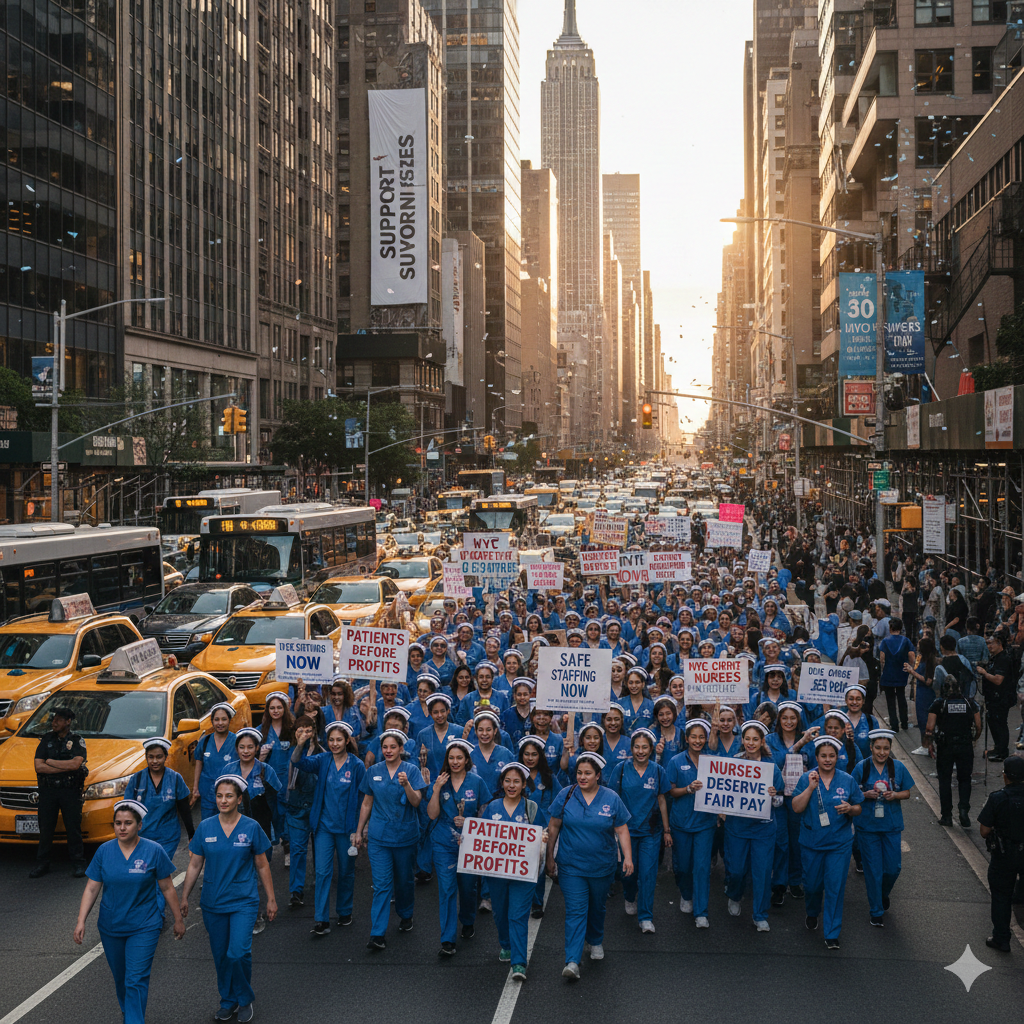
In January 2026, the streets outside New York City’s most prestigious medical institutions—Mount Sinai, Montefiore, and NewYork-Presbyterian—became the front lines of a historic labor struggle. Over 15,000 nurses walked off the job, initiating the largest strike in the city’s history. While critics often point to the disruption of care as a reason to avoid such actions, the reality is that the NYC nurse strike is not merely a dispute over paychecks; it is a necessary, moral stand for the sustainability of the healthcare system and the safety of the patients within it.

Categories
Conflict Economics Health Care Social Issues

Health Care Must be Given to Everyone

The Looming Crisis: Expiring ACA Subsidies and the Moral Mandate for Universal Care

As of January 2026, the United States stands at a precarious health care crossroads. The expiration of the enhanced premium tax credits—originally enacted during the pandemic and extended through 2025—has begun to trigger a massive financial shock for millions of Americans. For many, the “subsidy cliff” is no longer a theoretical policy debate; it is a monthly bill that has doubled or tripled overnight. As the nation moves toward the next federal election cycle, the urgency to transform this temporary fix into a permanent, universal right has never been greater.

Categories
Economics Health Care Social Issues Technology

Nutrition Policy and the SNAP Program

The shift toward restricting Supplemental Nutrition Assistance Program (SNAP) benefits to exclude “junk food” like candy and soda is an initiative that, on the surface, appears to align with the goal of improving public health. Proponents argue that taxpayer dollars should prioritize nutrition over empty calories. However, a closer look at the current implementation reveals that these changes—spearheaded by the Trump administration through broad state-level waivers—may be more disruptive than beneficial. While promoting healthy eating is a noble goal, the current approach lacks sufficient scientific backing, threatens the economic stability of retailers, and risks raising food prices for all consumers.

Categories
Economics Health Care Power Social Issues Technology

United Nations News is One of the Best Sources of Information

In an era of rapid-fire headlines and polarized media, the need for a reliable, comprehensive, and impartial source of information has never been more urgent. For those seeking to understand the intricate complexities of our globalized world, the United Nations news portal, news.un.org, stands as an essential resource. By providing direct access to the latest developments in international affairs and shining a light on humanitarian crises that often go overlooked, the site serves as a vital bridge between global citizens and the mission of the United Nations.

Categories
Conflict Economics Health Care Social Issues

Support OCHA to Help the World

Supporting the United Nations Office for the Coordination of Humanitarian Affairs (OCHA) is not merely an act of international charity; it is a strategic investment in the world’s most essential safety net. As the primary body responsible for synchronizing global disaster and conflict response, OCHA ensures that aid is not just delivered, but delivered effectively, fairly, and swiftly.

Categories
Economics Health Care Social Issues

Support Your Local Food Bank

The Vital Lifeline: Why Local Food Banks Matter in a Global Context

In a modern, organized society, the responsibility for ensuring that no citizen goes hungry is often viewed as a fundamental obligation of the state. Governments possess the infrastructure, tax revenue, and legislative power to enact broad social safety nets like SNAP or school lunch programs. However, the reality of poverty is frequently more immediate and complex than a centralized bureaucracy can handle. Supporting a local food bank is not merely an act of charity; it is a vital community intervention that fills the inevitable gaps left by government policy, while highlighting the need for a more robust international framework to address poverty at its root.

Categories
Economics Health Care Social Issues

SNAP is a Fundamental Moral Imperative

The Moral and Practical Necessity of SNAP: A Lifeline Beyond Wages

The debate over the Supplemental Nutrition Assistance Program (SNAP) often centers on fiscal responsibility and labor participation. However, viewing SNAP solely through a budgetary lens ignores its fundamental role as a cornerstone of national stability and human dignity. While the ultimate goal of any healthy economy should be a “living wage” that allows all citizens to purchase food independently, cutting SNAP funds in the interim is not a solution—it is a moral and humanitarian failure. Protecting SNAP is not just a matter of policy; it is an fulfillment of a nation’s ethical and international obligations.

Categories
Education Health Care Social Issues Technology

Generation Alpha

The Glass Barrier: Generation Alpha, iPads, and the Call for Public Oversight

Generation Alpha, born into a world where touchscreens are as ubiquitous as toys, faces a defining challenge: the iPad problem. These devices, heralded as tools for education and connection, have become, for many young children, digital pacifiers that carry profound and often detrimental effects on development. The excessive, unmonitored screen time experienced by this generation is a public health crisis in the making, and it demands a response that transcends the individual household. While parental responsibility is undeniable, the sheer scale of the digital environment and its impact on foundational human development necessitate that the government and social services step in to actively monitor and regulate the screen time of small children.

Categories
Economics Health Care Social Issues

Universal Healthcare is a Basic and Fundamental Human Right

The Churchville Imperative: Universal Healthcare as a Moral and Economic Necessity

The closure of a healthcare clinic, while a localized tragedy, often serves as a profound indicator of systemic national failure. The loss of the primary care facility in Churchville, Virginia, is a stark example of how America’s fragmented, for-profit healthcare system, exacerbated by ideologically driven cuts to essential safety nets, fails its most vulnerable citizens. This crisis, particularly prevalent in rural America, underscores an urgent need for a comprehensive, national health insurance system funded through progressive taxation—a framework that treats healthcare as a fundamental human right rather than a market commodity.