Categories
Economics Environment Technology

AI, Grid Strain, and Socialism

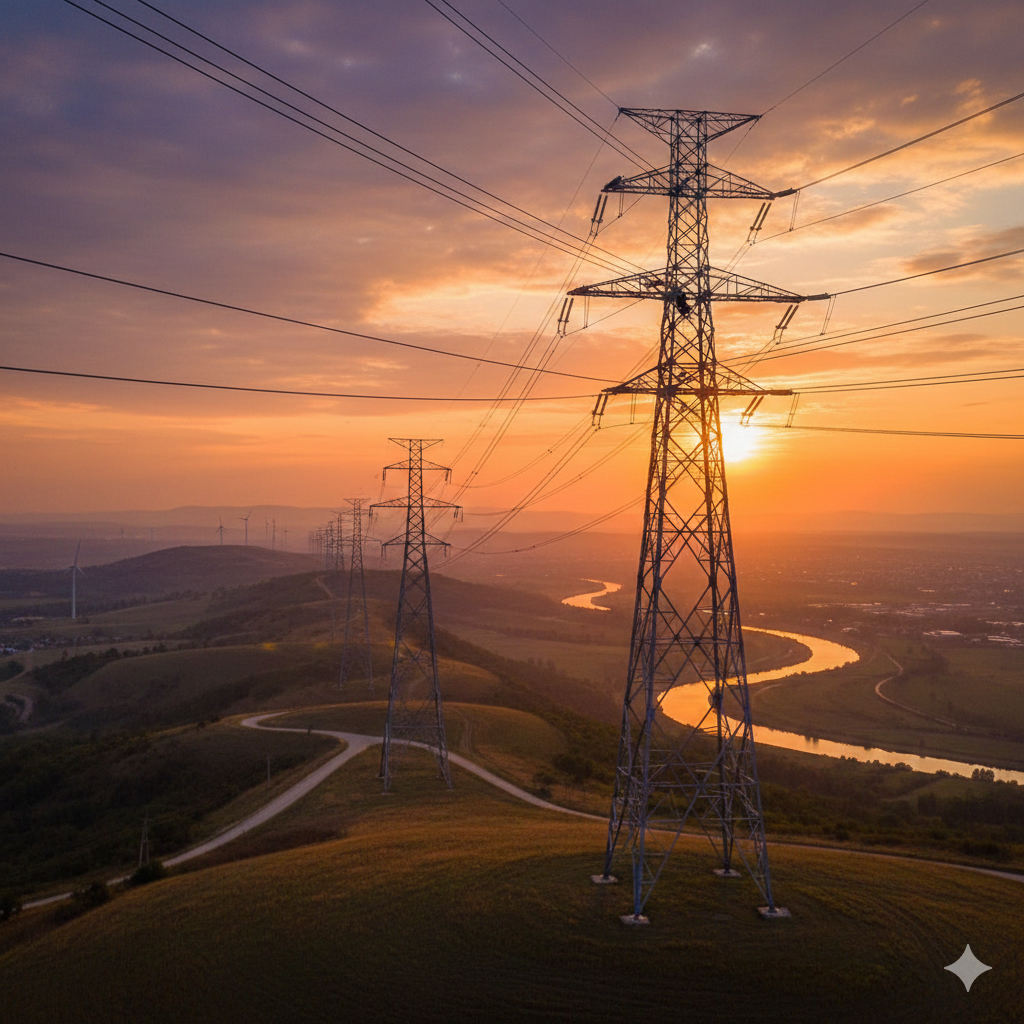
The recent reporting by CNN highlights a growing crisis in the American energy sector: residential electricity bills are skyrocketing, often rising at twice the rate of inflation. While factors such as aging infrastructure and extreme weather play a role, a primary driver is the unprecedented energy demand from artificial intelligence (AI) and the massive data centers required to power it. This situation exposes a fundamental flaw in the current privatized, market-driven utility system. To protect consumers and ensure a stable, affordable power grid, a socialist framework—prioritizing public need over corporate profit—is necessary to implement the stringent regulations required to fix these systemic failures.

Categories
Environment Social Issues Technology

Electric Rail: Future of Transport

The move toward electric rail is more than just a nostalgic nod to the past; it is a critical pivot for a sustainable future. As we navigate the year 2026, the case for a “rail renaissance” has never been stronger. Transitioning back to a rail-centric society addresses three of the most pressing challenges of our era: the climate crisis, the inefficiency of urban sprawl, and the demand for seamless, stress-free travel.

Categories
Environment Social Issues

Groundhog Day: Tradition vs. Science

The Shadow of Tradition: The History and Science of Groundhog Day

Every February 2nd, a curious ritual unfolds in the small town of Punxsutawney, Pennsylvania. A crowd gathers at Gobbler’s Knob to watch a groundhog named Phil emerge from his burrow. If he sees his shadow, we are told to expect six more weeks of winter; if not, spring is supposedly just around the corner. While Groundhog Day is a charming piece of Americana, it serves as a perfect case study for how we balance cultural heritage with a commitment to scientific literacy.

Categories
Economics Environment Technology

Tesla’s Mission Beyond Musk

The Car vs. The Creator: Why the Tesla Mission Must Transcend Musk

The electric vehicle (EV) revolution reached a critical tipping point in recent years, yet it now faces an unexpected psychological hurdle. For many, the Tesla brand—once a badge of honor for the environmentally conscious—has become inextricably linked to the polarizing political persona of its CEO, Elon Musk. However, to abandon the Tesla mission because of Musk’s rhetoric is to “throw the baby out with the bathwater.” The fundamental principle of the Tesla car—the acceleration of sustainable transport—remains one of the most vital industrial projects of the 21st century, and its success must be decoupled from the controversies of its founder.

Categories
Economics Environment Power

United Nations and the Impact of AI on the Environment

The Digital Cost of Intelligence: AI and the Global Environment

The rapid ascent of Artificial Intelligence (AI) has been hailed as the fourth industrial revolution, promising unprecedented efficiency and innovation. However, beneath the veneer of seamless digital interactions lies a physical reality with a staggering environmental price tag. As we move through 2026, the data confirms that AI is not merely a virtual phenomenon; it is a resource-intensive industry that strains global energy grids, depletes freshwater supplies, and accelerates the accumulation of toxic electronic waste. Because these environmental impacts cross national borders and involve the world’s most powerful multinational corporations, the solution cannot be found in a patchwork of local laws. Instead, the climate crisis fueled by AI requires a unified global response, necessitating the empowerment of the United Nations (UN) to regulate this “black box” industry for the survival of the planet.

Categories
Education Environment Social Issues

A Necessary Global Change

The Weight of Matter: Transitioning from Materialism to the Cerebral

For decades, the global standard for “success” has been measured by the accumulation of physical matter. In the “First World,” this has manifested as a relentless cycle of extraction, production, and waste. However, as our ecological boundaries reach a breaking point, it is becoming clear that the next stage of human evolution must be a pivot away from the physical and toward the cerebral. To save the environment, we must transition from a lifestyle defined by what we own to one defined by what we know, create, and experience.