Categories
Economics Education Social Issues

Public Broadcasting has to Endure for the Welfare of Humanity

The dissolution of the Corporation for Public Broadcasting (CPB) in early 2026 marks a watershed moment in American history, signaling the end of a 58-year commitment to universal, non-commercial education. For decades, the CPB acted as the bedrock for 1,500 local stations, ensuring that every American—regardless of income or geography—had access to high-quality information. Its absence creates a vacuum that private markets are ill-equipped to fill, precisely at a time when national cognitive and educational trends suggest we need it most.


Categories
Economics Education Power Social Issues Technology

Happy New Year!

A Dawn of Unity: Why the Light of Progress Still Shines

Happy New Year! As the calendar turns and we step into the fresh light of a new beginning, there is a natural inclination to look toward the horizon with a mixture of trepidation and anticipation. While the world often feels fractured by borders, ideologies, and old grievances, the dawn of a new year reminds us that time is an ally of transformation. There is a profound, evidence-based hope that the world is moving toward a more united, progressive, and enlightened future.

Categories
Education Social Issues Technology

Sweden leads the Way

The Great Recalibration: Why Sweden is Returning to Books and Why the World Should Follow

For over a decade, the global educational trend has been a headlong rush toward “one-to-one” digitalization—putting a tablet or laptop in the hands of every student. Sweden, a perennial leader in quality education and technological innovation, was an early pioneer of this movement. However, in a move that has sent ripples through the international community, the Swedish government recently announced a significant policy reversal: a “return to basics” that replaces screens with printed textbooks and replaces keyboards with pen and paper. This shift is not a rejection of modernity, but a science-based recalibration. To ensure the cognitive development of future generations, the UN should advocate for a similar return to physical materials in classrooms worldwide.

Categories
Economics Education Social Issues

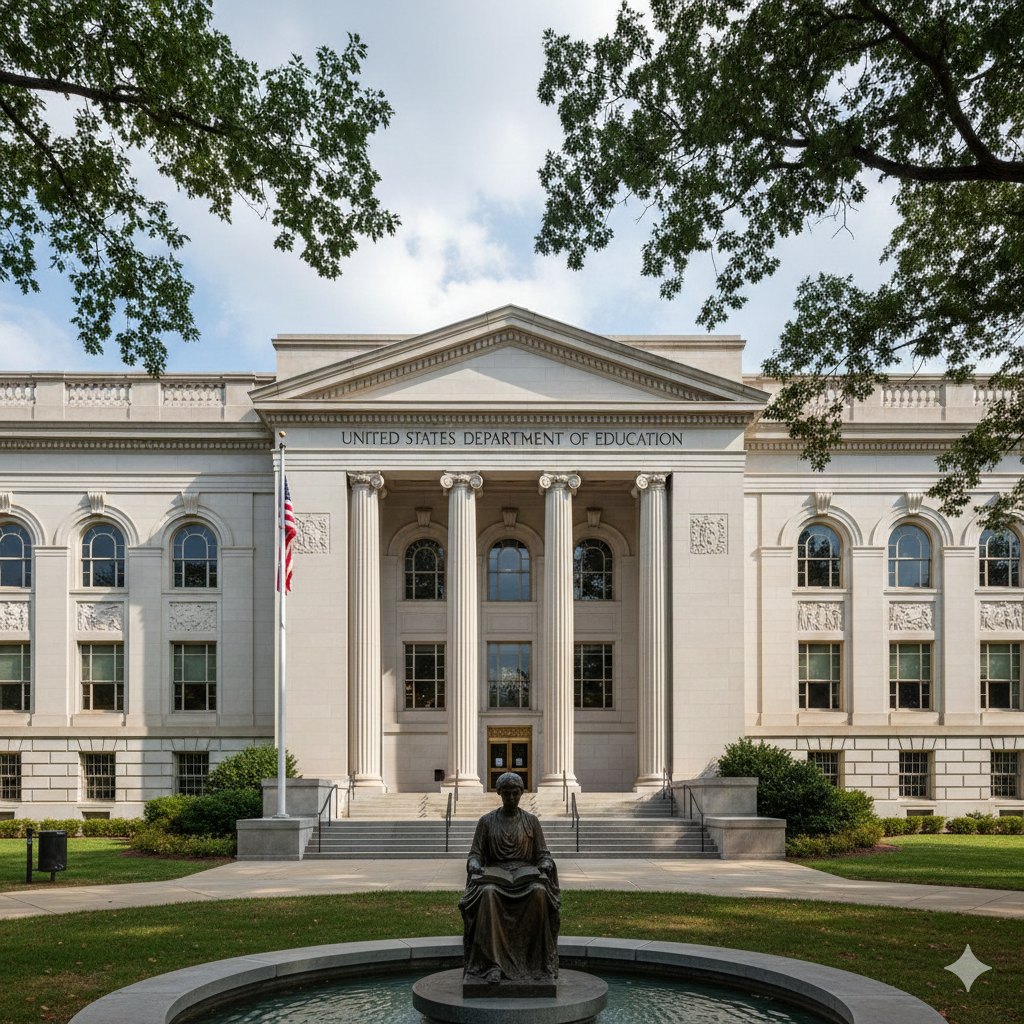
Department of Education Must Stay in Operation

The debate over the existence of the U.S. Department of Education (ED) often centers on the tension between federal oversight and state autonomy. While critics argue that education is a local matter and the federal bureaucracy is an unnecessary “middleman,” the Department plays a critical, irreplaceable role in protecting the rights of vulnerable students and ensuring that zip codes do not determine the quality of a child’s future. Abolishing the Department would not merely shift paperwork to the states; it would dismantle the essential “guardrails” of equity, civil rights, and financial stability in the American education system.

Categories
Economics Education Power Social Issues

She’s the Boss Now!

The Unfolding Power: Black Women’s Ascent in Education and Leadership

The narrative of American progress is continually being reshaped by the resilience and determination of Black women. Nowhere is this more evident than in their extraordinary and persistent rise in education, a foundational movement that is now beginning to translate into a commanding presence in positions of leadership and authority across all sectors. Black women are not just participating in the pursuit of knowledge; they are excelling, often outpacing all other demographic groups in educational attainment. This educational prowess is a potent force, signaling a powerful and inevitable shift in the landscape of leadership in the United States.

Categories
Education Health Care Social Issues Technology

Generation Alpha

The Glass Barrier: Generation Alpha, iPads, and the Call for Public Oversight

Generation Alpha, born into a world where touchscreens are as ubiquitous as toys, faces a defining challenge: the iPad problem. These devices, heralded as tools for education and connection, have become, for many young children, digital pacifiers that carry profound and often detrimental effects on development. The excessive, unmonitored screen time experienced by this generation is a public health crisis in the making, and it demands a response that transcends the individual household. While parental responsibility is undeniable, the sheer scale of the digital environment and its impact on foundational human development necessitate that the government and social services step in to actively monitor and regulate the screen time of small children.

Categories
Education Social Issues

Phonics in Schools

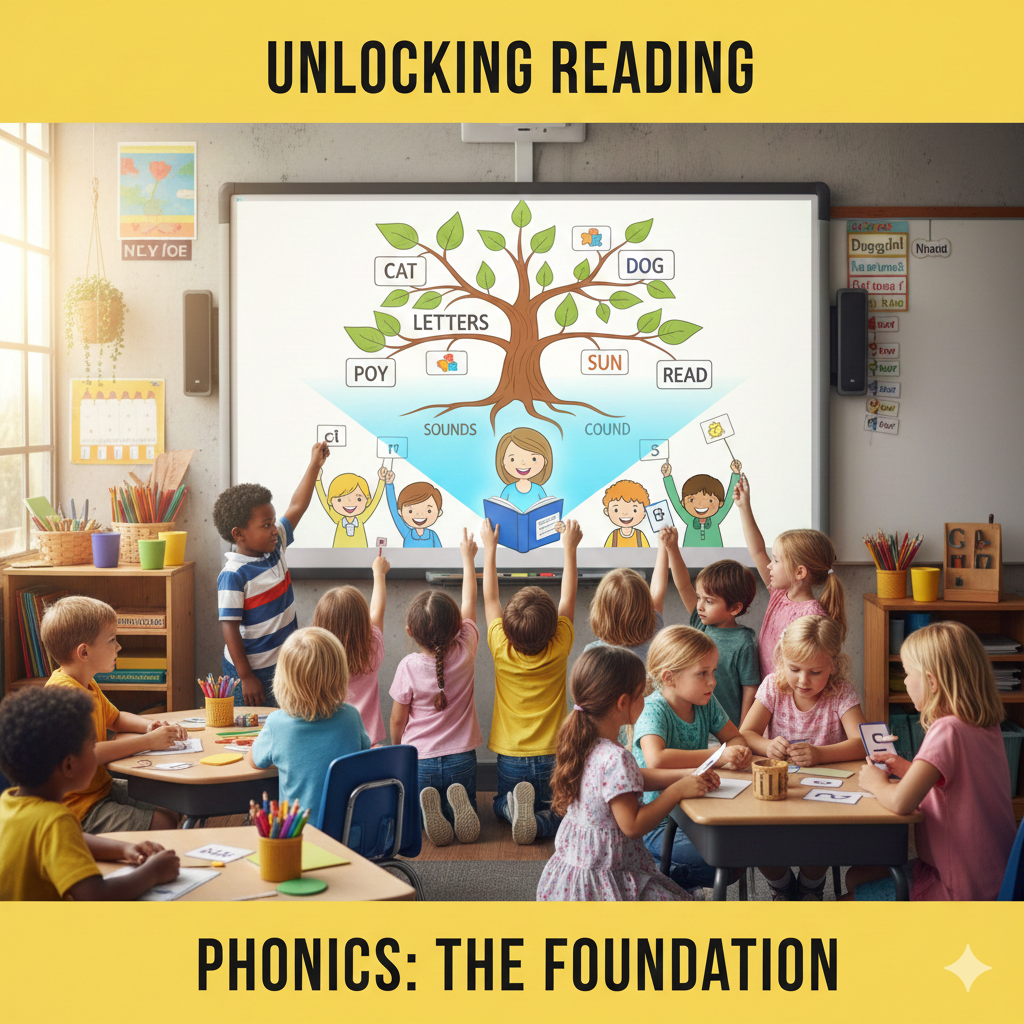
📚 The Unbreakable Code: Reasserting the Primacy of Phonics in Education

The ability to read is the cornerstone of academic success and a fundamental driver of social mobility. At the heart of achieving widespread literacy lies phonics, a systematic instructional method that teaches children to decode the written word by understanding the relationship between sounds (phonemes) and the letters or groups of letters (graphemes) that represent them. The decision by many educational institutions to move away from systematic phonics instruction in the mid-to-late 20th century in favor of approaches like “Whole Language” and “Balanced Literacy” was a detrimental swing of the pedagogical pendulum—a mistake that research has consistently shown to have hindered reading proficiency for a generation of students. Re-embracing explicit, systematic phonics is not a regression but a necessary return to evidence-based practice.

Categories
Education Social Issues

Classical Music in the Schools

The Essential Harmony: Advocating for Classical Music in Schools 🎻

The modern school curriculum, often seeking to be “relevant,” frequently embraces popular music genres like rock, rap, and hip-hop. While these forms of music have cultural significance, a compelling argument exists for a strategic shift in focus: prioritizing classical music education in schools. This move is not an arbitrary exercise in taste, but a foundational investment in students’ academic performance, cognitive development, and character. By emphasizing the structured complexity and emotional depth of classical music, schools can cultivate a more focused, constructive, and educated society, while helping to guide students toward cultural literacy beyond fleeting trends.

Categories
Conflict Economics Education Social Issues

History Has a Direction

The Inevitable Arc: Utility, Integration, and the Direction of History

The phrase “the right side of history” is often dismissed as rhetorical flourish, but a rigorous analysis of human development suggests it describes a tangible phenomenon. History is not a series of random, cyclical events; it possesses a distinct directionality. That direction is an ascent toward higher levels of integration, cooperation, and collective well-being. Specifically, the trajectory of human civilization points toward International Socialism—defined here as a robust system of international law coupled with economic social democracy based on Keynesian principles. This evolution is not merely accidental; it is inevitable because this system possesses the highest utility value of any social arrangement, and it is the duty of education to accelerate our arrival at this destination.

Categories
Economics Education

College Education is a Fundamental Right

The Unburdened Mind: Advancing Education as a Universal Right

The pursuit of knowledge is not a luxury item to be purchased, but a fundamental human right and the most potent engine of collective prosperity. Yet, in many developed nations, higher education has been commodified, leading to crippling student loan debt that suppresses economic vitality and inhibits social mobility. A radical restructuring of this system is required, one that simultaneously cancels existing student loan debt, establishes tuition-free college education, and, critically, institutes rigorous academic standards to ensure the integrity of scholarly degrees. Furthermore, the establishment of a globally-managed university system, financed by the United Nations (UN), represents the necessary next step in realizing education’s universal potential.The Unburdened Mind: Advancing Education as a Universal Right