Categories
Conflict Power Social Issues

UN Power for Conflict Resolution

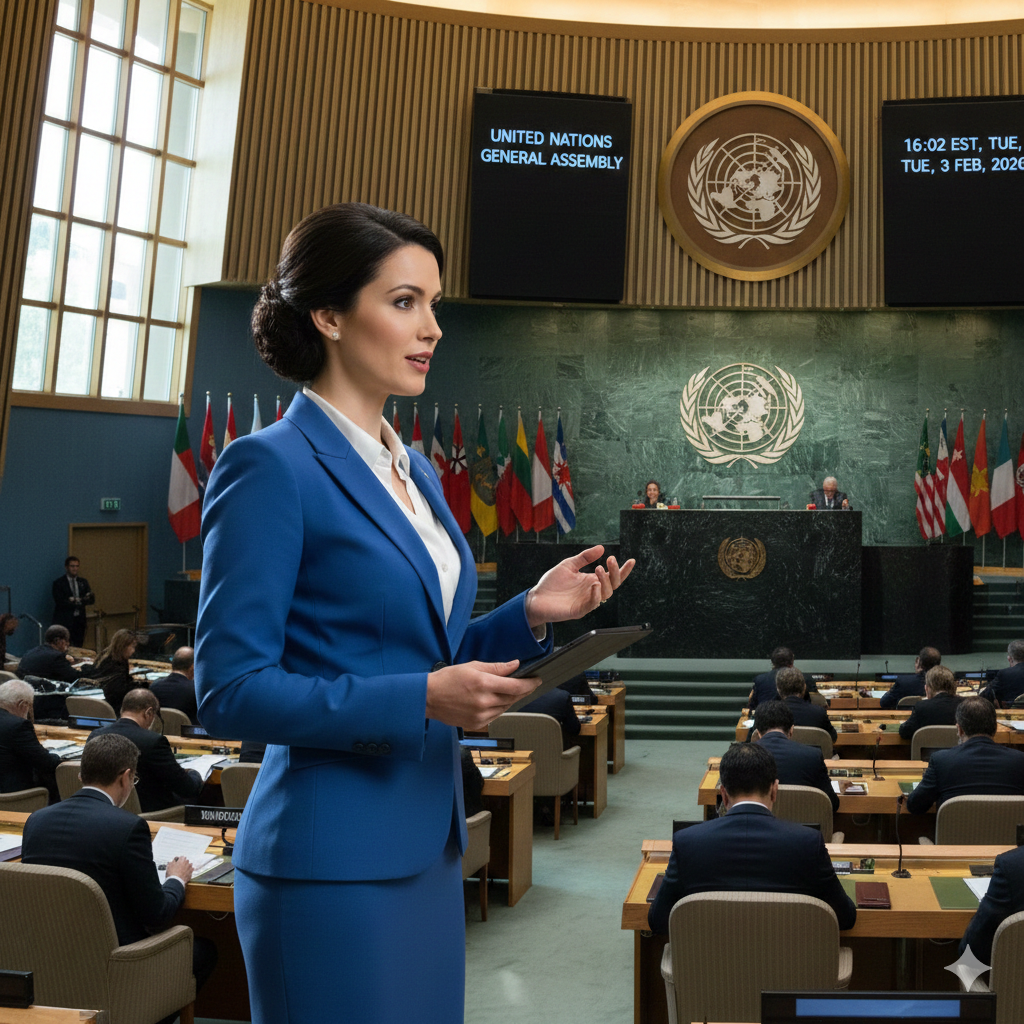
The Silent Skies of the Arabian Sea: A Case for a Reformed UN

On February 3, 2026, the silence over the Arabian Sea was shattered when a U.S. Navy F-35C, launched from the USS Abraham Lincoln, intercepted and destroyed an Iranian Shahed-139 drone. According to U.S. Central Command, the drone had “aggressively approached” the carrier, ignoring de-escalatory signals. This engagement, occurring just 500 miles off the Iranian coast and amid a flurry of maritime harassment incidents in the Strait of Hormuz, is more than a tactical skirmish; it is a symptom of a fractured global order. The incident underscores a dangerous reality: in the absence of a robust, empowered international mediator, the world relies on the hair-trigger “self-defense” of individual nations, making regional war a matter of a single pilot’s split-second decision. To prevent such sparks from igniting a global conflagration, the United Nations must be granted greater authority to regulate and resolve interstate conflicts before they reach the point of kinetic engagement.


Categories
Conflict Economics Social Issues

Healthcare Advocacy Through Protest Tactics

In recent weeks, the “ICE Out of Everywhere” movement has demonstrated a masterclass in grassroots mobilization. From the “National Shutdown” to the widespread use of mutual aid and “ICE watching,” these tactics have transformed abstract political dissent into a tangible, community-led defense system. While the focus has been on the immediate protection of immigrant neighbors from federal enforcement, the architecture of this movement offers a compelling blueprint for another life-or-death struggle: the fight for national health insurance.

By applying the same intensity, organizational structure, and community-first ethos to healthcare, advocates can shift national health insurance from a policy debate into a social imperative.

Categories
Conflict Economics Social Issues

United Nations Monopoly on Weapons for Peace

The Price of Power: Ending the Era of Global Militarism

For decades, the world has operated under the grim assumption that peace is merely the interval between wars, and that security can only be bought through the accumulation of more lethal weaponry. In 2024, global military spending reached a staggering $2.7 trillion, and by 2035, current trends suggest it could soar to over $6.6 trillion. This is more than a financial statistic; it is a profound moral failure.

Militarism—the glorification and expansion of armed force as the primary tool of foreign policy—does not create safety. Instead, it creates a “slippery slope” where nations with massive standing armies feel a pathological need to use them, transforming every diplomatic friction into a potential battlefield.

Categories
Conflict Social Issues

ICE Accountability and Future Legal Risks

The Pendulum of Accountability: ICE and the Future of Federal Enforcement

The political landscape of the United States has long been characterized by a pendulum swing between administrative philosophies. However, as enforcement tactics under the current administration reach unprecedented levels of aggression, a significant legal and ethical question looms: what happens when the pendulum swings back? For those currently serving within Immigration and Customs Enforcement (ICE), the assumption of permanent political cover may be a dangerous miscalculation. History and emerging legal frameworks suggest that the “just following orders” defense is rarely a permanent shield against the shifting tides of federal and state oversight.

Categories
Conflict Power Social Issues

Civil Society’s Role in Democracy

In the architecture of a stable democracy, the ballot box is only the foundation. The true structural integrity of the system is maintained by civil society—the “third sector” of social life, comprising the voluntary organizations, grassroots movements, and community bonds that exist outside of the government and the market.

A healthy democracy requires more than just periodic elections; it demands a vigilant citizenry capable of checking state power between those elections. Without a robust civil society, the state risks becoming an echo chamber of its own authority, sliding toward the consolidation of power that characterizes authoritarianism.

Categories
Conflict Power Social Issues

Gulliver’s Travels: Moral “Giants”

Jonathan Swift’s Gulliver’s Travels is often mistaken for a whimsical children’s story, but beneath the surface of flying islands and talking horses lies a razor-sharp scalpel aimed at the heart of human nature. Writing in 1726, Swift wasn’t just mocking 18th-century British politics; he was diagnosing a permanent human condition.

The book remains vital today because it forces us to confront our own “smallness”—both literal and moral—and suggests that true greatness has nothing to do with physical stature.

Categories
Conflict Economics Power Social Issues

Divorce Law Reform for Modern Families

The traditional image of the “disadvantaged spouse” is undergoing a radical shift in the 21st century. As educational and economic landscapes flip, our legal frameworks—forged in an era of male breadwinners—are increasingly out of step with reality.

Categories
Conflict Power Social Issues

Stalking: The “Giant” at the Door

The “Giant” at the Door: The Relentless Shadow of Stalking

The sun would set, but for Paul, the darkness brought no peace. It began the day he walked away from Sarah. He had discovered the rot beneath the surface: the stolen credit cards, the whispered drug deals, and a lifestyle that threatened to pull him into a cage alongside her. He chose survival and ended it. But Sarah did not accept the end.

Categories
Conflict Social Issues

Drive: Genius, Crime, and Gender

The theory that the depths of human depravity and the heights of human genius spring from the same well of “biological drive” is a provocative, albeit controversial, lens through which to view history. The core of this argument—originally popularized by thinkers like Camille Paglia—suggests that the aggressive, obsessive, and often antisocial energy that produces a “Jack the Ripper” is the exact same elemental force required to produce a Mozart, an Einstein, or a Napoleon.

Categories
Conflict Social Issues Technology

UN: Humanity’s Voice to the Stars

The prospect of humanity’s first “Hello” to the stars is perhaps the ultimate high-stakes social situation. If we ever receive a signal from an extraterrestrial civilization, the response shouldn’t be a fragmented chorus of competing national interests, but a singular, coherent voice.

Here is an exploration of why a unified body like the United Nations is essential for crafting a logical, progressive, and wholesome mission for our species—both here and beyond.