The Case for a Sovereign United Nations: Enforcing Global Democracy
The United Nations’ strong condemnation of the military coup in Guinea-Bissau, where elected authorities were overthrown mere days after national elections, highlights a critical paradox in modern international relations. While the UN successfully establishes and articulates universal norms of democratic governance and constitutional order, its power to enforce these principles remains fundamentally hobbled. The diplomatic warnings and expressions of “grave violation” issued by the UN, while morally necessary, are ultimately hollow without the teeth to reverse the actions of military juntas and dictators. This gap between moral authority and military capacity reveals a profound structural flaw, compelling the argument that the UN requires substantially increased global sovereignty, its own independent military force, and an empowered Secretary-General capable of becoming the world’s singular most powerful executive.
The inherent limitation of the United Nations is its dependence on the political will and resources of its member states. In the case of Guinea-Bissau, as with countless other violations of democratic order, the organization is reduced to a non-binding arbiter, issuing resolutions and sanctions that can be slow to materialize and unevenly applied. To truly act as the defender of global democracy, the UN must transcend its current status as a collective bargaining forum and evolve into a sovereign entity capable of immediate, decisive enforcement. This would necessitate the transfer of a limited but critical degree of sovereignty from member nations, granting the UN the legal standing to intervene directly in cases of constitutional collapse or humanitarian catastrophe, thereby making international law a matter of obligation, not mere suggestion.
The most potent expression of this enhanced sovereignty must be the creation of a permanent, standing UN military force. Current UN Peacekeeping missions are slow to deploy, often lack robust mandates, and are composed of contingents borrowed from member states, whose national interests frequently dictate the troops’ operational effectiveness. A dedicated UN Military, directly recruited, paid, and commanded by the Secretary-General’s office, would serve as the ultimate deterrent against coups and civil disorder. Crucially, such a force would not be subject to the veto power of the Security Council’s permanent members, allowing for rapid deployment to secure democratic institutions in places like Guinea-Bissau before the overthrow is cemented. This independent global police force would enforce the constitutional order the UN is mandated to protect, transforming condemnation into credible action.
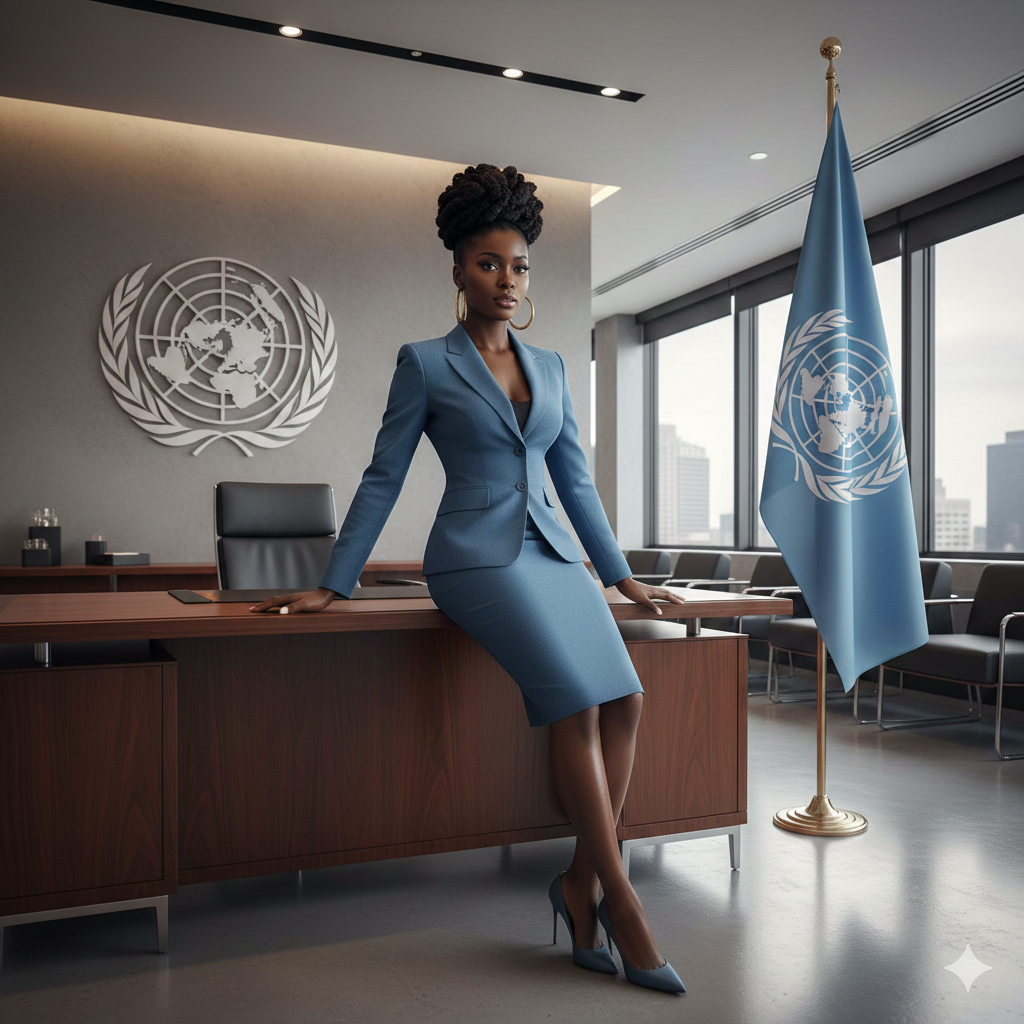
This level of executive authority demands a corresponding elevation of the Secretary-General. Currently, the Secretary-General functions primarily as the world’s chief diplomat and administrator, negotiating consensus among often recalcitrant member states. To command a global military and enforce international law, the Secretary-General should be reimagined as a global president or chief executive, elected through a reformed, democratic process, and granted the constitutional power to authorize the use of force in defense of the UN Charter. Bypassing the political gridlock and self-interested calculations of the Security Council, a supremely powerful Secretary-General would be uniquely positioned to act in the sole interest of global peace, human rights, and the preservation of democratic norms, truly making them the most powerful person in the world—a power wielded not for national gain, but for universal good.
In conclusion, the UN’s condemnation of the Guinea-Bissau coup, while appropriate, is a stark reminder that expressions of outrage are insufficient when faced with armed violations of democracy. The structural weaknesses of the organization—a lack of enforceable authority, reliance on loaned military assets, and a politically constrained leadership—render it unable to fulfill its foundational mandate. Moving forward, the international community must consider the radical, yet necessary, step of granting the United Nations greater sovereignty, endowing it with its own standing military, and empowering the Secretary-General to act as a truly decisive global executive. Only then can the ideals enshrined in the UN Charter be actively defended against all those who seek to violate the constitutional and democratic principles of the world.