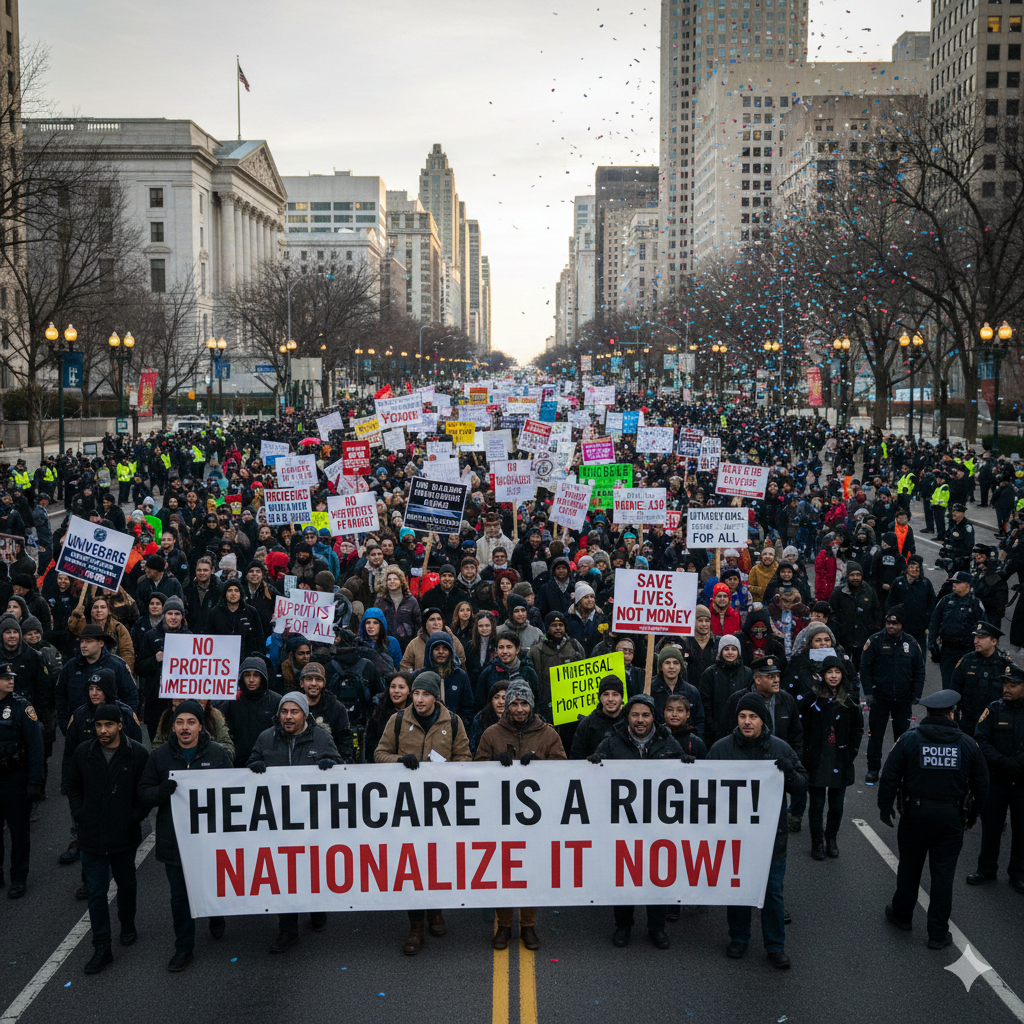
In recent weeks, the “ICE Out of Everywhere” movement has demonstrated a masterclass in grassroots mobilization. From the “National Shutdown” to the widespread use of mutual aid and “ICE watching,” these tactics have transformed abstract political dissent into a tangible, community-led defense system. While the focus has been on the immediate protection of immigrant neighbors from federal enforcement, the architecture of this movement offers a compelling blueprint for another life-or-death struggle: the fight for national health insurance.
By applying the same intensity, organizational structure, and community-first ethos to healthcare, advocates can shift national health insurance from a policy debate into a social imperative.
1. Transforming “Political Issues” into “Caregiving Movements”
The anti-ICE movement in places like Minneapolis has succeeded because it is framed not just as a policy critique, but as a caregiving social movement. Protesters aren’t just holding signs; they are delivering groceries, providing “know your rights” trainings, and using whistles to alert neighbors of danger.
A movement for national health insurance must adopt this same “mutual aid” model. Instead of waiting for a bill to pass, organizers should create local networks that:
- Navigate the current “minefield”: Helping neighbors fight insurance denials or find clinics, creating a shared community “defense” against medical debt.
- Highlight the “Human Cost”: Much like the vigils for those lost in ICE custody, healthcare activists should hold “Medical Debt Vigils” or “Denial of Care Memorials” to make the invisible casualties of a profit-driven system impossible to ignore.
2. Using the “National Shutdown” Strategy
On January 30, 2026, thousands participated in a “day of no work, no school, no shopping” to protest ICE operations. This economic blackout forced the business community—which had previously been silent—to acknowledge the crisis.
The healthcare industry is particularly sensitive to economic pressure. A “National Day of No Premiums” or a coordinated boycott of specific private insurers that routinely deny life-saving care would apply the same leverage. When healthcare workers and patients stand together to say “no work, no school, no shopping” until a public system is established, the crisis moves from the hospital waiting room to the corporate boardroom.
3. The Power of “Moral Witness”
A key tactic in current protests is the “ICE Watcher”—volunteers who film and document enforcement actions to ensure due process. This provides a “moral witness” that forces transparency on an opaque agency.
Healthcare needs its own watchers. Organizing patients and nurses to document and publicly “call out” the bureaucracy of insurance denials creates a similar form of civilian oversight. When a company denies a child’s surgery or a senior’s medication, it should not happen in a quiet email; it should be met with the same public outcry and “whistleblowing” presence that greets an ICE raid.
4. Building Multi-Sector Coalitions
The recent anti-ICE protests are notable for their diversity; they include labor unions, nurses (like those walkouts in Santa Cruz), clergy, and small business owners. This “multi-sector power” is the only force capable of overcoming the lobbying power of the insurance industry.
When nurses walk out not just for their own wages, but to demand a system where their patients are never turned away for lack of funds, they bridge the gap between labor rights and human rights. This solidarity is the “secret sauce” of the current immigration protests and must be the engine of the healthcare movement.
Conclusion
The current protests against ICE have proven that when a community decides that “business as usual” is a threat to their survival, they can disrupt the status quo with remarkable speed. National health insurance is often treated as a distant legislative goal, but it is, in reality, a matter of immediate communal defense. By organizing with the same urgency, documentation, and economic leverage seen in the anti-ICE movement, we can move national health insurance from a “someday” policy to a “today” necessity.