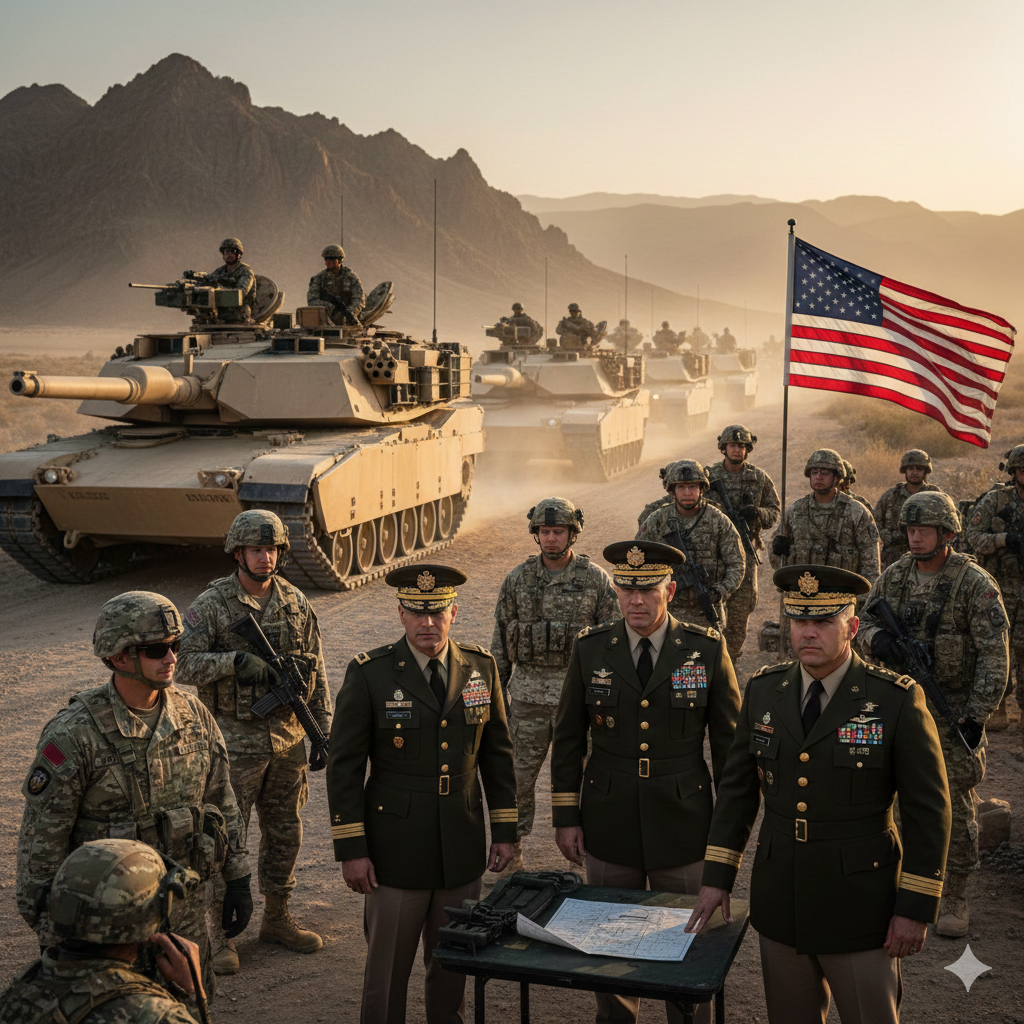
The Price of Power: Ending the Era of Global Militarism
For decades, the world has operated under the grim assumption that peace is merely the interval between wars, and that security can only be bought through the accumulation of more lethal weaponry. In 2024, global military spending reached a staggering $2.7 trillion, and by 2035, current trends suggest it could soar to over $6.6 trillion. This is more than a financial statistic; it is a profound moral failure.
Militarism—the glorification and expansion of armed force as the primary tool of foreign policy—does not create safety. Instead, it creates a “slippery slope” where nations with massive standing armies feel a pathological need to use them, transforming every diplomatic friction into a potential battlefield.
The Human and Economic Toll
The “opportunity cost” of militarism is perhaps the greatest tragedy of the modern era. While billions are poured into hypersonic missiles and stealth bombers, the fundamental pillars of human prosperity are left underfunded.
- The “Butter” vs. “Guns” Trade-off: Every dollar spent on a tank is a dollar not spent on a classroom or a clinic. According to UN data, $1 billion invested in education creates 26,700 jobs, whereas the same amount in military spending creates only 11,200.
- A Diverted Future: Reinvesting just 15% of current global military budgets would be enough to cover the annual costs of climate change adaptation for the entire developing world.
- Social Erosion: Militarism doesn’t just drain wallets; it corrodes culture. It desensitizes societies to violence, reinforces hierarchical power structures, and prioritizes the defense of borders over the well-being of people.
The Solution: A Global Monopoly of Force
To break this cycle of escalation, we must move beyond the “security dilemma” where one nation’s defense is perceived as another’s threat. The only path toward sustainable world peace is the systemic disarmament of nation-states and the transfer of heavy weaponry to a central, international authority: the United Nations.
1. A UN Monopoly on Weapons of Mass Destruction
The existence of 12,500 nuclear warheads is a sword of Damocles hanging over humanity. National control of these weapons is a recipe for accidental or intentional catastrophe. By placing all nuclear assets and strategic delivery systems under a strictly controlled UN mandate—solely for the purpose of global deterrence and eventual total elimination—we remove the existential threat of “Mutually Assured Destruction” between rival states.
2. Centralizing Heavy Conventional Arms
Peace cannot be kept by a patchwork of competing national interests. A UN standing force, equipped with the world’s primary heavy weaponry (tanks, long-range missiles, and advanced aircraft), would serve as a global “police force” rather than a tool for conquest.
- Ending Arms Races: If nations no longer possess the tools for offensive war, the incentive to overspend on “defense” vanishes.
- Enforcing International Law: A UN with a monopoly of force can actually enforce its resolutions, rather than merely issuing condemnations that aggressive states ignore.
A Vision for Future Prosperity
Imagine a world where the $2.7 trillion annual “war tax” is redirected toward the Sustainable Development Goals. We could end global hunger, provide universal healthcare, and transition to a green economy in a single generation.
The choice is stark: we can continue to fund our own destruction, or we can embrace a new architecture of security—one that is human-centered, rooted in cooperation, and policed by a unified global community. It is time to dismantle the war machine and invest in humanity.