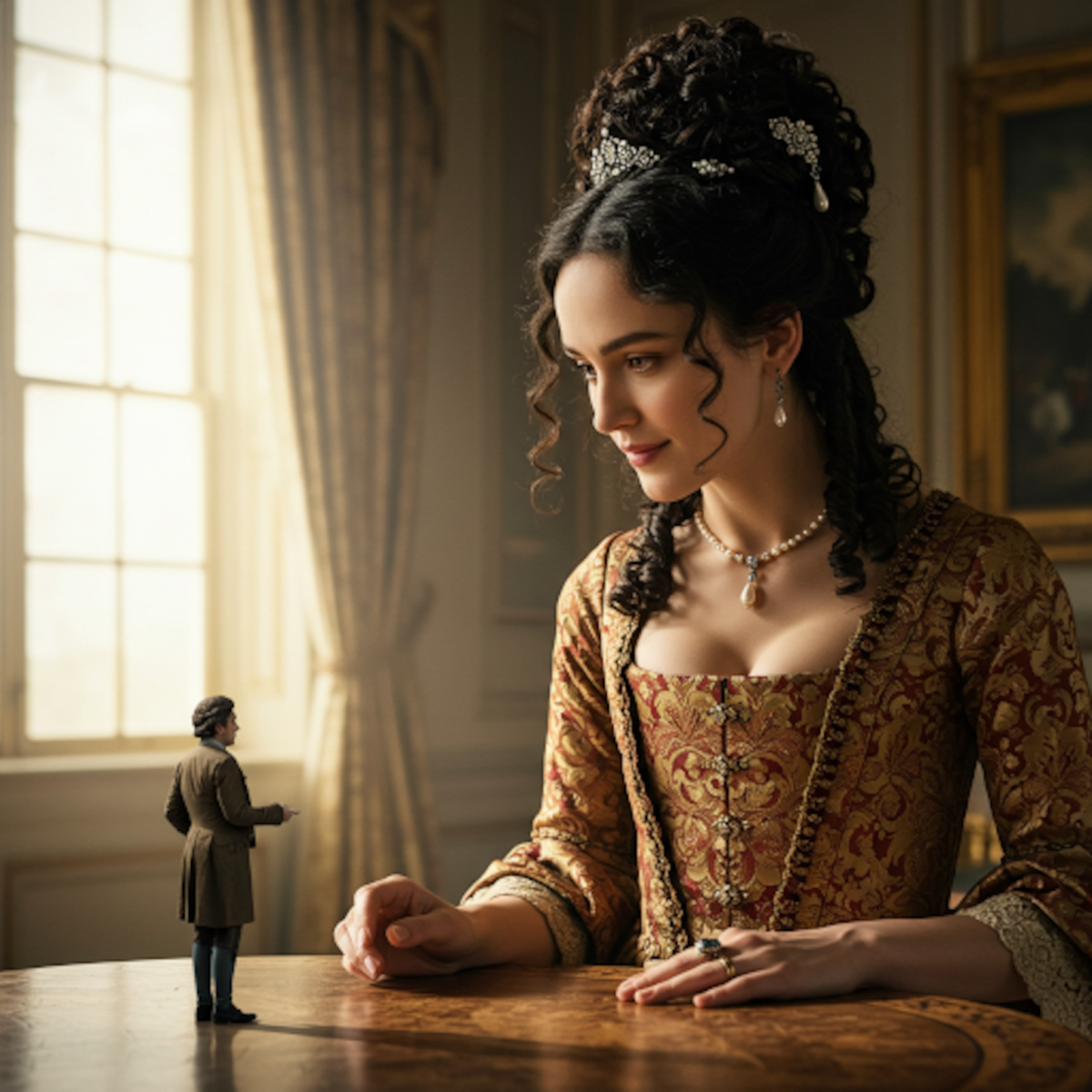
Jonathan Swift’s Gulliver’s Travels is often mistaken for a whimsical children’s story, but beneath the surface of flying islands and talking horses lies a razor-sharp scalpel aimed at the heart of human nature. Writing in 1726, Swift wasn’t just mocking 18th-century British politics; he was diagnosing a permanent human condition.
The book remains vital today because it forces us to confront our own “smallness”—both literal and moral—and suggests that true greatness has nothing to do with physical stature.
The Moral Architecture of Scale
The most profound lesson of the book lies in the contrast between the first two voyages: the tiny Lilliputians and the massive Brobdingnagians. Swift uses physical size as a brilliant metaphor for moral perspective.
The Pettiness of the Small
In Lilliput, the inhabitants are six inches tall, and their ethics are equally minute. They are defined by:
- Pointless Conflict: They engage in bloody civil wars over which end of an egg should be cracked (the “Big-Endians” vs. the “Little-Endians”).
- Political Vanity: Their leaders are chosen based on who can jump highest over a stick or dance on a tightrope.
- Ingratitude: Despite Gulliver saving their fleet, they eventually conspire to blind him because he won’t help them enslave their neighbors.
Swift’s point is clear: when we lack a “big picture” perspective, we become obsessed with tribalism and trivialities. In the modern era of social media “outrage culture” and partisan bickering over optics rather than substance, we are living in a digital Lilliput.
The Giants of Brobdingnag
When Gulliver travels to Brobdingnag, the scale flips. He is now the “little person,” and the giants are the ones looking down. However, they are “giants” not just because of their height, but because their moral compass is vastly superior.
The King of Brobdingnag is horrified when Gulliver offers to teach him the secret of gunpowder. The King views the invention as the work of an “impotent and grovelling insect” and prefers the simple virtues of agriculture and honest governance. To the giants:
- Wisdom is Simple: They value common sense and ethics over complex, manipulative legal systems.
- Peace is Paramount: They find the European history of war and conquest to be a “heap of conspiracies, rebellions, murders, and massacres.”
By making the “higher” beings physically larger, Swift illustrates that a truly great society is one that has outgrown the need for petty destruction and vanity.
Why It Matters in 2026
Swift’s masterpiece acts as a mirror. It reminds us that humanity has a recurring tendency to act like Lilliputians—focusing on “small” differences to justify “large” cruelties. We still struggle with:
- Specialized Ignorance: Like the Laputians (the “intellectuals” of the third voyage), we often get so lost in abstract theories and technology that we forget how to solve basic human problems.
- The Danger of Ego: Gulliver constantly tries to sound important to the giants, just as we often try to project a sense of grandiosity that our actual behavior doesn’t support.
The lesson of Gulliver’s Travels is an invitation to intellectual humility. It asks us to step back and view our conflicts from a “giant’s” perspective. If we saw our political and social squabbles from sixty feet up, would they look like noble causes, or would they look like children fighting over the “right” way to crack an egg?
Conclusion
Jonathan Swift’s work is a timeless warning against the “Lilliputian” within us. By showing that the giants were the only ones who possessed true humanity, he teaches us that moral growth is the only way to achieve real stature. We may never be seventy feet tall, but we can choose to stop being “little” in the ways that matter most.