The Gravity of Delusion: Why “Ancient Aliens” is a Flight from Reason
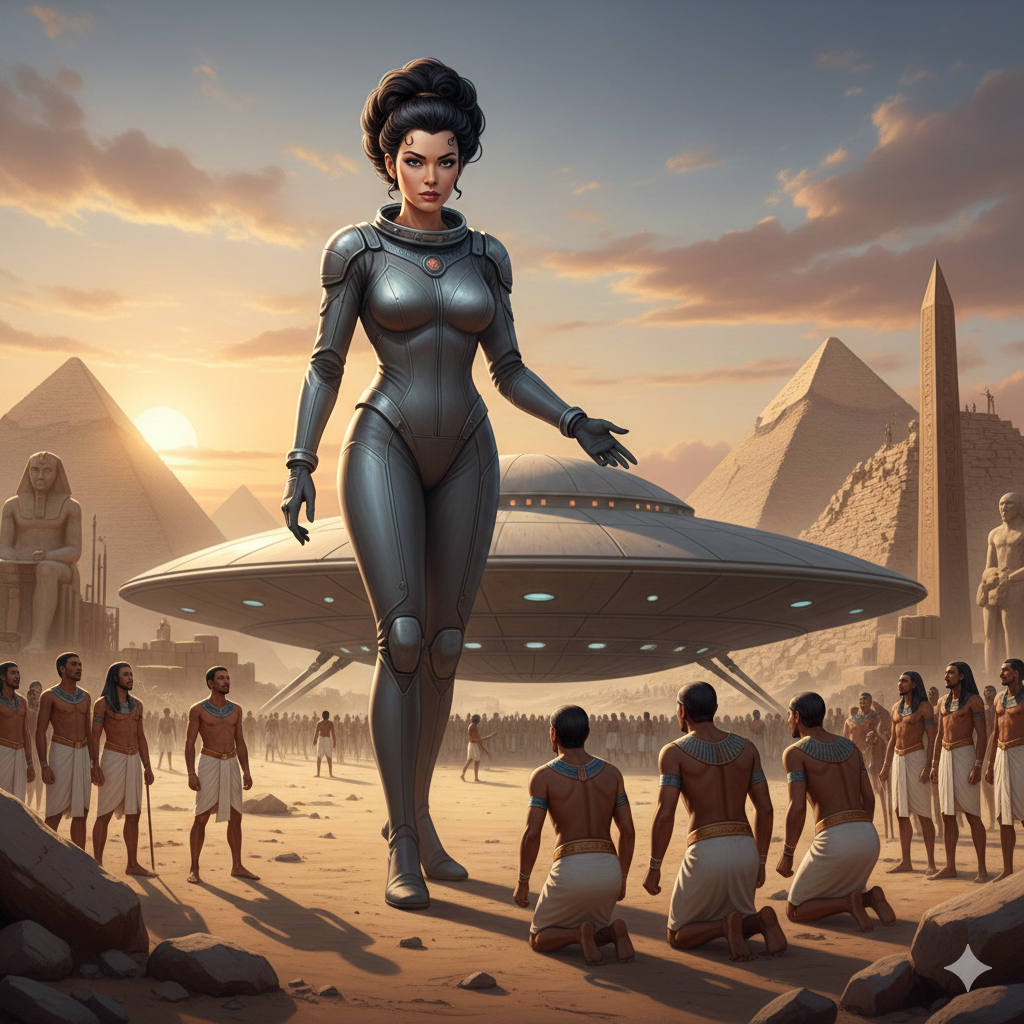
For decades, glossy television specials and viral social media threads have peddled a seductive narrative: that humanity’s greatest architectural and cultural achievements were not the product of human ingenuity, but the work of extraterrestrial visitors. While it makes for entertaining science fiction, the Ancient Astronaut Theory is a textbook example of pseudoscience. It represents more than just a harmless curiosity; it signifies a troubling retreat from critical thinking and a fundamental misunderstanding of the scientific method.
The Architecture of Pseudoscience
At its core, the theory relies on a logical fallacy known as argumentum ad ignorantiam—an appeal to ignorance. Proponents point to complex structures like the Pyramids of Giza or the Moai of Easter Island and claim, “We don’t know exactly how they did this, therefore, it must be aliens.”
Science, however, works in the opposite direction. It builds theories based on evidence, not the absence of it. Pseudoscience ignores the mountains of archaeological data—copper tools, quarry marks, worker encampments, and written records—that document the blood, sweat, and engineering brilliance of our ancestors.
- Cherry-picking: Proponents select vague petroglyphs that resemble “helmets” while ignoring the cultural context of the art.
- Lack of Falsifiability: There is no evidence that could disprove the theory to a “believer,” because any lack of evidence is simply explained away as a “government cover-up.”
The Erasure of Human History
Perhaps the most damaging aspect of Ancient Astronaut Theory is its inherent ethnocentrism. It rarely targets the achievements of Western Europe; instead, it focuses its “skepticism” on the monumental works of Indigenous peoples in Africa, the Americas, and Asia.
By suggesting that ancient Egyptians or the Maya were “too primitive” to understand celestial alignments or complex masonry, the theory robs these civilizations of their intellectual agency. It replaces human perseverance with “space magic,” effectively erasing the history of human evolution and technological progress.
A Symptom of a Larger Crisis
The popularity of these theories mirrors a broader societal trend: the devaluation of expertise. In an era of instant gratification and “alternative facts,” the slow, rigorous process of peer-reviewed science is often cast aside for the “low-hanging fruit” of sensationalist mysteries.
When we stop teaching students how to evaluate evidence and instead allow them to equate a YouTube documentary with a decade of archaeological fieldwork, we lose our grip on reality. Critical thinking is the immune system of the mind; without it, we are susceptible to all forms of misinformation.
“Extraordinary claims require extraordinary evidence.” — Carl Sagan
The Path Forward: Teaching Real Science
To combat the drift into pseudoscience, we must revitalize our commitment to empirical education. This doesn’t just mean memorizing facts; it means understanding the process of discovery.
- Teaching the Scientific Method: Emphasizing that theories must be testable and based on observable data.
- Highlighting Experimental Archaeology: Showing students how modern humans have successfully recreated ancient building techniques using only the tools available at the time.
- Fostering Healthy Skepticism: Encouraging students to ask “What is the source?” and “What is the simplest explanation?” (Occam’s Razor).
Conclusion
Ancient Astronaut Theory is a siren song for those looking for wonder in the wrong places. The truth—that nomadic tribes and early civilizations mastered the stars and moved mountains through sheer collective will and trial-and-error—is far more spectacular than any story of “galactic visitors.” To protect the future of our society, we must ground our wonder in the rigorous, beautiful reality of real science.