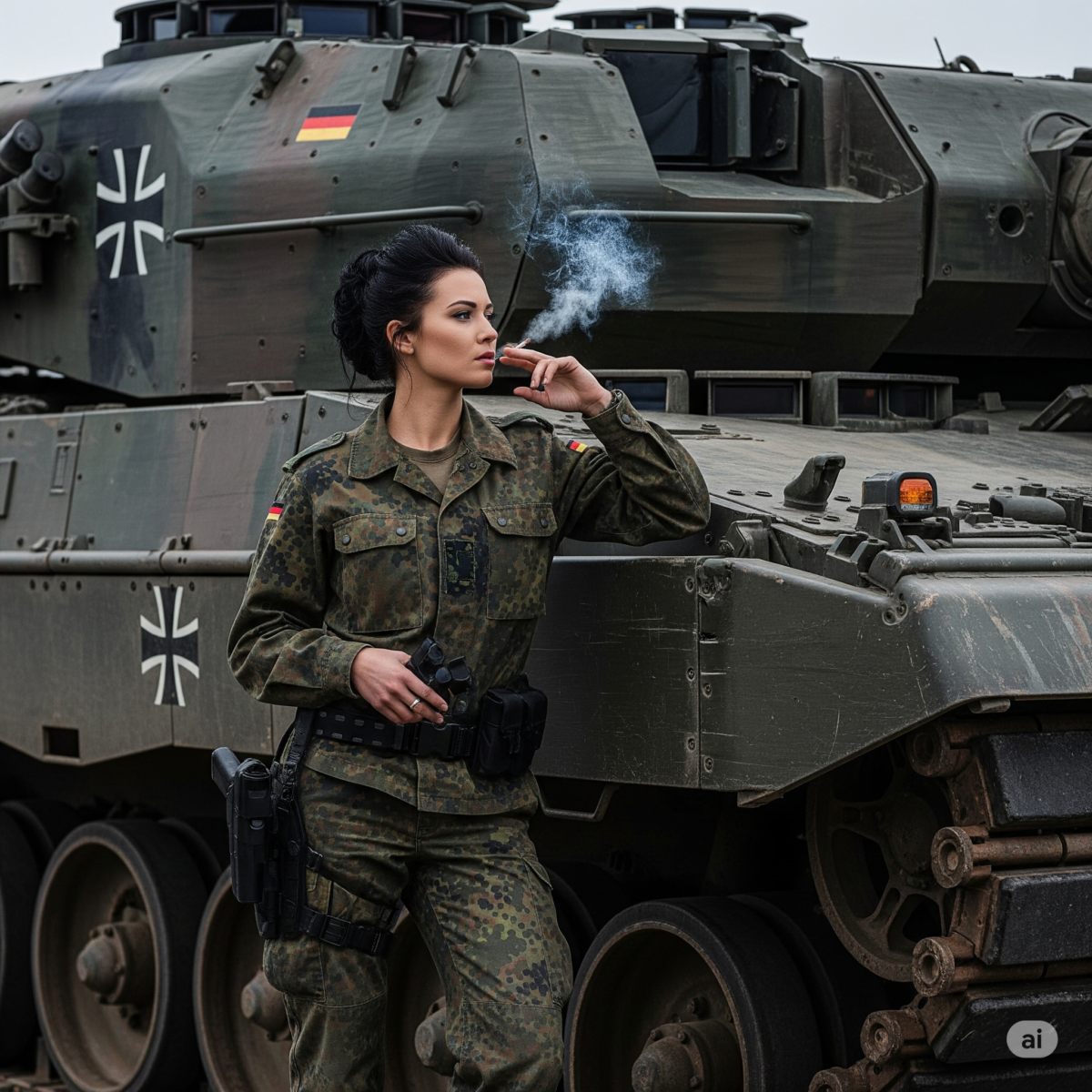
In the third decade of the 21st century, the global geopolitical landscape has shifted with a violent suddenness that few predicted, forcing a historic re-evaluation of Germany’s role on the world stage. Long described as a “reluctant hegemon” or a “civilian power,” Germany is currently undergoing a Zeitenwende—a historic turning point. Driven by a volatile cocktail of Russian expansionism to the East and an increasingly transactional, unpredictable United States to the West, the “sleeping giant” of Europe is finally waking up.
The Twin Pressures: East and West
The catalyst for this military “comeback” is a dual-threat environment that has shattered decades of German security assumptions.
- Russian Aggression: The ongoing war in Ukraine has proved that large-scale conventional warfare is not a relic of the past. For Berlin, the threat is no longer theoretical; the proximity of Russian revanchism has turned military readiness into an existential necessity.
- The Transatlantic Rift: Simultaneously, relations with the United States have reached a modern nadir. The recent “Greenland Crisis,” where Washington’s aggressive posture toward Danish sovereignty and Canadian Arctic interests sent shockwaves through NATO, has left Europe feeling squeezed. When the traditional guarantor of security—the USA—begins to view its allies’ territories as assets to be acquired or leveraged through tariffs and threats, Germany realizes it can no longer outsource its survival.
Awakening the Sleeping Giant
For years, both Moscow and Washington arguably operated under the “ignorance” that Germany would remain a passive economic engine, content to hide behind the American nuclear umbrella or Russian energy deals. That ignorance may have been a strategic miscalculation.
By pushing Germany into a corner, these powers have inadvertently revived the one thing the 20th century taught the world to fear: a fully mobilized, high-tech German military. However, unlike the ghosts of the past, this “sleeping giant” is awakening within a democratic, multilateral framework. Under the leadership of Chancellor Friedrich Merz and a cross-party consensus, Germany is now aiming for a defense budget that could reach 3.5% of GDP by 2029, potentially creating the strongest conventional army in Europe.
A Progressive Superpower?
The hope for this new era is that a rearmed Germany will act as an “enlightened leader.” Germany’s modern identity is built on the ruins of militarism, making its current leadership uniquely cautious and focused on international law. As the U.S. leans into isolationism and Russia into autocracy, Germany has the opportunity to become the “superpower the world can trust”—a stabilizing force that prioritizes:
- European Sovereignty: Leading a unified European defense that doesn’t rely on the whims of a single foreign leader.
- Climate and Innovation: Leveraging its industrial base to pioneer “green” defense and technological ethics.
- Stability through Strength: Preventing war by making the cost of aggression in Europe too high to pay.
The Nuclear Question
Perhaps the most controversial aspect of this comeback is the resurfacing debate over atomic weapons. While Germany remains a signatory to the Non-Proliferation Treaty, the erosion of the U.S. nuclear umbrella has led some analysts to “think the unthinkable.”
As an advanced first-world nation with a sophisticated civilian nuclear history and world-class engineering, Germany possesses the “nuclear latency” to develop a deterrent relatively quickly if it felt truly abandoned. While current policy remains focused on “nuclear sharing” and conventional strength, the mere fact that this is being discussed in Berlin underscores how much the global order has fractured.
The world is watching as Germany steps out of its self-imposed shadow. If the goal is a more stable globe, a strong, enlightened Germany may not be the threat it once was, but rather the very pillar of stability that a chaotic 2026 requires.