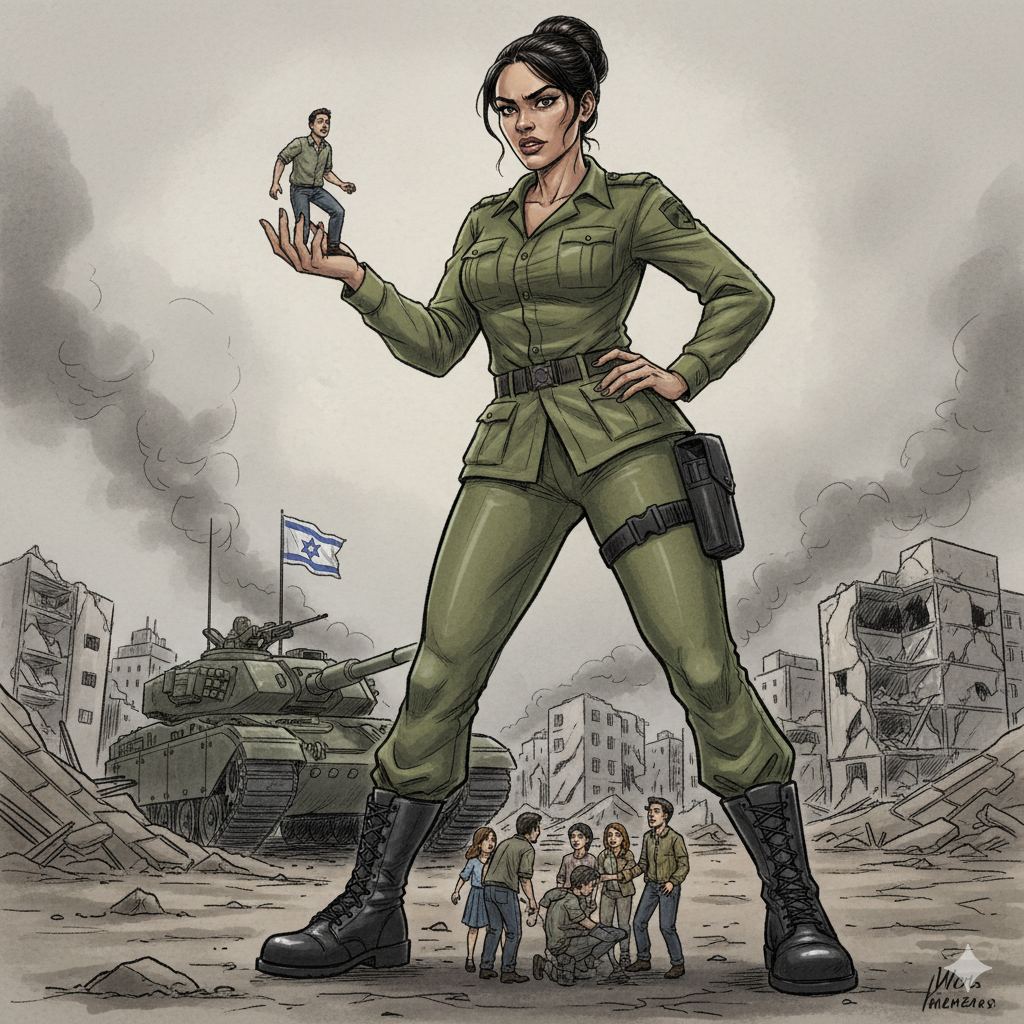
The Price of Domination: A Call for a Sovereign Global Authority
The history of civilization is, tragically, a history of the strong asserting will over the weak. However, as we move through 2026, the archaic impulse to dominate “the other” has evolved from a moral failure into a global existential threat. The domination of one people by another—whether through territorial annexation, prolonged military occupation, or systemic genocide—does more than destroy individual lives; it fractures the delicate machinery of the global economy and destabilizes the very foundation of international law. To survive this century, the world must transition from a collection of competing interests into a unified community governed by a United Nations empowered with true sovereignty, including the independent power to tax and the authority to maintain its own standing military.
The Modern Face of Oppression
The current global landscape provides a grim catalog of how the desire for domination persists. In Eastern Europe, the Russian occupation of Ukraine continues to serve as a stark reminder of imperialist ambition. This conflict has not only devastated Ukrainian infrastructure but has also permanently altered European security, forcing a massive diversion of capital from social welfare to military spending.
Similarly, the ongoing control exercised by Israel over Palestinian territories remains a flashpoint of systemic inequality. The denial of self-determination creates a cycle of violence that radiates outward, radicalizing populations and preventing the Middle East from achieving its potential as an integrated economic hub. In Africa, the situation is even more dire; from the 1000-day war in Sudan—which the international community has struggled to classify and contain—to the simmering tensions between Ethiopia and Eritrea over sea access, “war economies” have become structurally entrenched. These conflicts are often fueled by external powers vying for mineral resources, proving that the domination of a people is frequently just a mask for the theft of their wealth.
Perhaps most jarring are the recent rhetorical shifts in established democracies. The threats made by U.S. President Donald Trump regarding the annexation of Greenland and the use of trade tariffs as a “hard way” to coerce Canada and Denmark represent a dangerous return to 19th-century expansionism. When the world’s largest economy threatens the sovereignty of its closest allies, the very idea of a “rules-based order” begins to dissolve.
The Economic Victimhood of the World
While the human cost of these oppressions is immeasurable, the world economy is perhaps the greatest systemic victim. Domination is inherently inefficient. It requires:
- The Diversion of Capital: Billions are spent on occupation forces and border fortifications rather than on green energy or medical research.
- Supply Chain Volatility: Conflicts in Africa and Ukraine disrupt the flow of critical minerals and grain, causing global inflation that punishes the poor in every nation.
- Market Paralysis: Uncertainty over sovereignty—as seen in the Greenland crisis—chills foreign investment and stalls long-term economic planning.
When one nation seeks to control another, they do not just steal a territory; they sabotage the global marketplace.
A Sovereign United Nations
The current United Nations is a consultative body, often paralyzed by the veto power of the very nations practicing domination. To end the era of empire, the UN must be transformed into a functional global authority.
First, the UN requires the power to tax. Currently, the organization is a beggar, reliant on the whims of member states. A direct global tax—perhaps on international financial transactions or carbon emissions—would provide the UN with the independent resources necessary to fund humanitarian relief and development without being held hostage by national budgets.
Second, the UN must have the power to raise its own military. Relying on “peacekeepers” lent by member states is insufficient. A permanent UN standing army, loyal only to the global charter, would provide a credible deterrent against illegal annexations. It would allow the international community to intervene in genocides in real-time, rather than watching from the sidelines as “red lines” are crossed in places like Sudan or the Sahel.
The domination of one people by another is a relic of a primitive past that the modern world can no longer afford. We are too interconnected to allow any nation to act as a law unto itself. By empowering a central authority with the tools of sovereignty—the purse and the sword—we can finally move toward a world where the economy thrives in peace, and no people live under the shadow of another’s ambition.