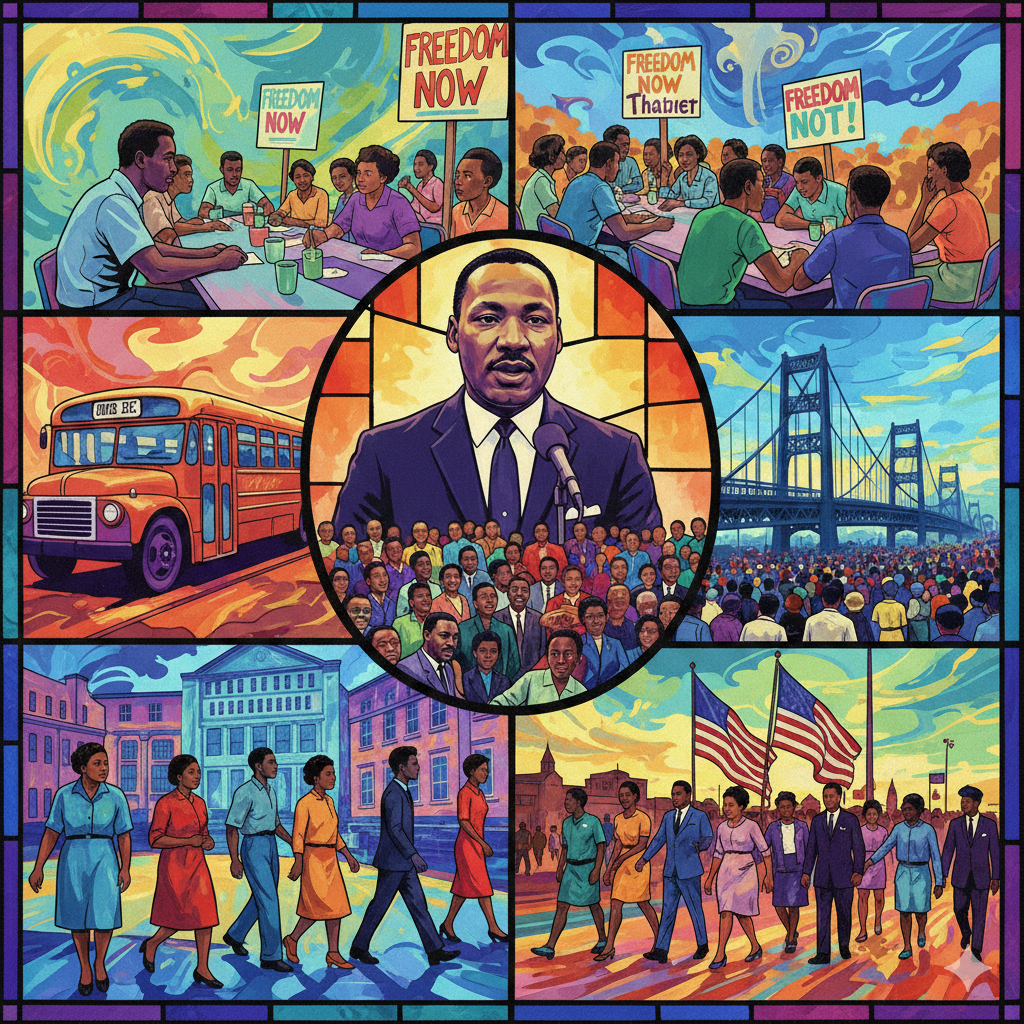
Each year, as we observe Dr. Martin Luther King Jr. Day, we do more than simply remember a man; we honor a philosophy of transformation that remains the most viable blueprint for social progress. In our current era, where tensions between government agencies like Immigration and Customs Enforcement (ICE) and immigrant rights protesters often reach a boiling point, King’s legacy offers a critical middle path. His life taught us that the pursuit of justice is most powerful when it is conducted with a disciplined commitment to peaceful assembly and a profound, mutual respect between the citizen and the state.
The Foundation of Nonviolence
At the heart of Dr. King’s message was the “Beloved Community”—a society based on justice, equal opportunity, and love of one’s fellow human beings. King’s strategy of nonviolent direct action was never a form of passive submission; rather, it was a “courageous confrontation” with evil.
For protesters today, especially those advocating for the rights of migrants, King’s example serves as a reminder that the moral high ground is maintained through dignity and restraint. When a protest remains peaceful, the focus stays on the policy or the injustice being questioned. Violence or lawlessness, by contrast, often shifts the public’s attention away from the “message” and onto the “mess,” giving detractors an excuse to ignore the underlying grievance.
Fidelity to the Law and Civil Disobedience
One of the most nuanced parts of Dr. King’s philosophy was his respect for the rule of law. In his Letter from Birmingham Jail, he famously distinguished between “just” and “unjust” laws.
- Just Laws: A man-made code that squares with the moral law.
- Unjust Laws: Codes that degrade human personality or are inflicted on a minority that had no part in enacting them.
King argued that if one must break an unjust law to rouse the conscience of the community, they must do so openly, lovingly, and with a willingness to accept the legal penalty. This “fidelity to the law” is what separates a civil rights activist from a rioter. By accepting the consequences (such as arrest), the protester demonstrates that they do not seek to destroy the legal system, but rather to purify it.
The Responsibility of Law Enforcement
For the principles of cooperation to work, the burden of respect cannot fall solely on the protesters. Law enforcement and federal agencies have a reciprocal duty to uphold the constitutional rights of those they encounter.
In the context of recent conflicts involving ICE, the escalation of force—such as the use of surveillance technology to target dissenters or the deployment of riot gear against peaceful crowds—can erode public trust. Just as Dr. King called for protesters to be disciplined, he frequently highlighted the brutality of police who used their authority to suppress basic American freedoms. For a society to remain “ordered,” law enforcement must:
- Protect the First Amendment: Facilitate the right to assemble rather than viewing every crowd as a threat.
- Practice De-escalation: Use communication and transparency to lower tensions.
- Exercise Restraint: Ensure that the response to protest is always proportionate and respects the inherent dignity of every individual, regardless of their legal status.
A Call for Cooperation
Dr. Martin Luther King Jr. Day should be a “day on, not a day off”—a time for us to recommit to the hard work of cooperation. In a time of deep division over immigration and border policy, we must remember King’s warning that “injustice anywhere is a threat to justice everywhere.”
True progress is made when protesters speak with a clear, peaceful voice and when those in power listen and protect those voices. By staying within the framework of the law and respecting each other’s humanity, we ensure that the “troubled times” of today become the “triumphs” of tomorrow.