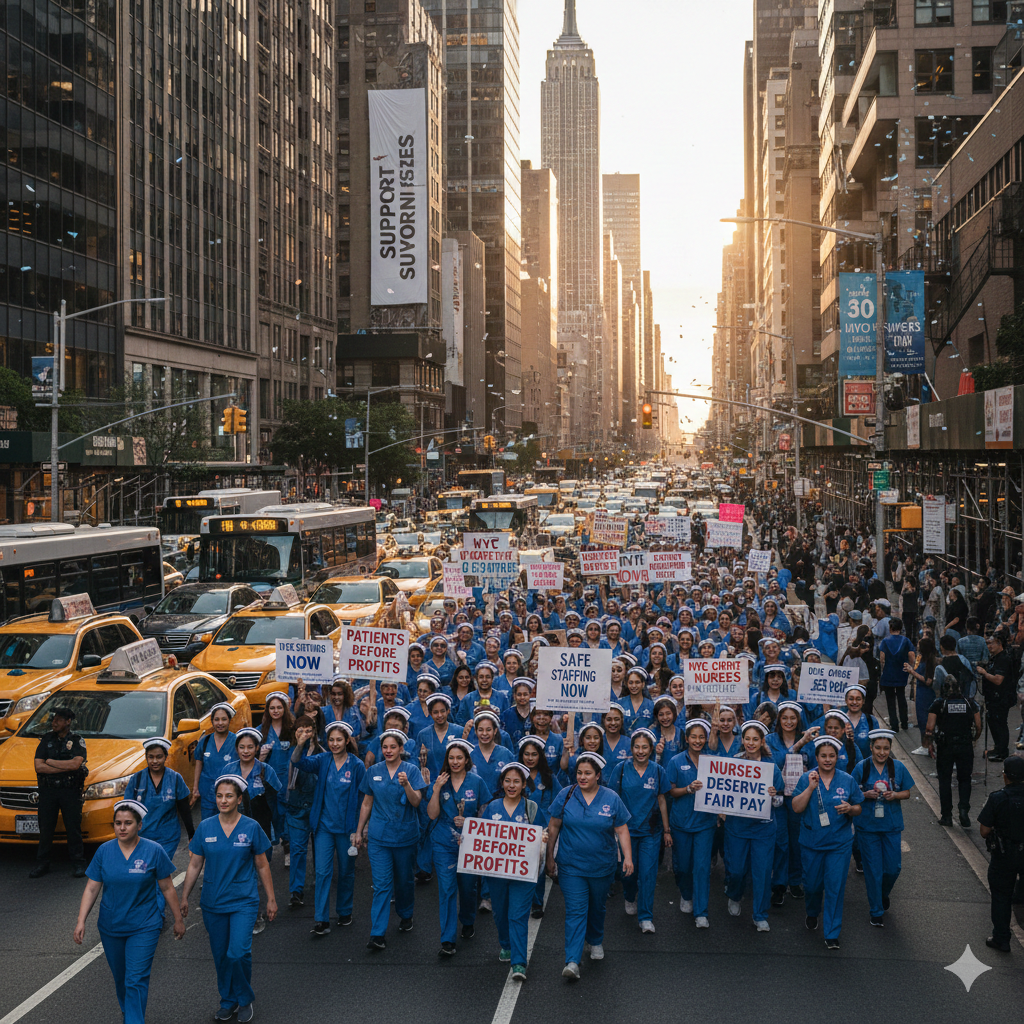
In January 2026, the streets outside New York City’s most prestigious medical institutions—Mount Sinai, Montefiore, and NewYork-Presbyterian—became the front lines of a historic labor struggle. Over 15,000 nurses walked off the job, initiating the largest strike in the city’s history. While critics often point to the disruption of care as a reason to avoid such actions, the reality is that the NYC nurse strike is not merely a dispute over paychecks; it is a necessary, moral stand for the sustainability of the healthcare system and the safety of the patients within it.
The Crisis of Understaffing and Patient Safety
The primary driver of the strike is the issue of safe staffing ratios. For years, nurses have been forced to handle unmanageable patient loads, sometimes caring for double the recommended number of patients in high-stress environments like the Emergency Department.
- The Patient Risk: Understaffing isn’t just a “workload” issue; it is a patient safety crisis. When a single nurse is responsible for too many lives, the risk of medication errors, missed symptoms, and delayed treatments skyrockets.
- The Last Resort: Nurses view the strike as a “lifesaving intervention.”
- By walking out, they are sounding an alarm that the current conditions are more dangerous than the temporary disruption of a strike. They are fighting for the legal right to give every patient the focused attention they deserve.
Protection from Workplace Violence
A striking and often overlooked aspect of this labor action is the demand for workplace violence protections. Recent years have seen a terrifying rise in incidents, including active shooter scares and physical assaults on medical staff.
Nurses are asking for basic security measures—such as wearable panic buttons and increased security personnel—to ensure they can do their jobs without fearing for their lives. When a hospital refuses to invest in the safety of its staff, it sends a clear message that the well-being of the frontline worker is secondary to the bottom line. Striking for these protections is a fundamental right to a safe workplace.
Economic Fairness and Executive Compensation
The argument that hospitals “cannot afford” to meet nurse demands is often contradicted by the financial realities of these institutions.
| Metric | Context |
| Executive Pay | CEOs at these private, non-profit hospitals often earn tens of millions of dollars annually, with some seeing 50% raises in recent years. |
| Hospital Cash Reserves | Major systems like Mount Sinai and Montefiore have held billions in cash and assets, even while threatening to cut nurse health benefits. |
| Temporary Labor Costs | Hospitals have spent upwards of $100 million in a single week on “travel nurses” to bridge the strike—money that could have been invested in permanent staff retention. |
It is ethically inconsistent for a hospital to claim poverty when it comes to nurse health insurance and inflation-adjusted raises while simultaneously awarding multi-million dollar bonuses to administrators.
Preserving the Future of Nursing
Finally, the strike is about retention. The healthcare industry is facing a massive exodus of veteran nurses due to burnout. If the most experienced professionals leave because they are underpaid and overworked, the entire healthcare infrastructure of New York City will collapse. By striking for better benefits and fair pay, nurses are attempting to make the profession sustainable for the next generation.
Conclusion
The New York City nurse strike is a courageous defense of the “human” element in healthcare. Nurses are not walking away from their patients; they are standing up for a system where “care” is more than a corporate slogan. By demanding safe staffing, protection from violence, and fair compensation, they are ensuring that the people who keep the city alive are treated with the dignity they have earned.
2 replies on “New York City Nurse Strike”
It’s so important to understand the human side of these labor struggles. Nurses are not just walking off the job for a paycheck—they’re raising a red flag for patient safety. The lack of proper staffing isn’t just inconvenient, it’s dangerous.
Very True