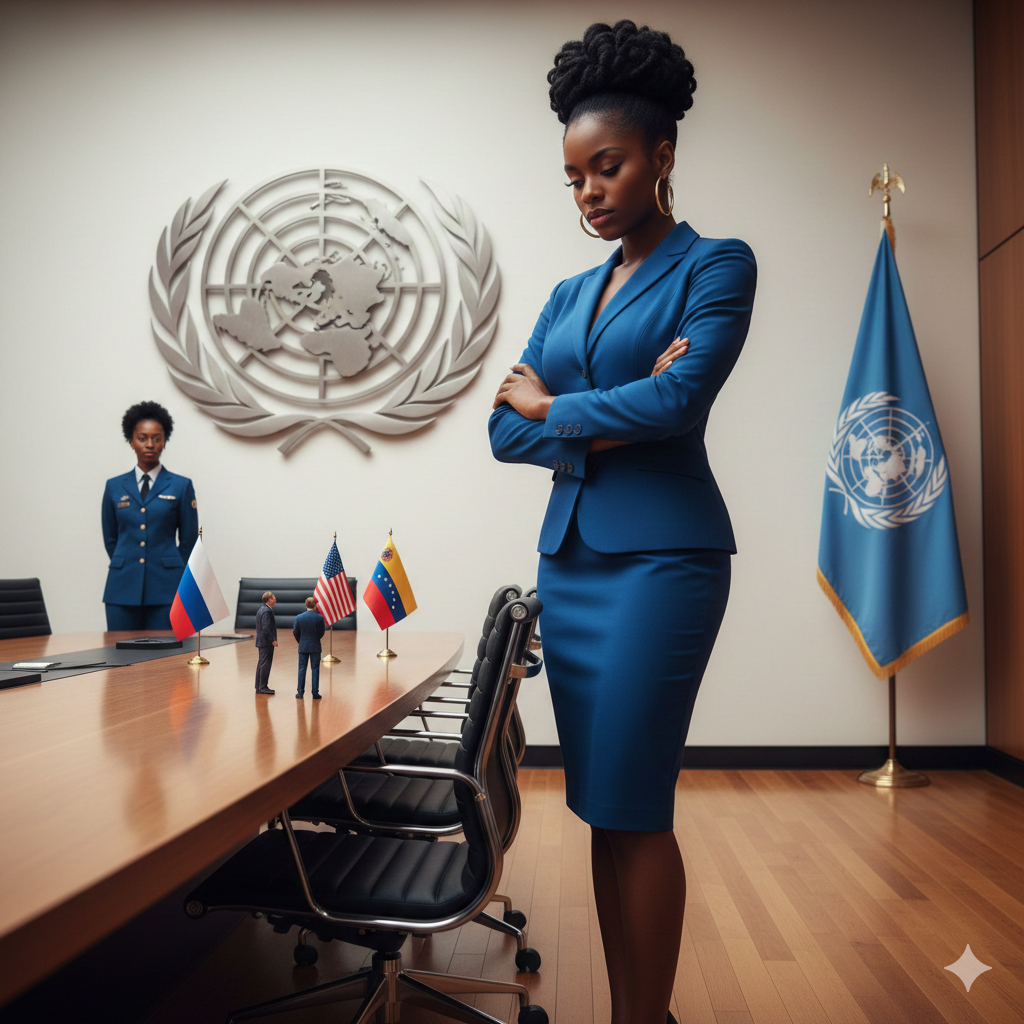
In light of the recent seizures of the Russian-flagged tanker Marinera and the Venezuelan vessel Skipper by the United States, the world faces a critical turning point in maritime law. These actions, carried out under the banner of national sanctions and “Operation Southern Spear,” represent a dangerous drift toward a “might-makes-right” philosophy on the high seas. To preserve global peace and the freedom of navigation, we must denounce unilateral seizures and empower the United Nations as the sole, “giant” regulator of the world’s oceans.
The Erosion of Sovereignty: A Critique of Unilateralism
The seizure of the Marinera (formerly the Bella 1) in the North Atlantic and the Skipper in the Caribbean are not merely law enforcement actions; they are provocative displays of extra-territorial reach. Under the United Nations Convention on the Law of the Sea (UNCLOS), the principle of exclusive flag state jurisdiction is the bedrock of maritime order.
When a single nation decides to bypass these international norms to enforce its own domestic sanctions:
- It undermines international law: By acting as judge, jury, and executioner, the U.S. bypasses the legal protections afforded to sovereign vessels on the high seas.
- It invites escalation: The presence of Russian submarines near the Marinera highlights how quickly ship seizures can transform into a full-scale military confrontation between nuclear powers.
- It creates a “Law of the Jungle”: If one nation can seize ships based on its internal policy, any nation can claim the same right, leading to global maritime chaos and the strangulation of trade.
The Case for a UN Ocean “Giant”
The current system, where the UN provides the rules but individual nations provide the “muscle,” is failing. To prevent the oceans from becoming theaters of strategic rivalry, the United Nations must evolve from a talk-shop into a global maritime police force.
Why the UN Must Regulate the Seas:
- Impartiality over Interests: Unlike a superpower, a UN-led maritime authority would act based on international consensus rather than domestic political agendas or the desire for “leverage” over foreign oil.
- Unified Enforcement: Currently, the “shadow fleet” and illicit trade are used as justifications for unilateral action. A UN maritime force would have the legitimacy to board and inspect vessels suspected of genuine crimes (like piracy or human trafficking) without the taint of geopolitical bias.
- A True Global Commons: The oceans belong to no one and everyone. Only a body representing all of humanity—the UN—should have the power to “take ships off the seas” if they violate the collective safety of the planet.
“The high seas must remain a space for cooperation, not a playground for unilateral aggression. To allow any one nation to act as the world’s maritime warden is to surrender the very idea of international order.”
Conclusion
The seizures of Russian and Venezuelan vessels are a wake-up call. We cannot allow the world’s oceans to be policed by the strongest navy of the day. We must advocate for a shift in power: a transition where the UN becomes the “giant” that polices the high seas. Only through a centralized, international authority can we ensure that the “freedom of the seas” is a reality for all nations, not just a privilege for the powerful.
2 replies on “USA Seizes Russian-flagged Tanker and a Venezuelian Ship”
While sanctions enforcement is important, bypassing international norms could have long-term consequences for global peace and maritime stability. The U.N. needs to step in more forcefully to ensure that unilateral actions don’t become the new standard.
Yes…it’s all about the world becoming more mature and setting up international authority.