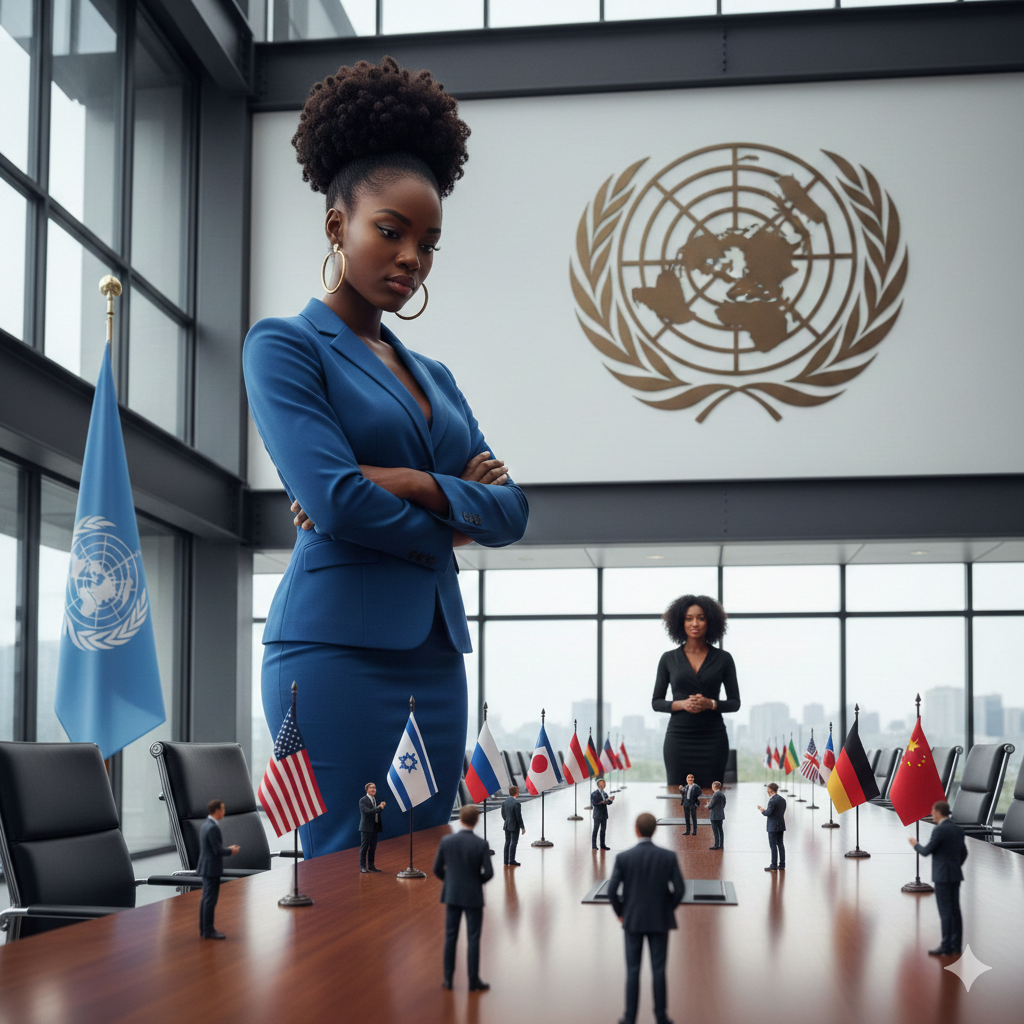
The following article examines the recent surge in American unilateralism under the second Trump administration and the growing argument for a global legal authority capable of restraining such actions.
Beyond the “Don-roe Doctrine”: The Moral Necessity for a “Giant” United Nations
In the opening days of 2026, the international community finds itself at a terrifying crossroads. Following the surgical military intervention in Venezuela that resulted in the capture of Nicolás Maduro, President Trump has signaled that the “Don-roe Doctrine”—an aggressive, modern expansion of the 1823 Monroe Doctrine—is now the guiding light of American foreign policy.
With threats of “Operation Colombia,” military pressure on Mexico over drug trafficking and water rights, and the persistent, unsettling demand for the “acquisition” of Greenland, the world is witnessing a return to 19th-century-style imperialism. However, in an interconnected, nuclear-armed world, this unilateral path is not just anachronistic; it is fundamentally wrong.
The Erosion of Sovereignty: Mexico, Colombia, and Greenland
The administration’s recent rhetoric has targeted America’s closest neighbors with unprecedented hostility. By claiming that Colombia is “very sick” and suggesting military operations to dismantle cocaine mills, or threatening Mexico with invasions and tariffs over resource disputes, the U.S. is bypassing the very foundations of international diplomacy.
Furthermore, the renewed push for Greenland—a self-governing part of the Kingdom of Denmark—treats land and people as mere real estate. This “need” for Greenland for Arctic defense ignores the right of self-determination, a cornerstone of modern civilization. When a single nation decides it has the right to redraft the maps of other sovereign states based on its own security “needs,” the rule of law is replaced by the rule of the jungle.
The Legal Reality: Only the UN Holds the Sword
Under the United Nations Charter, specifically Article 2(4), all member states are prohibited from the “threat or use of force against the territorial integrity or political independence of any state.” There is no “neighborhood exception” for these rules.
- Unilateralism is Lawlessness: No country, regardless of its economic or military might, has the moral or legal right to invade another to settle domestic grievances or seize resources.
- The UN’s Exclusive Mandate: The only legitimate authority for collective intervention resides with the UN Security Council. Any action taken outside this framework is a violation of the “jus cogens” norms—the highest level of international law.
The Case for a “Giant” United Nations
The current crisis demonstrates that the United Nations, as it exists today, is too easily ignored. For international law to be more than just a suggestion, the UN must undergo a radical transformation. It is time to move past the era of the “strongest nation” and toward the era of the “strongest Law.”
We must argue for an empowered, centralized UN that functions like a “giant” on the global stage. For peace to be permanent, the nations of the world—including the superpowers—should feel tiny and small before the majesty of international law and the collective will of humanity.
A “Giant UN” would possess:
- Binding Enforcement: The ability to impose immediate, crippling sanctions or deploy a standing UN peace enforcement force that outweighs any single national military.
- Universal Jurisdiction: The power to check the ambitions of any leader who threatens the borders of another.
- Moral Primacy: A shift in global consciousness where “national interest” is always secondary to “global stability.”
Conclusion: A Choice Between Chaos and Order
If we allow the precedent set in Venezuela to become the new standard for Mexico, Colombia, and Greenland, we invite a world of endless, fragmented warfare. The path forward requires us to abandon the vanity of nationalism and submit to a higher authority. The UN must be built up until no single president can threaten the peace of the world with a tweet or a strike. Only when the nations feel small can the world truly be safe.