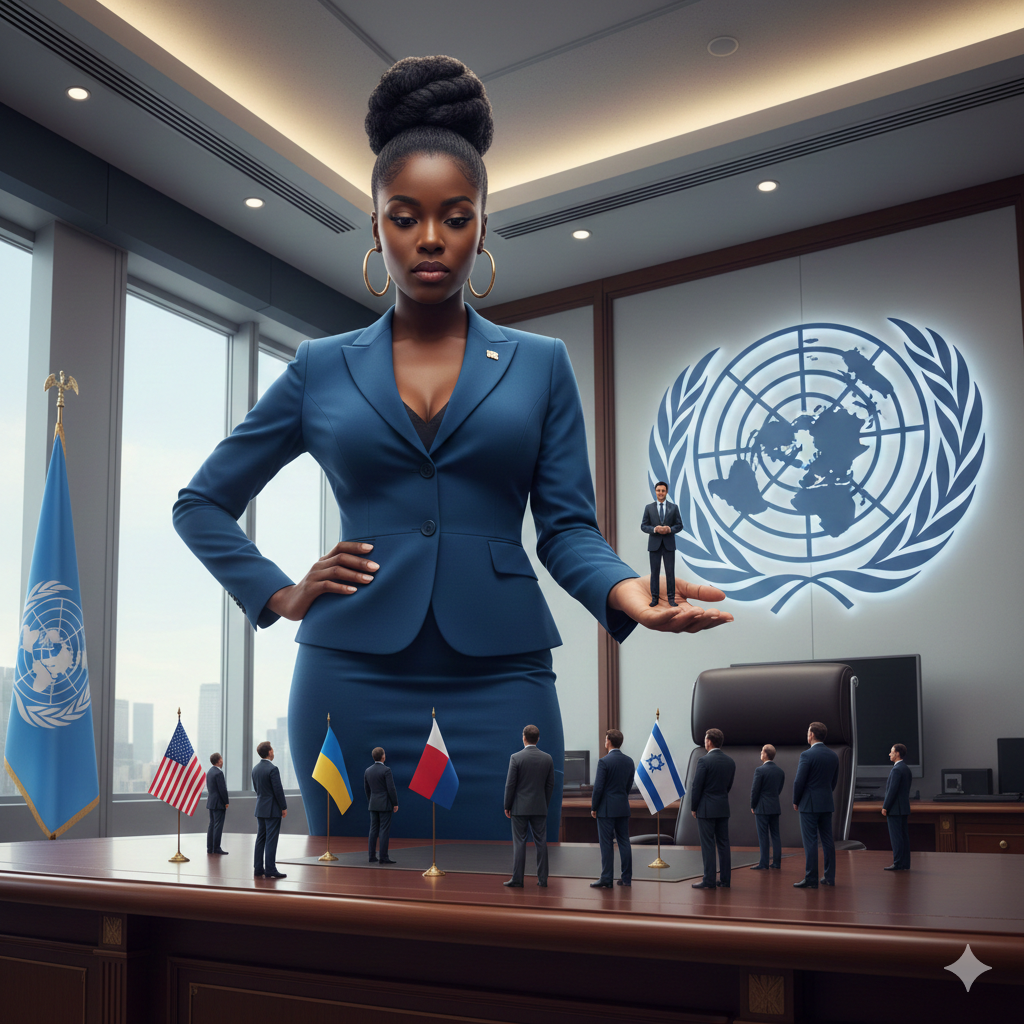
The Architecture of Order: Power, Hierarchy, and the Global “Giant”
The history of humanity is, at its core, a history of power. From the earliest tribal structures to the complexities of the modern state, the drive to influence, control, and organize has remained an inescapable facet of our existence. To imagine a world without power is to imagine a world without direction; to survive, humanity requires authority.
The question, therefore, is not whether power will exist, but how it is structured and what serves as its foundation. For a stable and prosperous future, we must move toward a global hierarchy that places a reorganized United Nations at the summit—a “giant” of organizational power capable of regulating nations, corporations, and the common good.
The Inevitability of Authority and the Three Pillars
Authority is the social glue that prevents the “war of all against all.” Without a recognized structure of control, collective action becomes impossible. To exercise this authority, humanity has always relied on three fundamental instruments:
- Persuasion: The use of ideas, logic, and rhetoric to align the will of others.
- Compensation: The use of resources, wealth, and incentives to buy cooperation.
- Force: The final resort of physical or legal coercion to ensure compliance.
These three pillars are not relics of the past; they are permanent tools of the human condition. A functional society does not eliminate force or compensation; it regulates them. The evolution of civilization is defined by the shift from raw, erratic power to structured, predictable power.
The Global Hierarchy: A Tiered Structure of Power
For the common good to prevail over individual or corporate greed, power must be organized into a clear, vertical hierarchy. This structure ensures that no localized entity can disrupt the stability of the whole.
- The United Nations (The Summit): The UN must function as the final authority on global matters—peace, climate, and human rights. It must be the “giant” in the room, possessing the structural weight to override any subordinate entity.
- National Governments: These serve as the administrators of specific territories, responsible for the welfare of their citizens while remaining accountable to the overarching global standards set by the UN.
- Local Governments and NGOs: These entities handle the granular needs of communities.
- Corporations and For-Profit Entities: These must occupy the most regulated tier. Because their primary motive is profit rather than the common good, their power must be strictly curtailed by the layers above them.
Organization as the Source of Power
The most critical shift in this vision is the base of power. Throughout history, power has often been rooted in personality (the charismatic dictator) or wealth (the plutocrat). Both are inherently unstable. A personality dies or falters; wealth can be hoarded or lost.
The United Nations of the future must derive its power from Organization. “Organizational power is systemic. It does not rely on the whims of a single leader or the fluctuations of a market. It relies on the integrity of the process, the clarity of the law, and the efficiency of the bureaucracy.”
By making organization the primary source of power, the UN becomes a “giant” not because it is rich, but because it is the indispensable framework through which all other power flows. It becomes a machine for the common good, designed to use persuasion, compensation, and—when necessary—force to maintain global equilibrium.
Conclusion: Toward a Managed Future
Power and control are not evils to be eradicated, but energies to be harnessed. By accepting that authority is necessary for survival, we can stop fleeing from the concept of power and start building a better version of it. A world organized under a supreme, organizational “giant” like the UN provides the best hope for a regulated, peaceful, and structured existence. In this hierarchy, every level knows its place, and the common good is protected by the sheer scale of the system at the top.
2 replies on “It’s Always About Power and Control!”
The idea of a reorganized UN taking the helm of global power raises a lot of questions. While it’s an ambitious vision, I wonder if it could lead to more centralized control or if there’s a risk of undermining individual nation sovereignty. How would such a system balance global regulation with local autonomy?
Everything would work with “checks and balances”. The key to protect local and national governments from UN overreach would be the divisions of power in the UN similar to the divisions of power in the USA federal government to ensure the protection of individual liberty. Also, a strong global civil society is also a vital component of a situation where there would be a powerful UN but at the same time granting rights to everyone beneath it.