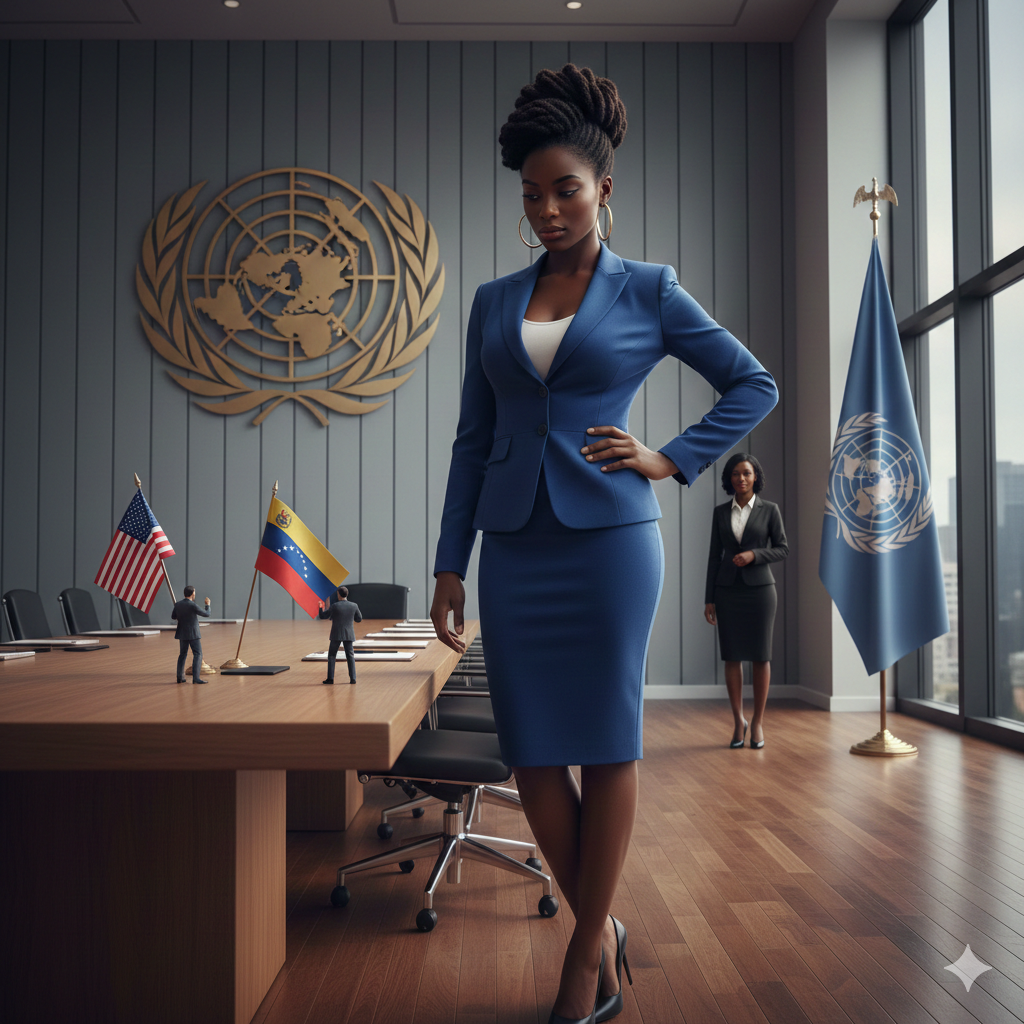
The Crisis of Unilateralism: A Case for Multilateral Accountability in Venezuela
The escalating tensions between the United States and Venezuela have reached a critical juncture that threatens regional stability and undermines the foundation of international law. While the United States justifies its military posture and economic blockades as a necessary crusade against “narco-terrorism,” its unilateral approach—characterized by extrajudicial maritime strikes and sweeping sanctions—circumvents the global legal order. Simultaneously, the Venezuelan government cannot be shielded from scrutiny; substantive evidence suggests the state has devolved into a “gangster state” where high-ranking officials facilitate the global drug trade. This dangerous deadlock demonstrates that neither unilateral aggression nor sovereign impunity is a viable path forward. Instead, the situation demands a robust, centralized response from the United Nations to address both criminal culpability and illegal aggression.
The Illegality of Unilateral Aggression
The recent escalation of U.S. military activity in the Caribbean, including the deployment of warships and the reported execution of over 20 strikes on vessels, constitutes a grave breach of the UN Charter. Under Article 2(4), the threat or use of force against the territorial integrity or political independence of any state is strictly prohibited. By labeling the Venezuelan leadership a “foreign terrorist organization” to justify maritime blockades, the U.S. is bypassing the Security Council, which is the only body with the legal authority to authorize such coercive measures.
UN experts have rightly condemned these actions as “extrajudicial executions” that violate the international law of the sea. These unilateral measures do not merely target a regime; they exacerbate a humanitarian crisis that has already claimed tens of thousands of lives through the collapse of public health and infrastructure.
Evidence of State-Sponsored Criminality
Criticizing U.S. intervention does not equate to an endorsement of the Maduro administration. Substantial evidence points to the existence of the Cartel of the Suns (Cartel de los Soles), a term used to describe a diffuse network of high-ranking Venezuelan military officers involved in international cocaine trafficking.
The evidence of this criminality is documented through multiple channels:
- Federal Indictments: In 2020 and 2025, U.S. courts unsealed indictments charging Nicolás Maduro and 14 other officials with narco-terrorism, alleging they used the state apparatus to “flood the United States with cocaine.”
- Expert Testimony: Former high-ranking officials, such as Hugo “El Pollo” Carvajal (former head of military intelligence), have pled guilty in international courts, confirming that illicit economies are used to ensure political loyalty and fund the regime’s survival.
- Regional Impact: Neighbors like Guyana and Colombia have reported that Venezuelan security forces facilitate the movement of illegal drugs and gold, destabilizing the entire hemisphere.
The Necessity of a UN-Led Resolution
The current “cowboy-style” diplomacy—where one powerful nation acts as judge, jury, and executioner—only allows the Venezuelan government to paint itself as a victim of “imperialist aggression,” thereby consolidating its domestic power. To break this cycle, the United Nations must assert its authority through several key actions:
- Independent Investigation: The UN should establish a specialized commission to investigate drug trafficking allegations, moving the evidence from domestic U.S. courts to an international platform that carries global legitimacy.
- Multilateral Accountability: If criminal evidence is verified, the UN Security Council—not individual states—should be the body to impose targeted, legally binding sanctions that minimize civilian harm.
- Electoral Verification: The UN must lead a neutral mediation process to restore democratic transparency, ensuring that any transition of power is the result of the Venezuelan people’s will, not external force.
Conclusion
Unilateralism is a relic of an era that the UN Charter was specifically designed to end. By allowing the U.S. to conduct a “shadow war” in the Caribbean, the international community risks setting a precedent where sovereignty is subject to the whims of the powerful. However, by ignoring the documented narco-trafficking within the Venezuelan state, we abandon the victims of organized crime. Only a UN-led response can provide the neutral, legal, and firm framework needed to hold both aggressors and criminals accountable.