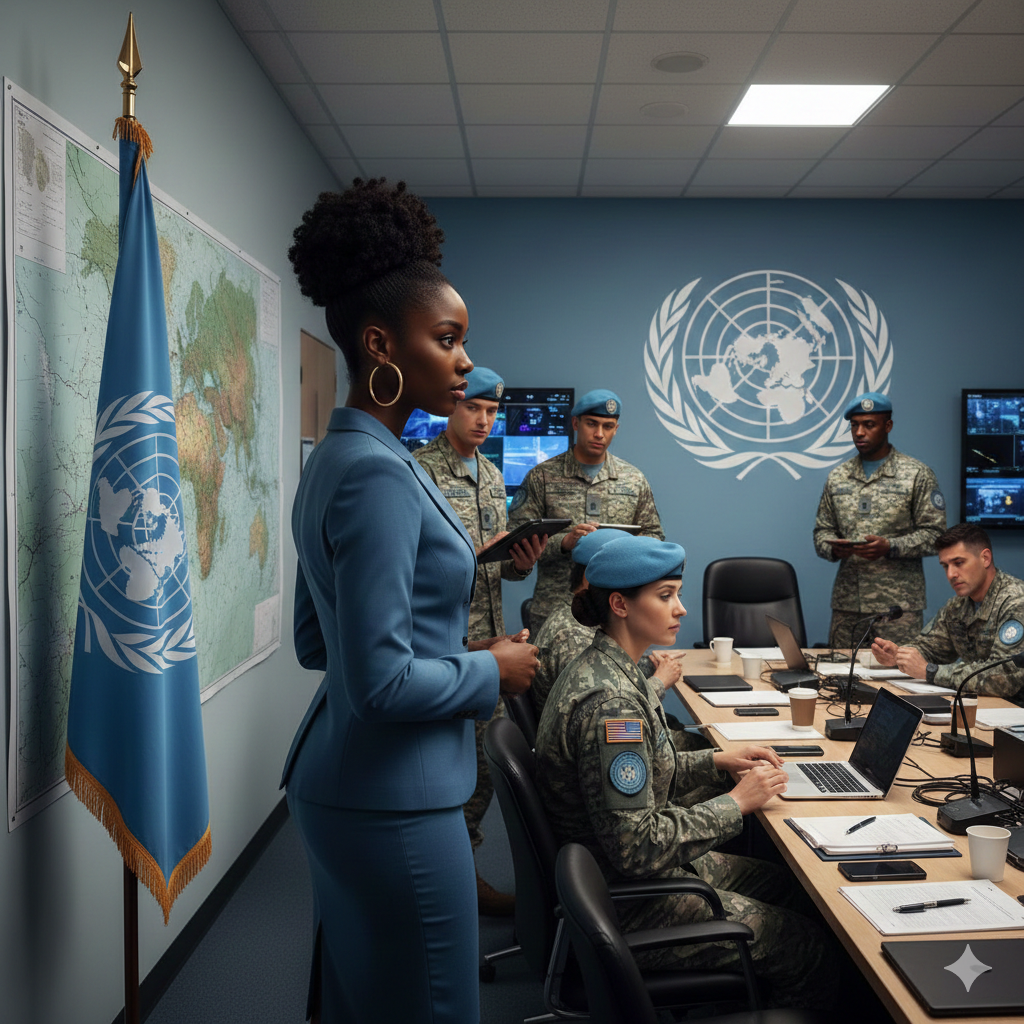
The Case for Multilateralism: Strengthening Legitimacy in the Fight Against Terrorism
The recent U.S. airstrikes in northwest Nigeria, conducted in December 2025, have reignited a critical debate regarding the unilateral use of military force in the global war on terror. While the United States cited the protection of persecuted communities and the elimination of ISIS-Sahel militants as the primary drivers for the strikes, the operation’s long-term effectiveness and international standing remain under scrutiny. To ensure that such interventions are viewed as legitimate by the global community, there is an urgent need for greater United Nations (UN) involvement and a shift toward a truly internationalized counterterrorism effort.
The Legitimacy Gap in Unilateral Action
Military operations conducted by a single superpower—even when coordinated with a host government—often suffer from a “legitimacy gap.” When the United States acts independently, the international community frequently perceives the intervention through the lens of national interest rather than collective security. In the Nigerian context, the strikes were preceded by rhetoric emphasizing the protection of specific religious groups, which some critics argue narrows the scope of the mission and risks inflaming local sectarian tensions.
UN involvement provides a “multilateral stamp of approval” that unilateral actions lack. A mandate from the UN Security Council (UNSC) signals that the international community has reached a consensus on the necessity of force. This collective authorization transforms an act of power into an act of international law, reducing the perception of “gunboat diplomacy” and fostering broader global support.
Terrorism as a Borderless Threat
The groups operating in the Sahel and West Africa, such as ISIS-Sahel and Boko Haram, do not respect national borders. Their networks for financing, recruitment, and weaponry are inherently transnational. Consequently, a strategy centered on sporadic, nation-to-nation strikes is insufficient to address the systemic nature of the threat.
| Feature | Unilateral | Multilateral |
| Legal Basis | Host nation consent or self-defense. | UNSC Resolution under Chapter VII. |
| Scope | Often limited to tactical military strikes. | Holistic: sanctions, aid, and peacekeeping. |
| Perception | Can be seen as intrusive or “hegemonic.” | Viewed as a collective security effort. |
| Sustainability | Dependent on the intervening nation’s domestic politics. | Based on long-term international commitment. |
The Need for a More Effective UN
For multilateralism to work, the UN itself must become a more willing and effective actor in combating actual terrorism. Historically, the UN has often been relegated to “peacekeeping”—monitoring truces between state actors—rather than “peacemaking” in the face of non-state terrorist organizations.
To become effective, the UN must:
- Streamline Mandates: Move beyond purely observational roles to allow for robust enforcement actions when civilians are under imminent threat from designated terrorist groups.
- Integrate Regional Alliances: Work closer with organizations like the Economic Community of West African States (ECOWAS) and the African Union (AU) to ensure that interventions are “nationally owned” and culturally informed.
- Address Root Causes: Utilize its unique position to combine military security with developmental aid, addressing the poverty and lack of governance that allow extremism to flourish in the first place.
Conclusion
The fight against terrorism in Nigeria and the broader Sahel cannot be won through “guns-a-blazing” tactics alone. While tactical strikes may offer temporary relief, they lack the legal and moral weight required to stabilize a region. By bringing these efforts under the umbrella of the United Nations, the international community can ensure that the fight against terrorism is not just a Western priority, but a global obligation. A more proactive, empowered UN is the only way to transform military intervention into a legitimate, sustainable path toward peace.