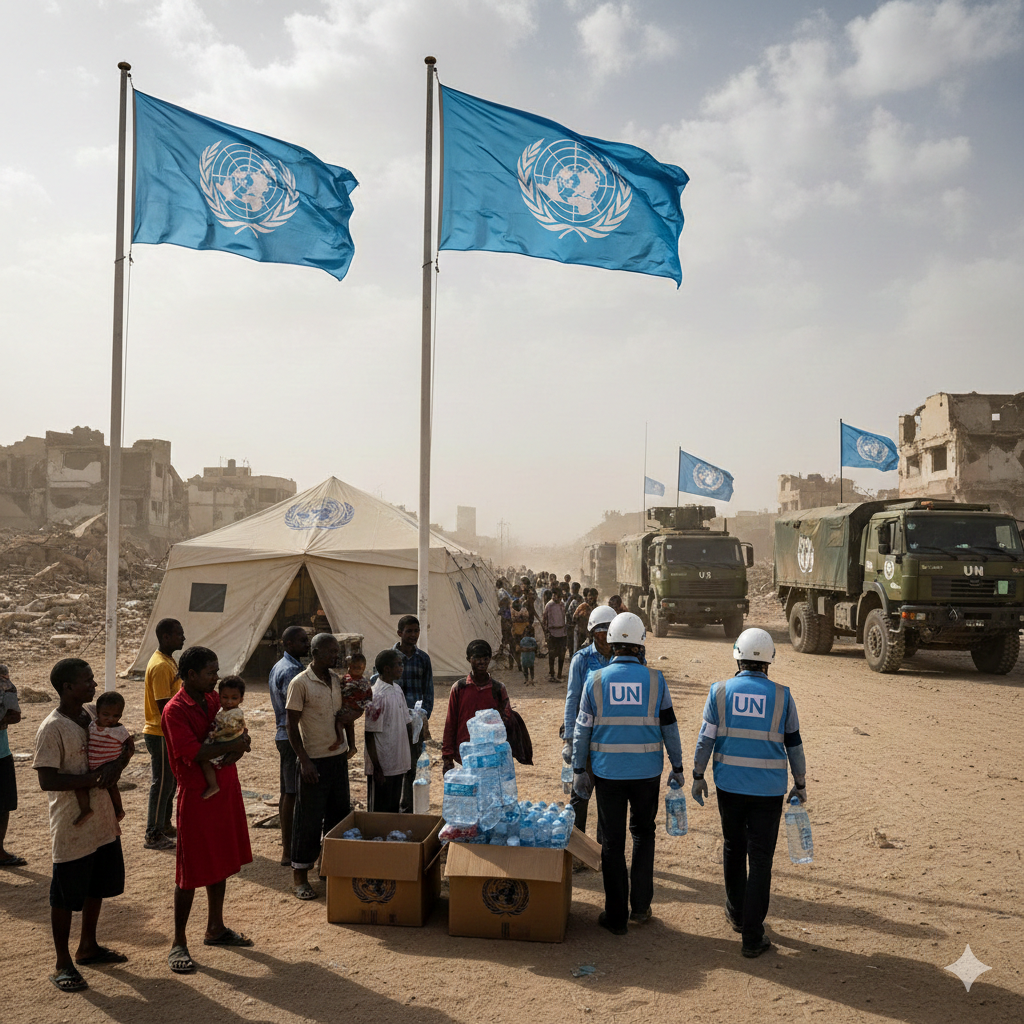
Supporting the United Nations Office for the Coordination of Humanitarian Affairs (OCHA) is not merely an act of international charity; it is a strategic investment in the world’s most essential safety net. As the primary body responsible for synchronizing global disaster and conflict response, OCHA ensures that aid is not just delivered, but delivered effectively, fairly, and swiftly.
In an era of escalating global crises, supporting OCHA is critical for three primary reasons: it maximizes the efficiency of the humanitarian system, provides the financial “gasoline” for rapid response, and serves as the world’s most credible voice for the vulnerable.
1. The Power of Coordination: Avoiding Chaos
When a major disaster strikes—such as the 2023 earthquake in Türkiye and Syria—hundreds of NGOs, government agencies, and international bodies rush to help. Without a central “air traffic controller,” this influx can lead to duplication of efforts in some areas while leaving others completely neglected.
- Eliminating Redundancy: OCHA organizes the “Cluster System,” ensuring that one agency handles water, another handles shelter, and another manages health, preventing wasted resources.
- Data-Driven Action: Through its Information Management tools, OCHA identifies exactly where the need is greatest, ensuring that aid follows evidence rather than media attention.
- Negotiating Access: OCHA often works behind the scenes to negotiate “humanitarian corridors,” allowing aid workers to cross frontlines and reach civilians in active war zones.
2. Strategic Financing: The “First Responder” Fund
Supporting OCHA means supporting the Central Emergency Response Fund (CERF) and Country-Based Pooled Funds (CBPFs). These are some of the most efficient financial tools in the humanitarian world.
- Speed: CERF allows the UN to jump-start aid operations within hours of a crisis, long before traditional fundraising appeals can be processed.
- The “Underfunded” Lifeline: Much of OCHA’s funding goes to “forgotten crises”—protracted conflicts in places like Chad or Yemen that no longer dominate the news cycle but where millions of lives are at risk.
- Empowering Local NGOs: OCHA’s pooled funds are unique in that they provide direct support to local, on-the-ground organizations that understand the culture and terrain better than any international body.
3. Advocacy and Principle: Protecting the Vulnerable
Beyond logistics and money, OCHA is a moral authority. It is the lead advocate for International Humanitarian Law, constantly reminding warring parties that “even wars have rules.”
- Humanitarian Principles: OCHA ensures that aid is given based on need alone (impartiality) and is not used as a political tool (neutrality).
- The Global Voice: By producing the Global Humanitarian Overview, OCHA provides the definitive account of the world’s needs, forcing the international community to face the reality of human suffering.
Conclusion
As climate change increases the frequency of natural disasters and geopolitical tensions continue to flare, the demand for OCHA’s services is at an all-time high. To support OCHA is to believe that human life has value regardless of geography, and that the global community has a responsibility to respond to suffering with order, speed, and integrity. Without OCHA, the world’s response to crisis would be a fragmented, inefficient scramble; with it, we have a fighting chance to save the lives of the nearly 300 million people currently in need of assistance.