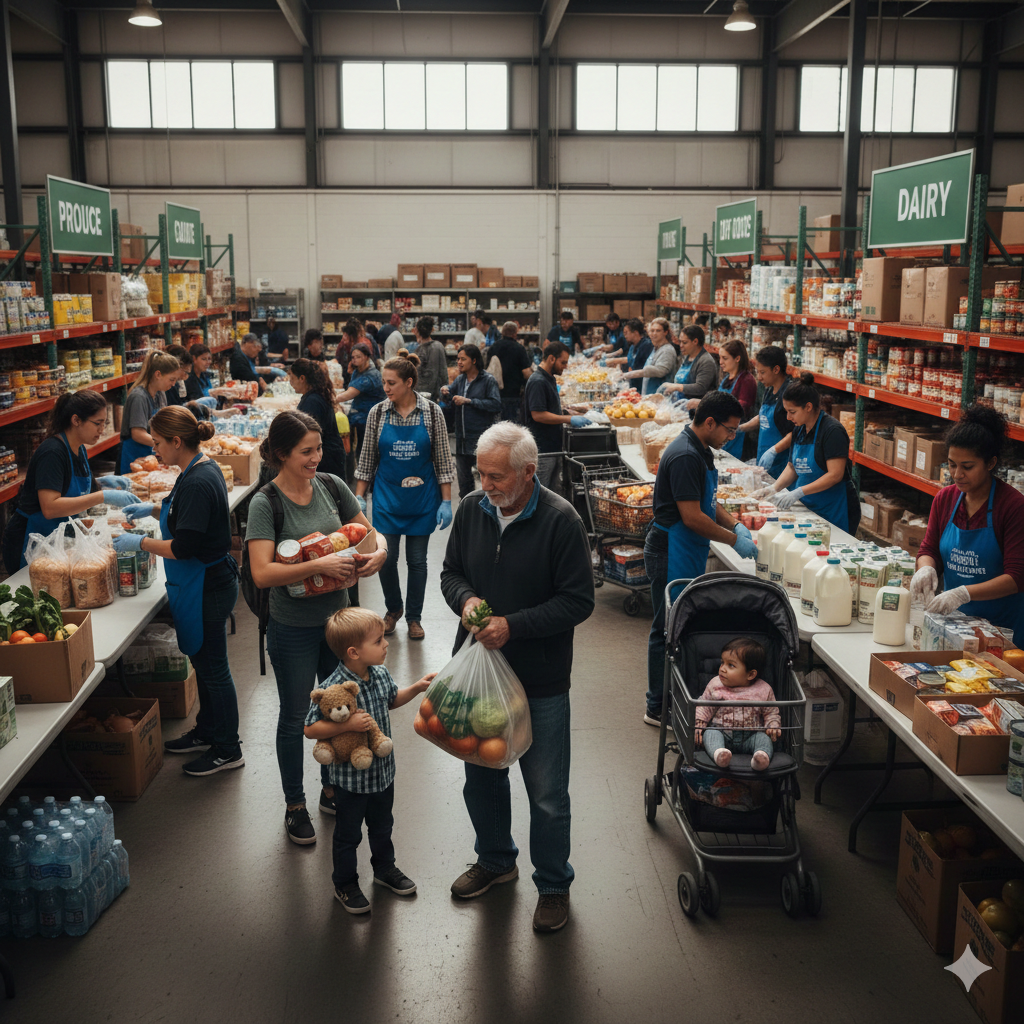
The Vital Lifeline: Why Local Food Banks Matter in a Global Context
In a modern, organized society, the responsibility for ensuring that no citizen goes hungry is often viewed as a fundamental obligation of the state. Governments possess the infrastructure, tax revenue, and legislative power to enact broad social safety nets like SNAP or school lunch programs. However, the reality of poverty is frequently more immediate and complex than a centralized bureaucracy can handle. Supporting a local food bank is not merely an act of charity; it is a vital community intervention that fills the inevitable gaps left by government policy, while highlighting the need for a more robust international framework to address poverty at its root.
Filling the Gaps in the Social Safety Net
While it is the job of the government to manage systemic poverty, federal and state programs are often restricted by rigid eligibility requirements, processing delays, and periodic budget cuts. For a family facing a sudden job loss or a senior citizen choosing between life-saving medication and a meal, the weeks it takes for government benefits to arrive are weeks they cannot afford to wait.
Local food banks act as the “emergency room” of the food system. Because they are rooted in the community, they can respond with a speed and flexibility that governments cannot match. They offer:
- Immediate Relief: No-questions-asked assistance for those in crisis.
- Nutritional Support: The ability to provide fresh produce and perishables that are often difficult to distribute through traditional voucher systems.
- A “Multiplier Effect”: Most food banks can turn a $1 donation into multiple meals through bulk purchasing power, making individual contributions far more impactful than they appear.
The Power of Local Solidarity
Donating to a local food bank also strengthens the social fabric of a community. It fosters a culture of mutual aid, where neighbors look out for neighbors. This grassroots support transforms the fight against hunger from an abstract policy goal into a shared human mission. When we give locally, we are not just providing calories; we are providing stability. A well-fed community is one where children can focus in school, workers can maintain their health, and local economies remain resilient. By stepping in where the government falls short, local donors ensure that the most vulnerable members of society do not slip through the cracks of a slow-moving system.
The Role of International Law and Wealth Redistribution
The necessity of local food banks also points to a larger, global failure in how wealth is distributed. Currently, much of the world’s resources are concentrated in a way that creates extreme disparity between nations. If a robust system of international law were established to regulate global wealth—perhaps through standardized corporate taxation or a global “poverty tax” on extreme wealth—the funding available to combat hunger would be astronomical.
Imagine a world where international law mandated:
- Closing Tax Havens: Redirecting billions in “hidden” wealth toward global development goals.
- Debt Relief for Developing Nations: Allowing countries to spend their revenue on feeding their people rather than paying interest to foreign creditors.
- Global Food Reserves: A legally binding international agreement to redistribute surplus food from wealthy nations to regions in crisis.
Under such a framework, the burden on local charities would be significantly lightened. Instead of just “patching the holes” in a broken system, local organizations could focus on long-term empowerment and education.
Conclusion
Supporting your local food bank is an essential duty of a compassionate citizen. While we must continue to hold our governments accountable for their primary role in feeding the poor, we cannot ignore the immediate hunger in our own backyards. By donating, we provide a necessary lifeline to our neighbors. Simultaneously, we must look toward the horizon and advocate for international legal reforms that prioritize human life over unregulated wealth. Until the day global poverty is addressed at its source, the local food bank remains one of our most powerful tools for justice.