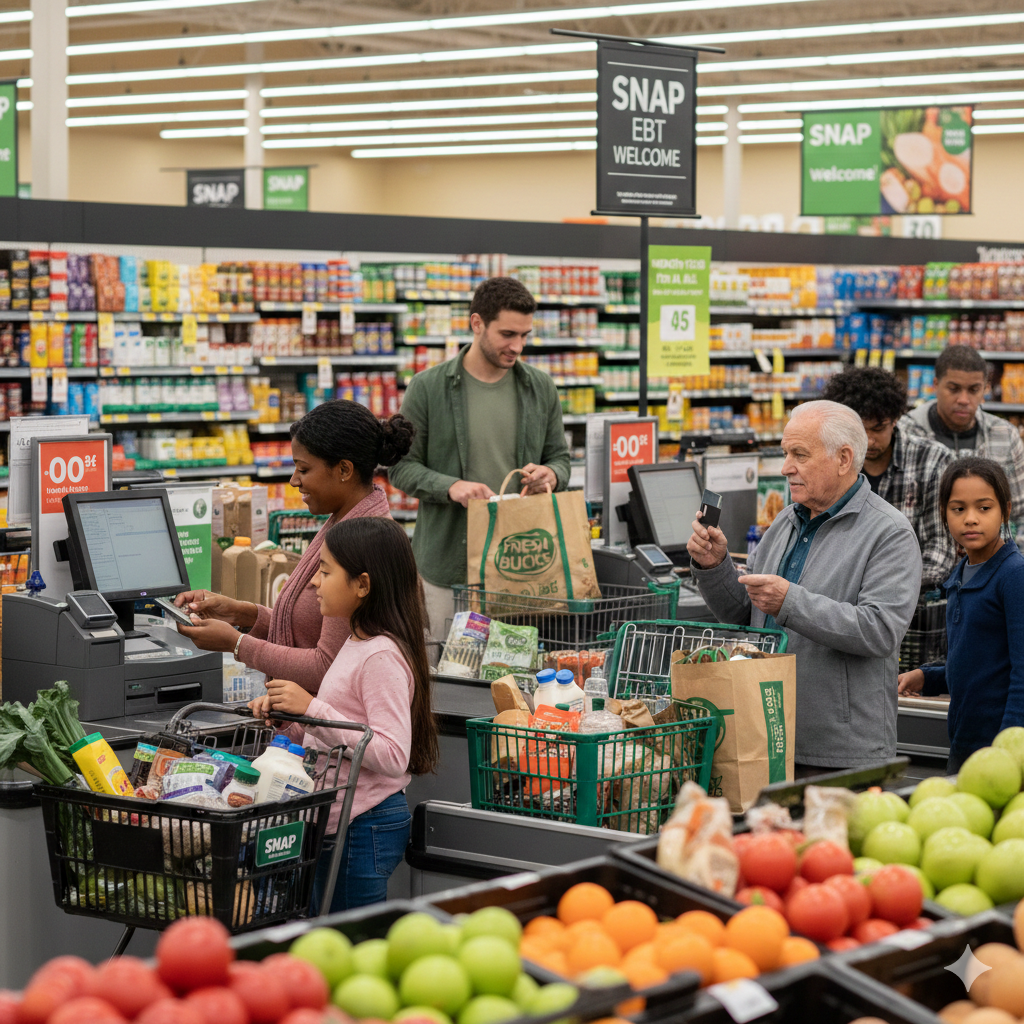
The Moral and Practical Necessity of SNAP: A Lifeline Beyond Wages
The debate over the Supplemental Nutrition Assistance Program (SNAP) often centers on fiscal responsibility and labor participation. However, viewing SNAP solely through a budgetary lens ignores its fundamental role as a cornerstone of national stability and human dignity. While the ultimate goal of any healthy economy should be a “living wage” that allows all citizens to purchase food independently, cutting SNAP funds in the interim is not a solution—it is a moral and humanitarian failure. Protecting SNAP is not just a matter of policy; it is an fulfillment of a nation’s ethical and international obligations.
The Gap Between Wages and Wellness
In an ideal economic system, the market would provide wages high enough to ensure that every worker can afford a nutritious diet. Raising the minimum wage and strengthening labor protections are indeed the most sustainable ways to reduce dependency on government assistance. However, we do not yet live in that reality.
For millions of Americans, even full-time work does not equate to food security. Rising costs in housing, healthcare, and utilities often force families into “heat or eat” dilemmas. SNAP acts as a vital bridge for those in low-paying sectors where wages have not kept pace with inflation. Furthermore, the program is essential for those who cannot rely on wages alone:
- The Elderly and Disabled: Many SNAP recipients are on fixed incomes and cannot simply “work more” to cover rising grocery bills.
- Children: A significant portion of SNAP beneficiaries are children whose developmental health depends on consistent nutrition that their parents’ current wages may not provide.
- The “Working Poor”: Statistics show that the majority of able-bodied SNAP recipients are already employed, but their income remains below the poverty threshold.
Cutting these funds doesn’t “incentivize” work; it simply increases the “cliff effect,” where a small raise in pay can lead to a total loss of benefits, leaving a family worse off than before.
The Moral Imperative and the UN Charter
The preservation of SNAP is not merely a domestic preference; it is a requirement of global citizenship. As a founding member of the United Nations, the United States is bound by a framework that recognizes food as a fundamental human right.
The UN Charter (Articles 55 and 56) commits member states to promote “higher standards of living” and “universal respect for, and observance of, human rights.” This is further clarified in the Universal Declaration of Human Rights (Article 25), which explicitly states:
“Everyone has the right to a standard of living adequate for the health and well-being of himself and of his family, including food, clothing, housing and medical care…”
To cut SNAP funding is to move backward on these international commitments. A nation’s greatness is measured by how it treats its most vulnerable members. By providing a “food stand” through SNAP, the government acknowledges that hunger is not a personal failure, but a systemic issue that the state has a moral duty to address.
An Economic Multiplier
Beyond the moral argument, SNAP is a highly efficient economic tool. Unlike many other forms of spending, SNAP benefits are injected immediately into local economies.
- Local Impact: Every dollar spent in SNAP generates approximately $1.50 to $1.80 in local economic activity.
- Retail Support: Benefits are spent at local grocery stores, farmers’ markets, and corner shops, supporting small business owners and agricultural supply chains.
- Healthcare Savings: Food security is preventative medicine. SNAP participants have lower rates of hospitalization and chronic illness, saving billions in long-term public health expenditures.
Conclusion
The path forward should involve a dual strategy: aggressively raising wages to empower the workforce while fiercely protecting the SNAP program for those who still fall through the cracks. To cut funding now would be to violate the very principles of human dignity and international law that we claim to uphold. We must maintain this lifeline until the day comes when no citizen has to choose between paying their rent and feeding their children.