Categories
Conflict Economics Education Social Issues

History Has a Direction

The Inevitable Arc: Utility, Integration, and the Direction of History

The phrase “the right side of history” is often dismissed as rhetorical flourish, but a rigorous analysis of human development suggests it describes a tangible phenomenon. History is not a series of random, cyclical events; it possesses a distinct directionality. That direction is an ascent toward higher levels of integration, cooperation, and collective well-being. Specifically, the trajectory of human civilization points toward International Socialism—defined here as a robust system of international law coupled with economic social democracy based on Keynesian principles. This evolution is not merely accidental; it is inevitable because this system possesses the highest utility value of any social arrangement, and it is the duty of education to accelerate our arrival at this destination.
Categories
Conflict Economics Social Issues

The Labor Theory of Value

The Economic Inadequacy of the Labor Theory of Value

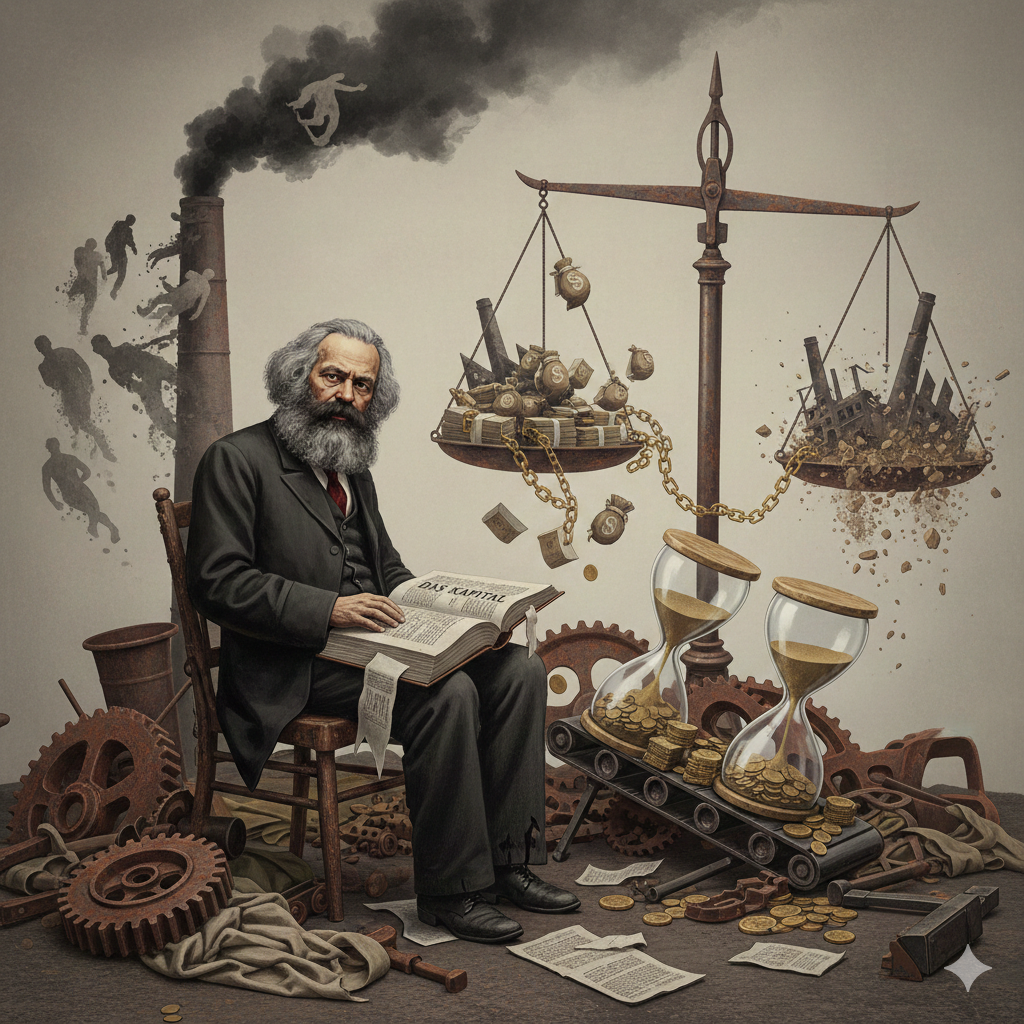
The Labor Theory of Value, as articulated by Karl Marx, posits that the economic value of a good is objectively determined by the socially necessary labor time required for its production.1 While this theory provided a potent rhetorical tool for 19th-century industrial critiques, it fails to describe how value actually functions in a modern economy. The fundamental error lies in the assumption that value is an inherent property derived from production inputs rather than a subjective assessment made by consumers.2 This is most evident in the “transformation problem,” where Marx struggled to mathematically reconcile labor values with actual market prices.3 If labor were the sole source of value, capital-intensive industries would logically be less profitable than labor-intensive ones, yet in reality, profit rates tend to equalize across sectors regardless of their labor composition.

Categories
Conflict Power

A Date that Shall Live in Infamy

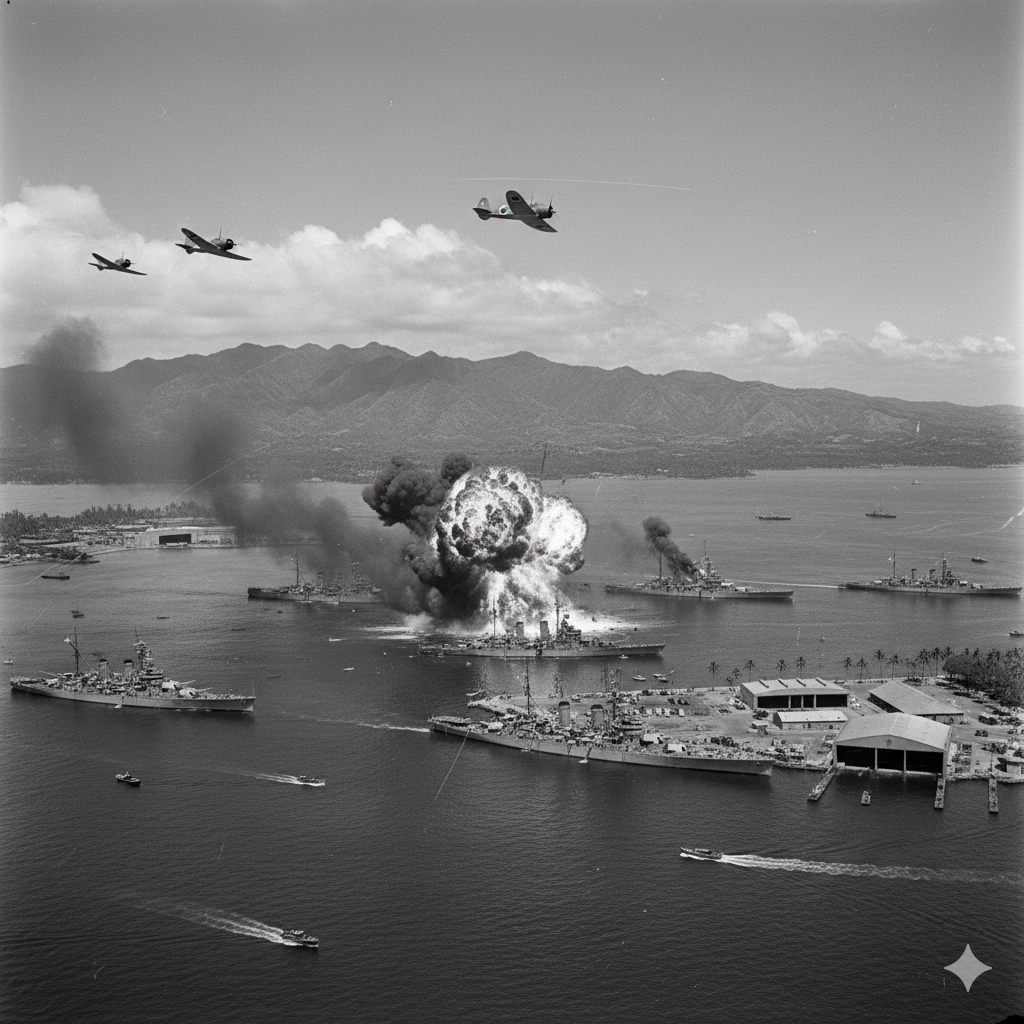
The 1941 attack on Pearl Harbor remains one of the most pivotal and sobering moments in modern history, a day that President Franklin D. Roosevelt declared “will live in infamy.” Remembering this event is not merely an act of memorializing the bravery and sacrifice of the 2,403 Americans who died; it is a vital, ongoing commitment to understanding the fragility of peace and the imperative for a robust international order. The sudden, devastating nature of the Japanese sneak attack was a traumatic shock that shattered America’s lingering isolationism and highlighted the fundamental need for strong international law, a powerful United Nations (UN), and arguably, an independent UN military force to prevent such unprovoked aggression from ever recurring.

Categories
Conflict Power Social Issues

UN Security Council

🇸🇪 A Moral Imperative: Restructuring the UN Security Council for the 21st Century

The United Nations Security Council (UNSC), charged with the primary responsibility for the maintenance of international peace and security, stands today as an anachronistic relic of a world order that has long since passed. The composition of its permanent members (P5)—the United States, China, Russia, France, and the United Kingdom—was decided not by principles of universal justice or consistent adherence to the UN Charter, but by the raw military and political power of the victors of World War II. To usher in a new era of global governance that truly lives up to the lofty ideals of its founding document, the P5 must voluntarily step down, and a new, more principled standard for membership, one centered on constitutional governance, human rights, and social democracy, must be established.

Categories
Economics Education

College Education is a Fundamental Right

The Unburdened Mind: Advancing Education as a Universal Right

The pursuit of knowledge is not a luxury item to be purchased, but a fundamental human right and the most potent engine of collective prosperity. Yet, in many developed nations, higher education has been commodified, leading to crippling student loan debt that suppresses economic vitality and inhibits social mobility. A radical restructuring of this system is required, one that simultaneously cancels existing student loan debt, establishes tuition-free college education, and, critically, institutes rigorous academic standards to ensure the integrity of scholarly degrees. Furthermore, the establishment of a globally-managed university system, financed by the United Nations (UN), represents the necessary next step in realizing education’s universal potential.The Unburdened Mind: Advancing Education as a Universal Right

Categories
Economics Social Issues

Unionization Must be Everywhere

The Case for Universal Unionization: A Foundation for Economic and Social Stability

The proposition that all workers should belong to a union—a policy known as universal unionization—is not merely an argument for worker rights, but a mandate for macroeconomic stability and social equity. When viewed through the lens of Keynesian economics, mandatory union membership emerges as a powerful structural mechanism necessary to ensure high wages, robust aggregate demand, and, critically, the sustained full employment of the labor force. Such a structural change would secure a positive living for all citizens and stabilize the entire economy.

Categories
Education Social Issues

Remove School Vouchers

The Erosion of Public Education: Why School Vouchers Are Detrimental

School voucher programs, often touted as a means of increasing “school choice” and fostering competition, fundamentally fail to deliver on their promises. By redirecting public tax dollars away from established public school systems into private, often religious, institutions, these programs create a cascade of detrimental effects. The primary arguments against school vouchers rest on three pillars: the fiscal harm they inflict on public schools, the questionable or even negative impact they have on student academic performance, and the erosion of accountability and civil rights protections for students.

Categories
Economics Education Social Issues

Education is Far More than a Personal Pursuit

The Intellectual Foundations of Progressive Society: Education and Democratic Health

The strength of a progressive society—one defined by its commitment to socialism, internationalism, demand-side economic management, and fundamental critical thinking—is directly correlated with the educational attainment of its populace. Education is not merely a tool for individual advancement; it is the fundamental infrastructure upon which complex, forward-looking political systems are built. By fostering cognitive ability, promoting intellectual humility, and inoculating citizens against simplistic authoritarian appeals, education emerges as the vital safeguard for both economic prosperity and democratic resilience.

Categories
Education Social Issues

Science and Ideology

The Empirical Imperative: Social Democracy as the Default Political System

The individual committed solely to the scientific method, prioritizing verifiable data, methodical inquiry, and empirical evidence above all, approaches the political sphere not with ideological fervor but with profound skepticism. For this “Empirical Citizen,” political systems are not articles of faith but large-scale, ongoing social experiments. When viewing society through this rigorously scientific lens, free from the biases of inherited doctrine or pseudohistorical narratives, the default conclusion is not a utopian ideal but a pragmatic optimization: a political system aligned with democratic socialism or social democracy.

Categories
Education Social Issues

Holocaust Denial, Ideology, and Society

The Epistemic Threat: Why Holocaust Denial is the Prototype for Authoritarian Pseudoscience

Holocaust denial is universally condemned as a vile and inflammatory expression of antisemitism, a deliberate injury to the memory of six million Jewish victims and millions of others murdered by the Nazi regime. Yet, to categorize it merely as anti-Jewish hate speech is to miss its deeper, more corrosive function. Holocaust denial is, at its core, a political act of pseudoscience and historical negationism. It is an organized attack on the very concept of verifiable truth, and its danger lies not just in the historical facts it seeks to erase, but in the blueprint it provides for dismantling the shared reality necessary for a free society. The falsification of history is the main negative trait of this denialism, serving as a gateway drug to the acceptance of authoritarian ideologies.